
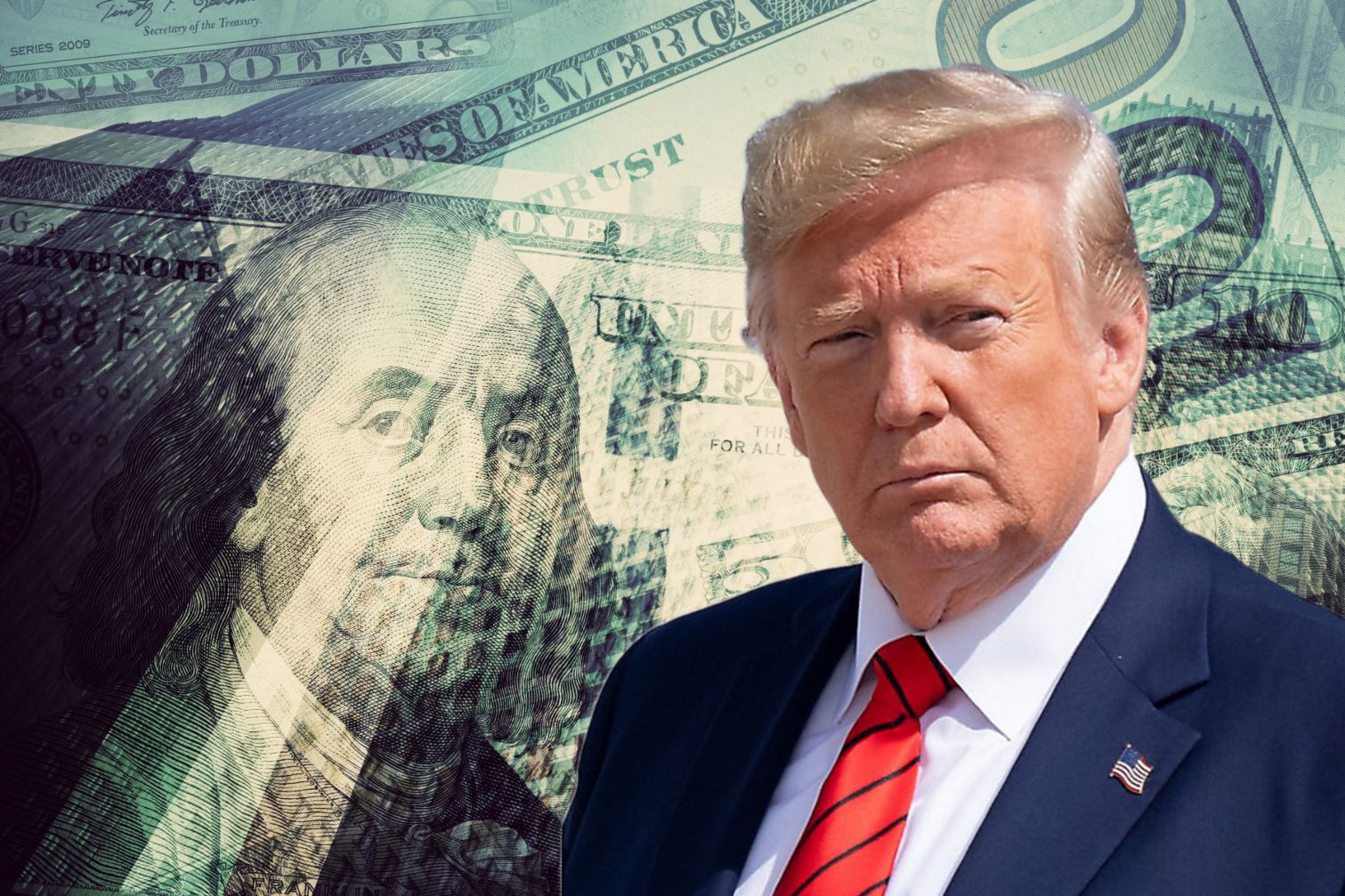

President Trump used his first year anniversary press conference to revisit one of his most popular and most misunderstood ideas, the plan to send $2,000 tariff dividend checks directly to working class Americans. While critics immediately jumped to process questions, Trump focused on the part that actually matters, the money is there, and a lot of it.
Asked whether he would need congressional approval to implement the plan, President Trump made it clear he is not eager to hand this over to the same Congress that has a long history of blocking tax relief for regular Americans. “I don’t think we would have to go to Congress,” Trump said, adding that the reason the idea is even on the table is because tariff revenue has exploded. According to Trump, the revenue surge would allow the government to issue at least a $2,000 dividend while still paying down national debt, something Washington rarely even pretends to care about.
That surge is not theoretical. U.S. tariff revenue for fiscal year 2025 totaled $195 billion, the highest annual collection in modern history and more than a 250 percent increase from the prior year. That did not happen by accident. It happened because President Trump unapologetically used tariffs to protect American industry and force better trade behavior from countries like China. Monthly tariff revenue climbed from roughly $7 billion at the start of the year to about $30 billion by September, a dramatic increase that caught even Treasury officials off guard.
Those tariffs were imposed using executive authorities such as the International Emergency Economic Powers Act, the same law now being scrutinized by the Supreme Court. While the Court is weighing limits on presidential tariff powers, Trump is already looking ahead at how to return some of that money to the people who ultimately paid higher prices while American leverage was being rebuilt.
Treasury Secretary Scott Bessent has suggested that Congress would likely need to authorize the checks, but not everyone in the White House agrees. Deputy Chief of Staff James Blair acknowledged last year that the administration is exploring every possible legal path to avoid congressional interference. He later clarified that while Congress may ultimately be required, the White House is not rushing to give lawmakers a veto over direct relief to voters.
Trump also emphasized that the dividends would likely come with income limits to ensure they go to people who actually need them, not wealthy elites who already benefit from loopholes and subsidies. That detail alone separates this idea from the reckless spending sprees Washington usually labels as stimulus.
Predictably, critics are already warning about executive overreach, even as they stayed silent while Congress spent trillions with borrowed money. Trump’s plan flips the script. Instead of redistributing debt, he is talking about redistributing revenue generated by foreign tariffs and using the rest to pay down what the government owes.
Whether Congress gets a vote or not, the message is clear. President Trump is not viewing tariffs as punishment. He is viewing them as leverage, revenue, and now potentially a dividend for the American worker. That is a very different mindset than the one that shipped jobs overseas and called it free trade.
Leave a Comment