
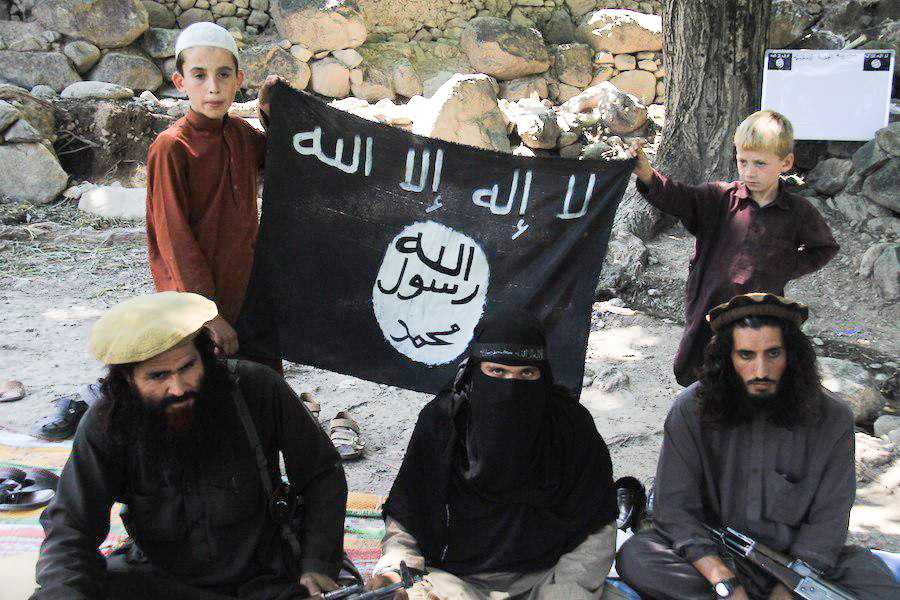

While most Americans were busy arguing about gas prices and cable news drama, something serious was unfolding overseas. In a coordinated covert operation stretching across multiple U.S. agencies, American forces quietly thwarted what could have been the largest ISIS prison break since the terror group lost its territorial caliphate in 2019.
The numbers alone are staggering. Nearly 6,000 ISIS detainees, described by a senior U.S. intelligence official as “the worst of the worst,” were being held in northern Syria. Intelligence warnings began surfacing in late October 2025 that Syria’s unstable political landscape could create the perfect conditions for chaos. By early January 2026, as fighting in Aleppo intensified and spread eastward, concerns grew that detention facilities guarded by the Kurdish led Syrian Democratic Forces, or SDF, might collapse.
If that had happened, the consequences would have been immediate and catastrophic. “If these 6,000 or so got out and returned to the battlefield, that would basically be the instant reconstitution of ISIS,” a senior U.S. official told Fox News, calling it a “severe crisis situation.” Years of counterterrorism work, thousands of American lives and billions of dollars invested in stabilizing the region, could have been undone almost overnight.
Instead of waiting for disaster, U.S. officials moved decisively. The Office of the Director of National Intelligence coordinated daily calls across agencies. Diplomatic channels were opened with both the SDF and the Iraqi government. U.S. Central Command surged helicopters and additional resources into the region to carry out rapid transfers. FBI teams were deployed to assist with biometric enrollment in Iraq, ensuring detainees could be properly identified and prosecuted in the future.
Within weeks, nearly 6,000 high risk detainees were transferred to a secure facility near Baghdad International Airport under Iraqi custody. Helicopters, logistics planning, and nonstop coordination made it happen in compressed time. “Thanks to the efforts… moving in helicopters, moving in more resources, and then just logistically making this happen, we were able to get these nearly 6000 out in the course of just a few weeks,” the official said.
The threat, however, has not disappeared. ISIS no longer controls large swaths of territory, but it continues operating in desert cells across Syria, carrying out assassinations and attacks. The fall of the Assad regime has left a fragile patchwork government struggling to maintain order. Meanwhile, the al-Hol camp, which houses ISIS families, is reportedly being emptied as the Syrian government releases detainees, a development U.S. officials view as deeply concerning.
Secretary of State Marco Rubio acknowledged the delicate balance. “We don’t have an embassy in Syria. It’s operating out of Türkiye. But we need to help them. We want to help that government succeed because the alternative is full-scale civil war and chaos.”
This operation was a reminder of something too often forgotten. When American intelligence agencies, diplomats, and military forces work together with focus and clarity, they can prevent disasters before they explode onto the front page. In this case, 6,000 potential terrorists did not return to the battlefield. That is not just a quiet success. It is a major one.
Leave a Comment