
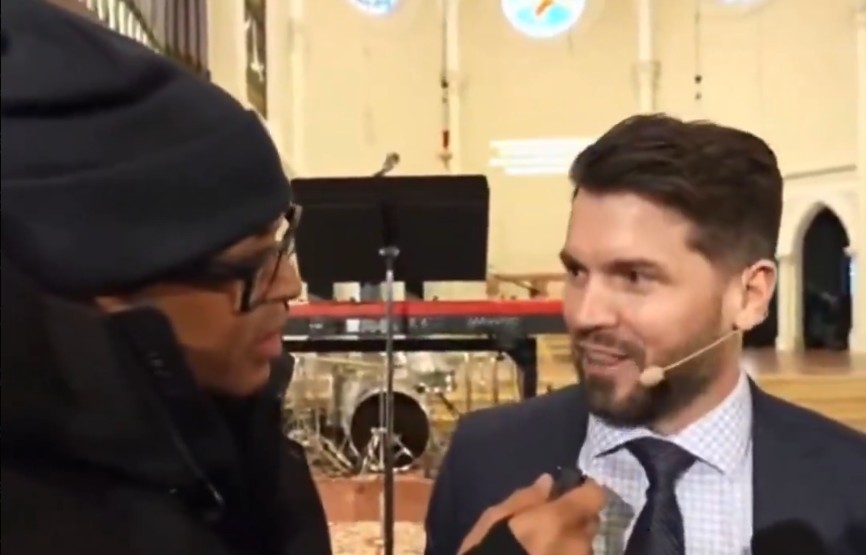

Former CNN host Don Lemon is now facing serious legal trouble stemming from a January 18, 2026 disruption at Cities Church in St. Paul, Minnesota. What began as a protest inside a Sunday worship service has turned into both a federal criminal case and a civil lawsuit.
The incident took place during a regular gathering at Cities Church, a congregation affiliated with the Southern Baptist denomination. According to reports, a group of demonstrators entered the sanctuary and began shouting “ICE out!” and “Justice for Renee Good.” The latter referred to a local anti ICE activist who was shot last month while allegedly attempting to run over a federal agent.
Protesters reportedly targeted the church because one of its pastors was said to be serving as acting director of the ICE field office in St. Paul. Authorities allege the demonstration was not a spontaneous outburst but a coordinated action. The federal indictment claims that approximately 20 to 40 agitators entered the church in what it describes as a “coordinated takeover style attack,” engaging in intimidation, threats, interference, and physical obstruction. Some participants allegedly prevented children from leaving the premises.
Lemon and eight others have been charged federally with conspiracy against the right of religious freedom at a place of worship. Each defendant also faces a count of injuring, intimidating, and interfering with the exercise of religious freedom under the Freedom of Access to Clinic Entrances Act, commonly known as the FACE Act. That law prohibits using force, threats, or physical obstruction to disrupt religious practice. Violations can carry significant penalties.
In addition to the criminal charges, a church member named Ann Doucette has filed a civil lawsuit in Minnesota District Court. Representing herself, Doucette alleges that the defendants “unlawfully interfered” with her ability to freely exercise her religion. She claims the protesters spread through the pews, confronted clergy, and created severe emotional distress, fear, and anxiety. The complaint also alleges that Lemon livestreamed parts of the event and “appeared to take satisfaction in the disruption.” Doucette is seeking financial damages and a court order barring the defendants from returning to the church.
The case raises significant constitutional questions. The First Amendment protects free speech and protest, but it also protects the free exercise of religion. When protest crosses into disruption inside a house of worship, the legal balance shifts.
The courts will ultimately determine guilt or innocence. But the facts alleged in the indictment and civil filing underscore a broader tension. Political activism, even on heated issues like immigration, does not grant a license to disrupt religious services. Places of worship have long been considered protected spaces in American civic life.
Now the legal system will decide whether that line was crossed.
Leave a Comment