
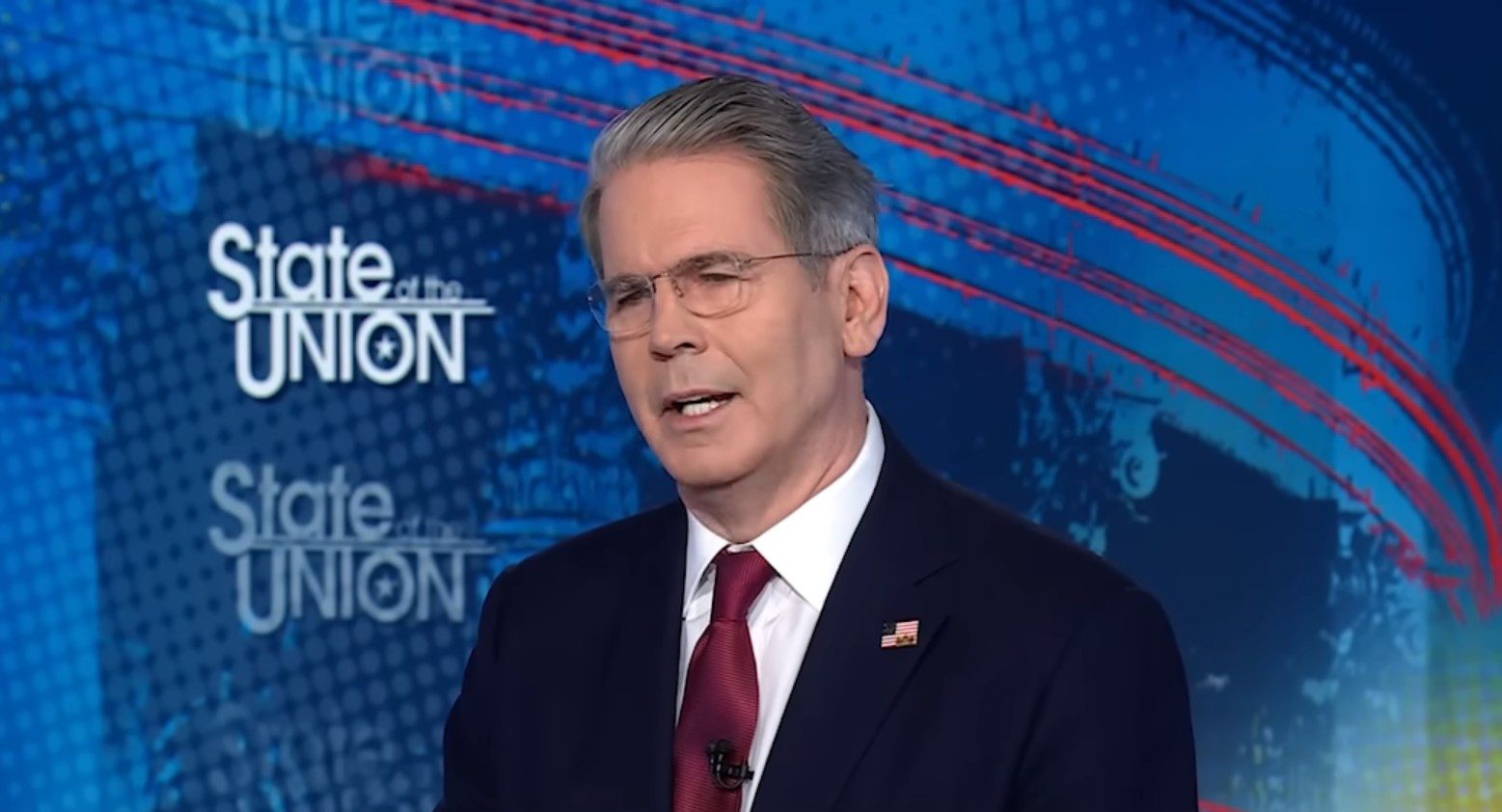

Treasury Secretary Scott Bessent got a very public reminder this week that when the world is on fire, podcast interviews are not exactly the top priority.
Bessent was in the middle of a live interview Thursday with Sky News anchor Wilfred Frost on The Master Investor Podcast when the conversation took a sudden detour. The interview was taking place inside the Treasury Department’s historic Cash Room when an aide abruptly interrupted about 13 minutes into the discussion.
The interruption was not subtle.
“The president wants you right away,” the aide said from off camera, according to a clip that quickly spread across social media.
At that point Bessent, 63, did what anyone summoned to the White House Situation Room by President Trump would do. He stood up, had the microphone removed from his jacket, and walked out.
The time stamp on the clip shows Bessent leaving around 10:22 a.m. He returned roughly two hours later after meeting with President Trump and senior national security officials as the administration continues managing the economic fallout from the war with Iran.
For those wondering whether the meeting was serious, here is a helpful rule of thumb. When the Treasury secretary gets called into the Situation Room during an active military conflict, it is probably not about reorganizing office furniture.
The war itself began February 28 when the United States and Israel launched Operation Epic Fury, a major strike campaign targeting Iran’s leadership and military infrastructure. The operation reportedly resulted in the death of Iranian Supreme Leader Ali Khamenei and triggered a new phase of instability across the Middle East.
Naturally, the financial world is watching closely.
When Bessent returned to the interview, Frost asked about the meeting and the president’s mood as the conflict continues to unfold. Bessent kept the details tight but offered a clear signal that the administration believes things are going according to plan.
“The president is in great spirits, the Iranian mission is proceeding well ahead of schedule,” Bessent said.
He also offered a personal note that caught some attention. Bessent mentioned his teenage child is considering military service and added, “I can give this team my highest compliment from President Trump, to the head of the Joint Chiefs, to the secretary of war. I would trust my child’s life in their hands.”
That statement says quite a bit about how the administration views its leadership team during the conflict.
The discussion also shifted to global markets and one particularly sensitive pressure point, the Strait of Hormuz. The narrow shipping lane handles a significant portion of the world’s oil supply, and Iran has previously threatened to choke off traffic there as leverage.
So far, that has not happened.
“There are, in fact, tankers coming through now,” Bessent said. “Iranian tankers, I believe some Chinese flagged tankers have come through. So we know that they have not mined the straits.”
Still, U.S. officials are preparing contingency plans. Bessent said the U.S. Navy could begin escorting ships through the strait once military conditions allow it.
Energy Secretary Chris Wright echoed that idea in a separate interview, confirming that escort plans are under discussion. Timing, however, depends on the battlefield situation.
“We’re simply not ready,” Wright said. “All of our military assets right now are focused on destroying Iran’s offensive capabilities.”
Meanwhile, the operation has already cost the United States roughly $11 billion, according to Bessent.
Expensive, yes. But when a war reshapes the Middle East and sends global markets into shockwaves, that number is only part of the story.
Leave a Comment