
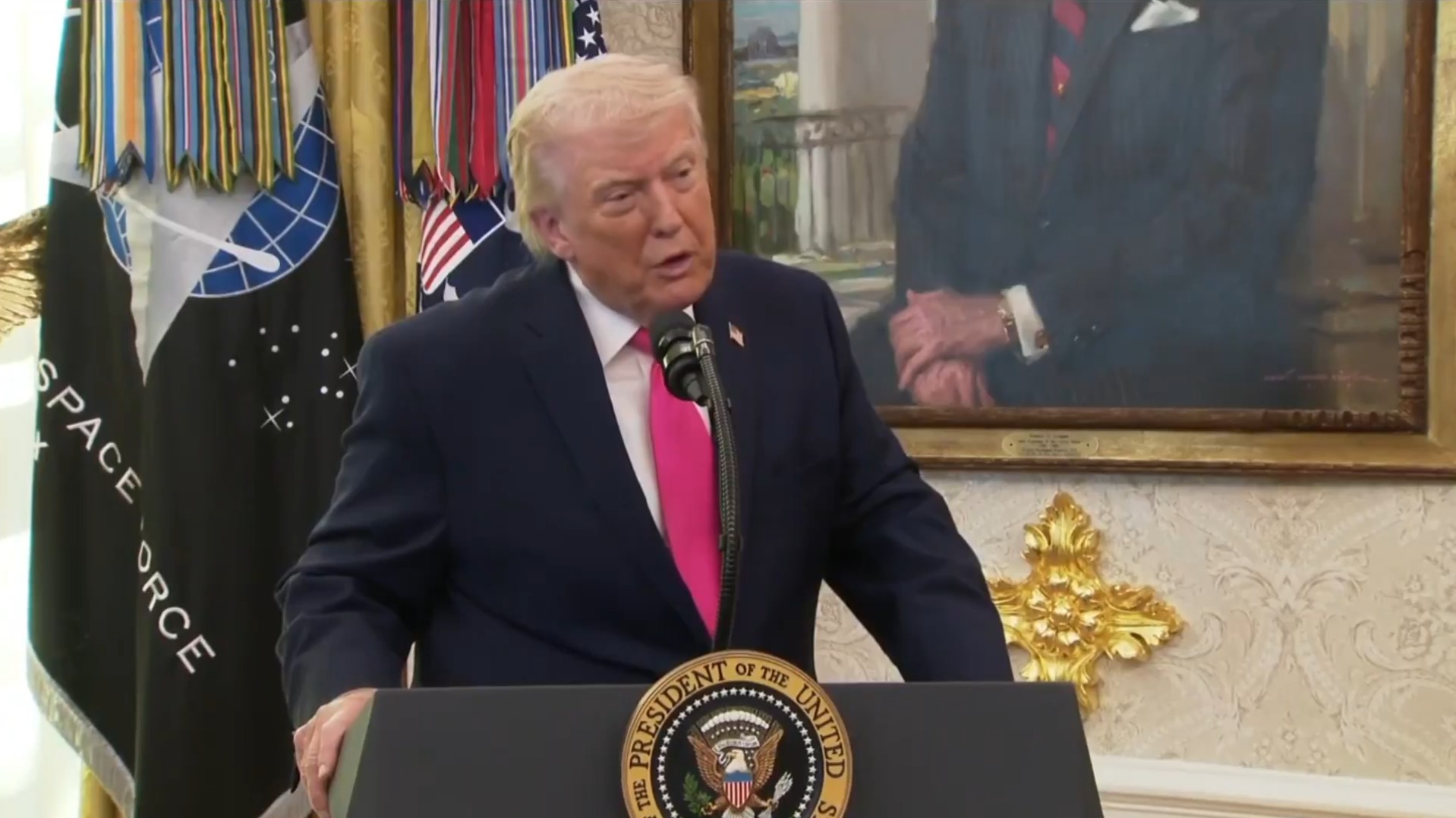

President Trump delivered one of those classic Oval Office moments this week, the kind that leaves reporters scrambling to figure out whether they just heard a breakthrough or the opening line of a negotiation tactic. This time, it involved Iran, oil markets, and what he casually described as a “very big present.”
Speaking to reporters, President Trump said Iran had sent something of significant value earlier in the day. Not missiles, not uranium, but something tied directly to oil and gas. “They gave us a present and the present arrived today, and it was a very big present, worth a tremendous amount of money,” he said. Naturally, that raised eyebrows. When Iran is giving “presents,” people tend to get a little suspicious.
He clarified that it had nothing to do with nuclear activity, which is the big headline everyone watches. Instead, the move appears connected to ongoing discussions surrounding energy markets and the Strait of Hormuz, one of the most critical chokepoints in the global oil supply. Roughly 20 percent of the world’s traded oil flows through that narrow stretch of water, and when it gets disrupted, markets don’t just wobble, they panic.
Iran had been doing exactly that, restricting access, mining waters, and contributing to a massive drop in traffic through the strait, reportedly by as much as 90 percent. That kind of disruption sends shockwaves through the global economy, and it didn’t take long for the United States to respond.
President Trump issued a 48-hour ultimatum over the weekend, making it clear that if Iran didn’t back off, U.S. strikes on energy infrastructure were on the table. Not vague warnings, not carefully worded diplomatic nudges, a direct line in the sand. Then, in a move that suggests negotiations are gaining traction, he extended that deadline by five days, citing productive conversations with what he called “the right people” in Iran.
And here’s where it gets interesting. According to President Trump, Iran “wants to make a deal very badly.” That’s a notable shift in tone from a regime that usually prefers defiance over cooperation. Whether that’s due to economic pressure, military positioning, or a combination of both is up for debate, but the timing isn’t exactly subtle.
At the same time, the U.S. has ramped up its military presence in the region to levels not seen since the Iraq invasion in 2003. Amphibious assault ships, Marines, and additional assets are now in place. That’s not just for show. It’s leverage, plain and simple.
President Trump also reiterated the core demand that hasn’t changed, Iran cannot have a nuclear weapon. He emphasized that point repeatedly, calling it priority number one, two, and three. There’s no ambiguity there.
Despite the buildup, he made it clear he has no desire to put boots on the ground. “I’m not putting troops anywhere and if I were, I certainly wouldn’t tell you,” he said. That leaves the current situation in a familiar spot, maximum pressure paired with an open door for a deal.
For now, the “present” has bought some time. Whether it leads to a lasting agreement or just delays the inevitable is the question everyone is quietly asking.
Leave a Comment