
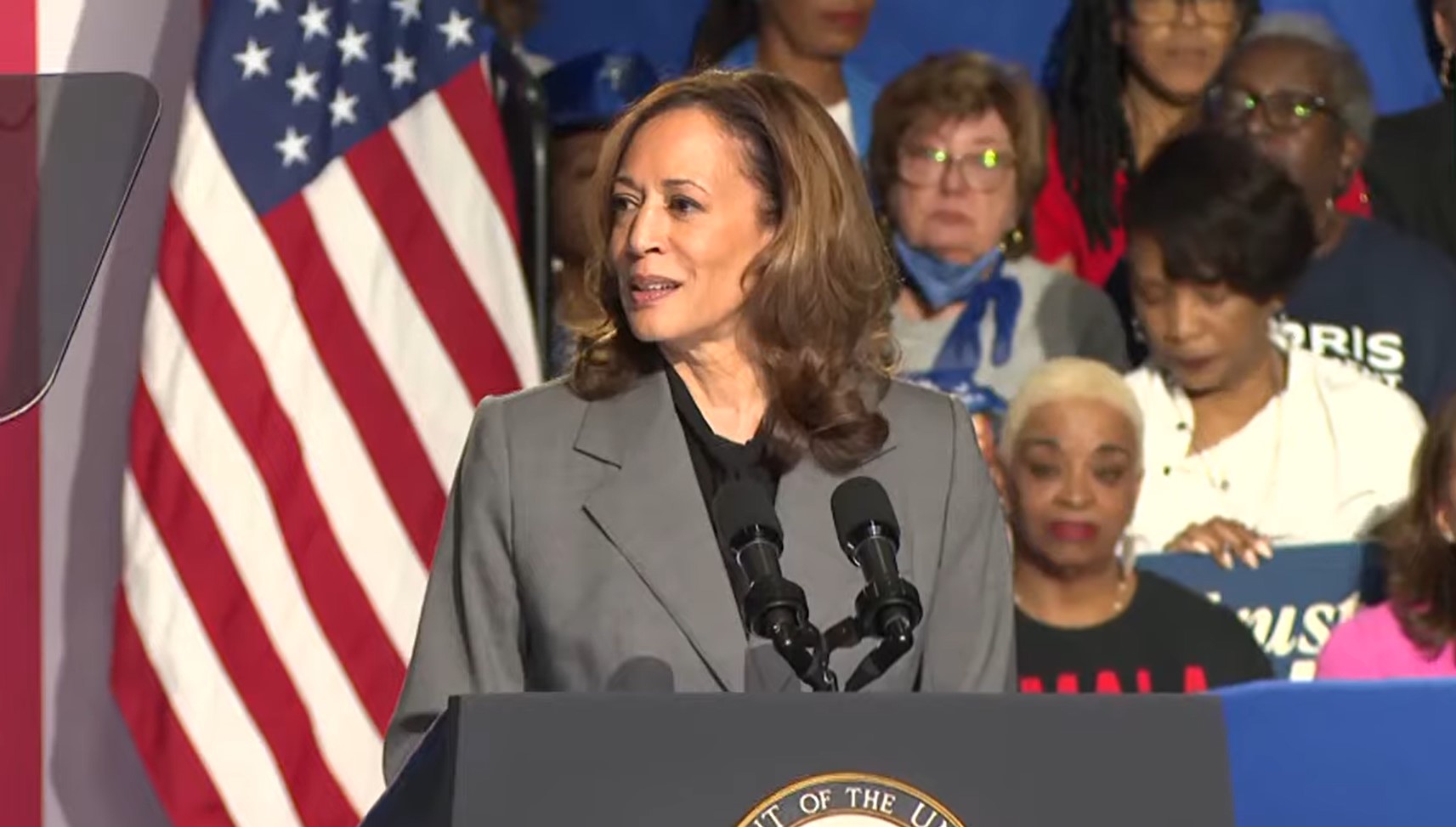

If there was any doubt that Kamala Harris isn’t quite ready to fade into the background, she pretty much erased it this week. Standing in front of a friendly crowd at the National Action Network convention, Harris gave her clearest signal yet that she’s eyeing another run at the White House in 2028. Not a firm announcement, of course, but close enough to get the political class buzzing.
“Listen, I might, I might. I’m thinking about it.” That’s the kind of answer that’s technically noncommittal but politically loud. You don’t say that in a room full of activists, donors, and party insiders unless you’re testing the waters, and judging by the reaction, the water was warm.
The crowd reportedly ate it up, chants of “Run again!” echoing through the room like it was a campaign rally instead of a convention panel. Even Al Sharpton had to joke that it felt more like a revival than a policy discussion. That tells you everything you need to know about the tone of the event.
But let’s step back from the applause for a second and look at the bigger picture. Harris is coming off a vice presidency that, to put it politely, didn’t exactly set the world on fire. Now she’s positioning herself as a leading contender for 2028, leaning heavily on name recognition and the fact that she’s already been on the national ticket twice.
That might work in a crowded Democratic primary, especially when the party is still trying to figure out its identity after losing ground with key voter groups in 2024. Harris even acknowledged that problem directly, admitting Democrats can’t just assume loyalty from Black and Latino voters anymore. That’s a notable shift in tone, and not exactly a comforting one for a party that used to treat those voting blocs as a given.
Her solution? Encourage voters to be “transactional.” In other words, don’t just vote out of habit or loyalty, demand something in return. It’s an interesting pitch, though it raises an obvious question, if voters start thinking that way across the board, how does that reshape the entire political landscape?
Of course, none of this happens in a vacuum. Harris spent part of her remarks going after President Trump, criticizing his foreign policy and leadership style. That’s expected. What’s more telling is that she’s already framing herself as the alternative, not just a participant in the conversation.
She’s also planning trips to key states like South Carolina and Georgia, which just so happen to be crucial early stops in any Democratic primary. Again, not exactly subtle.
So no, there’s no official campaign launch yet. But when you combine the messaging, the setting, the crowd reaction, and the upcoming travel schedule, it doesn’t take a political genius to see where this is heading.
Whether Democratic voters are eager for a sequel is a different question entirely.
Leave a Comment