
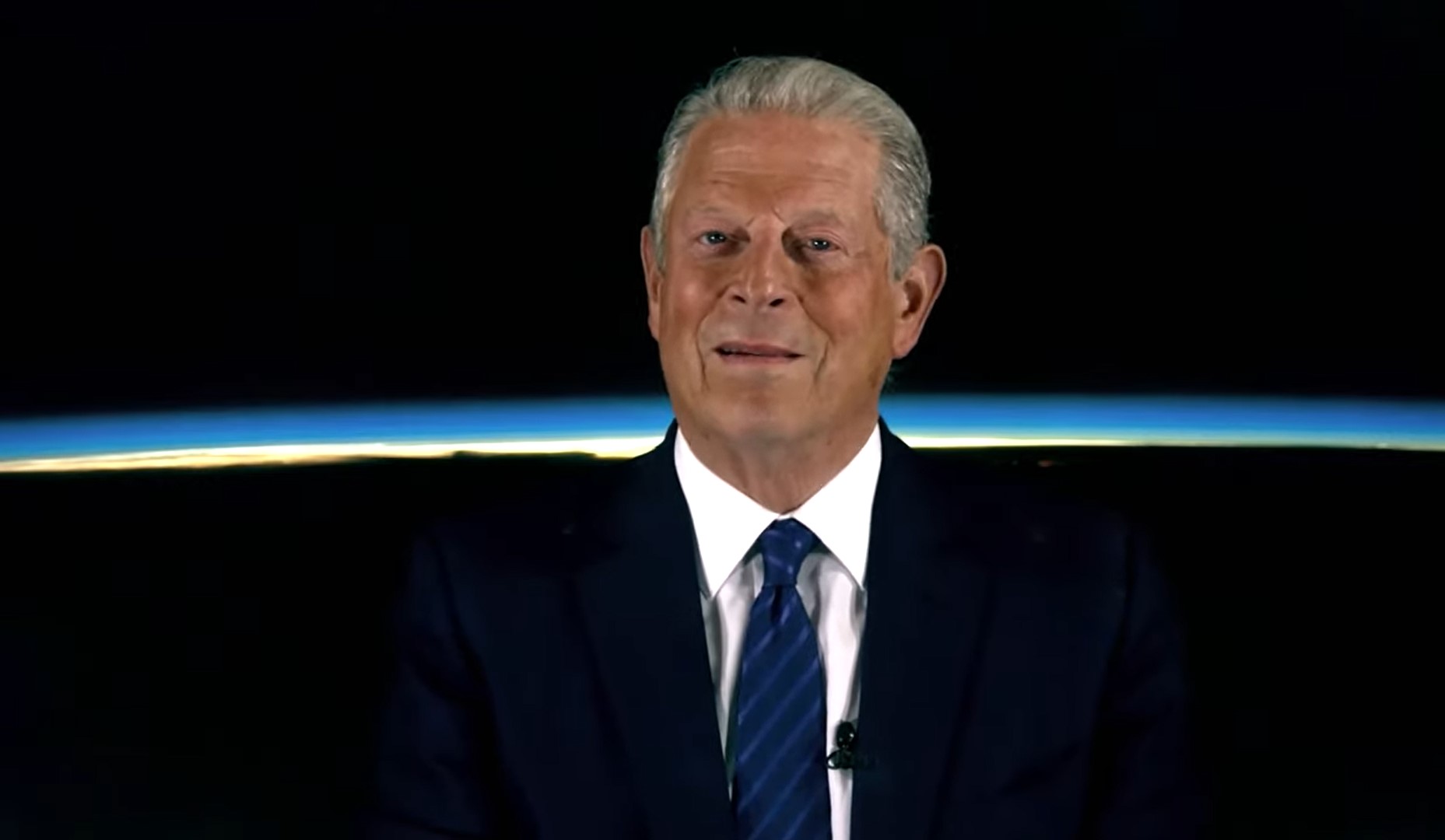

Al Gore is back with another climate warning, and this time the man who once sold the public on global warming catastrophe is now floating the threat of a coming ice age. After years of hearing that the planet was roasting, we are apparently now supposed to panic that it may soon freeze. At this rate, the forecast is less science and more spinning wheel.
The former vice president, whose 2006 film An Inconvenient Truth became required viewing for every self-important lecture circuit in America, is once again making media rounds predicting disaster. This time the concern centers on the Atlantic Meridional Overturning Circulation, often discussed in connection with the Gulf Stream. Gore suggested disruptions could create severe consequences within the next 25 years.
During a recent interview, actor Bradley Whitford dramatically suggested that if certain energy policies are not adopted, “we’re in an ice age in, like, 10 years.” Gore pulled back slightly, saying it would take longer, though he still insisted the outcome would be “very bad” and beyond anything comparable today.
So to summarize, the world is ending, but perhaps on a revised schedule.
This is where Gore’s credibility problem enters the room like an uninvited relative at Thanksgiving. An Inconvenient Truth made a series of predictions that simply did not materialize on the timelines presented. Gore warned the Arctic could lose all summer ice by 2013. It did not. He highlighted fears that Mount Kilimanjaro would lose all snow by 2015. It did not. He promoted visuals of coastal cities underwater from massive sea-level rise “in the near future.” Miami remains inconveniently above water.
That history matters because endless failed deadlines train the public to tune out future warnings, even legitimate ones.
To be fair, climate systems are real, environmental stewardship matters, and scientific debate over ocean circulation is ongoing. Some studies suggest long-term risks, while others are more cautious. A 2025 study published in Nature reportedly concluded a collapse before 2100 is unlikely. Even mainstream institutions such as the IPCC tend to treat a collapse within 25 years as an aggressive estimate rather than settled consensus.
That nuance, however, rarely survives contact with political activists or television interviews. Catastrophe sells. Calm explanation does not.
Gore has also insisted the warnings in his original film were “proven dead right,” which is an ambitious statement considering the many specific timelines that expired quietly while the planet kept rotating.
The larger issue is not whether climate changes. It does. It always has. The issue is whether the public should trust the same parade of celebrity-apocalypse predictions that have repeatedly overpromised disaster and underdelivered evidence on schedule.
Americans are not anti-science for noticing this pattern. They are paying attention.
If leaders want serious support for responsible energy and environmental policy, they should start with honesty, humility, and realistic projections. Constantly rebranding the latest existential panic from warming to change to freezing is not persuasion. It is marketing with a thermometer.
Leave a Comment