
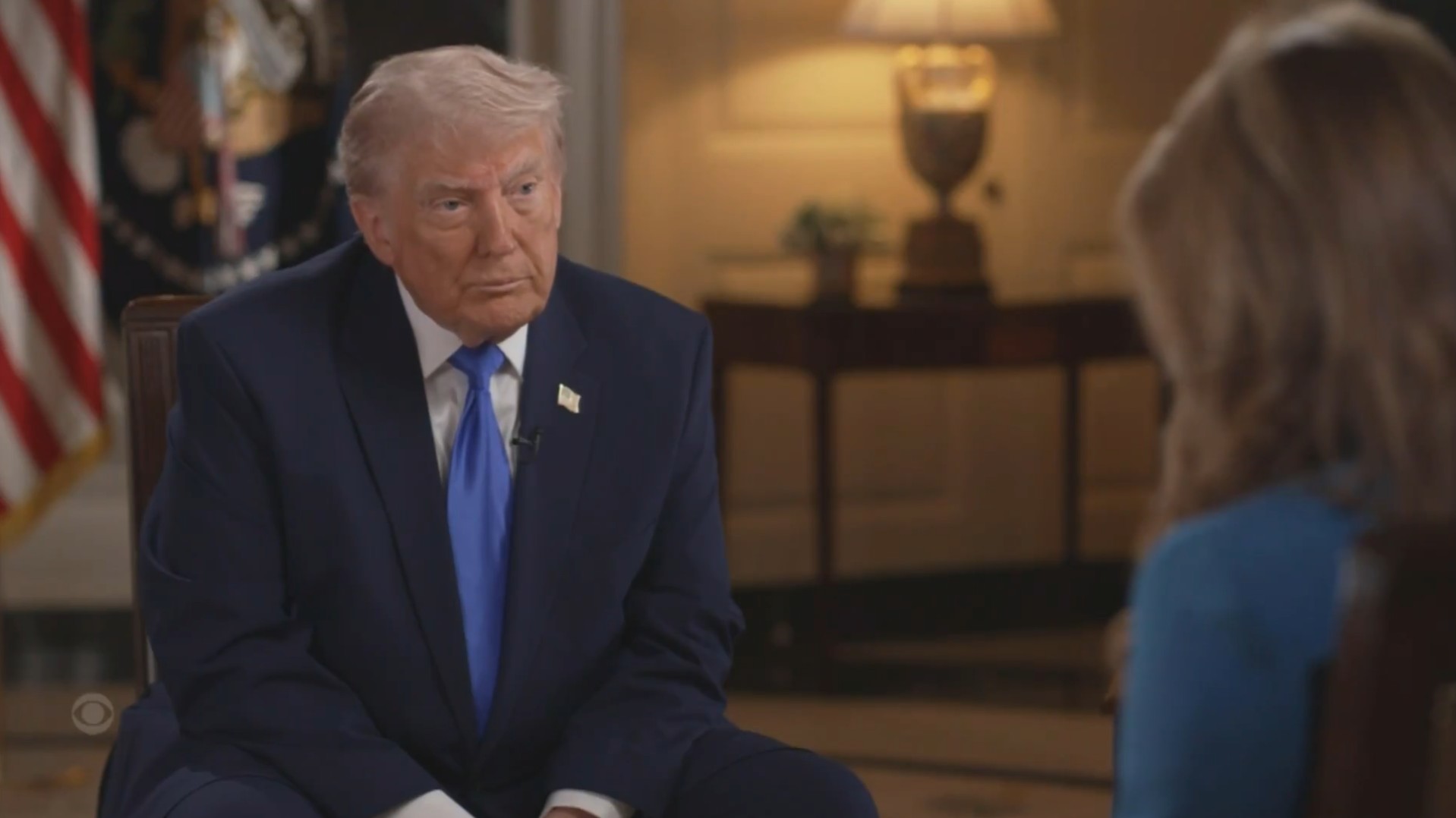

It takes a special kind of media instinct to look at a violent incident, see a deranged attacker’s manifesto, and decide the best use of airtime is to read it out loud on national television. Yet that’s exactly what 60 Minutes anchor Norah O’Donnell chose to do when sitting across from President Trump.
Let’s rewind for a second. A man storms the Washington Hilton, gets past security, and opens fire at a Secret Service agent. That alone should be a five-alarm wake-up call. The suspect, Cole Allen, wasn’t just some random guy having a bad day. He wrote a manifesto packed with rhetoric that sounds awfully familiar to anyone who’s spent more than ten minutes watching cable news or scrolling through certain corners of social media. Words like “p***phile,” “r**ist,” “traitor,” all aimed squarely at President Trump.
So what does the media do with that? Do they reflect on how this kind of language might inflame unstable individuals? Do they question whether constant character assassination has consequences? Not quite. Instead, O’Donnell decides to read those accusations directly to Donald Trump during an interview.
Predictably, President Trump didn’t sit there quietly and nod along. He called it out in real time, saying, “I was waiting for you to read that because I knew you would, because you’re horrible people.” That wasn’t polished, but it was honest. And frankly, a lot of Americans watching probably had the same reaction.
O’Donnell tried to play it off like she was just asking questions, even tossing in a “Do you think he was referring to you?” line that felt less like journalism and more like a setup. Trump’s response was blunt. He rejected the accusations outright and pointed out the absurdity of giving airtime to what he called “crap from some sick person.”
Here’s the bigger issue. When major media outlets amplify the words of violent individuals, especially when those words mirror their own editorial tone, it raises serious questions. There’s a difference between reporting facts and platforming propaganda from someone who just tried to kill a federal officer.
The press loves to talk about responsibility, usually aimed at everyone else. Maybe it’s time to look in the mirror. Reading a manifesto filled with extreme accusations on prime-time television doesn’t inform the public, it normalizes the rhetoric.
President Trump’s frustration wasn’t just about defending himself. It was about calling out a media culture that seems more interested in scoring points than showing restraint. And after yet another close call involving political violence, restraint might be the one thing that’s actually needed.
Leave a Comment