
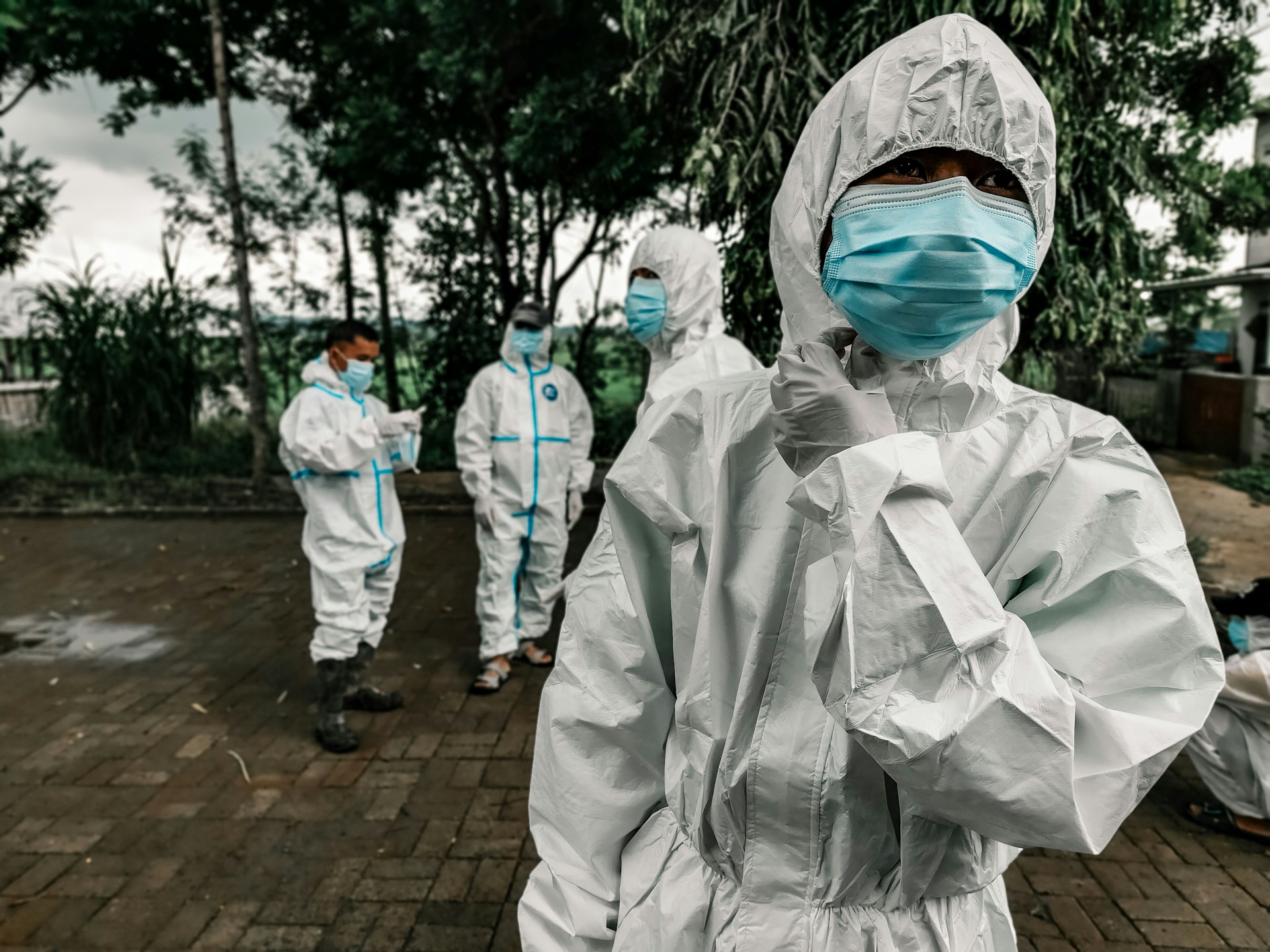

The World Health Organization has officially declared the latest Ebola outbreak in Central Africa a public health emergency of international concern, and while bureaucrats insist this is not a “pandemic-level event,” the details coming out of the Democratic Republic of the Congo and neighboring Uganda are enough to make anyone pay attention.
According to the WHO, the outbreak involves the Bundibugyo strain of Ebola, one of the rarer variants of the virus and one with no approved vaccine or proven treatment currently available. That little detail probably deserved more attention than the usual sterile press conference language about “enhanced surveillance” and “cross-border coordination.” When health officials admit there is no established vaccine for the strain spreading across multiple regions, people tend to notice.
WHO Director-General Tedros Adhanom Ghebreyesus acknowledged major uncertainties surrounding the outbreak, including the true number of infections and the full geographic spread. Translation: they still do not entirely know how bad this is.
So far, reports indicate more than 300 suspected cases and approximately 88 deaths. Laboratory-confirmed numbers remain lower, but health officials themselves admit the outbreak was spreading for weeks before authorities formally confirmed it. The first known patient reportedly became ill in late April and died just days later in Ituri Province in eastern Congo. By the time officials publicly recognized the outbreak through social media reports on May 5, dozens of people had already died.
That timeline is not exactly reassuring.
Even more concerning is the spread beyond the original outbreak zone. Cases have already appeared in Uganda, including one fatality in Kampala, a densely populated urban center. A confirmed case also surfaced in Kinshasa, Congo’s capital city located roughly 1,000 kilometers away from the epicenter. Once a virus reaches major transportation hubs and cities, health officials start sweating through their lab coats pretty quickly.
To be fair, Ebola is not COVID. It does not spread through casual airborne transmission. Ebola spreads through bodily fluids, which makes it more containable under normal circumstances. But “normal circumstances” is doing a lot of heavy lifting here. Eastern Congo has been plagued by violent conflict, militant activity, population displacement, and constant cross-border movement tied to mining operations. Trying to contain a deadly virus in a region already struggling with instability is like trying to repair a leaking boat during a hurricane.
Africa CDC Director-General Dr. Jean Kaseya admitted officials still do not know the index case, meaning the original source of the outbreak remains unknown.
“This outbreak started in April. So far, we don’t know the index case,” Kaseya told reporters.
That uncertainty matters because outbreaks are far easier to control when health authorities can trace where they started and how transmission chains formed. Right now, there are still major gaps in understanding how widespread the virus may already be.
Meanwhile, the WHO is discouraging border closures while urging governments to ramp up screening, surveillance, contact tracing, and infection-control measures. Critics of global health organizations will probably notice the familiar pattern here. International agencies once again appear reluctant to support travel restrictions even while acknowledging substantial uncertainty surrounding the outbreak’s scope.
For now, health officials are emphasizing containment, but with no vaccine available for this strain and confirmed spread into urban areas already underway, the situation deserves close attention rather than political spin or bureaucratic reassurance.
Leave a Comment