
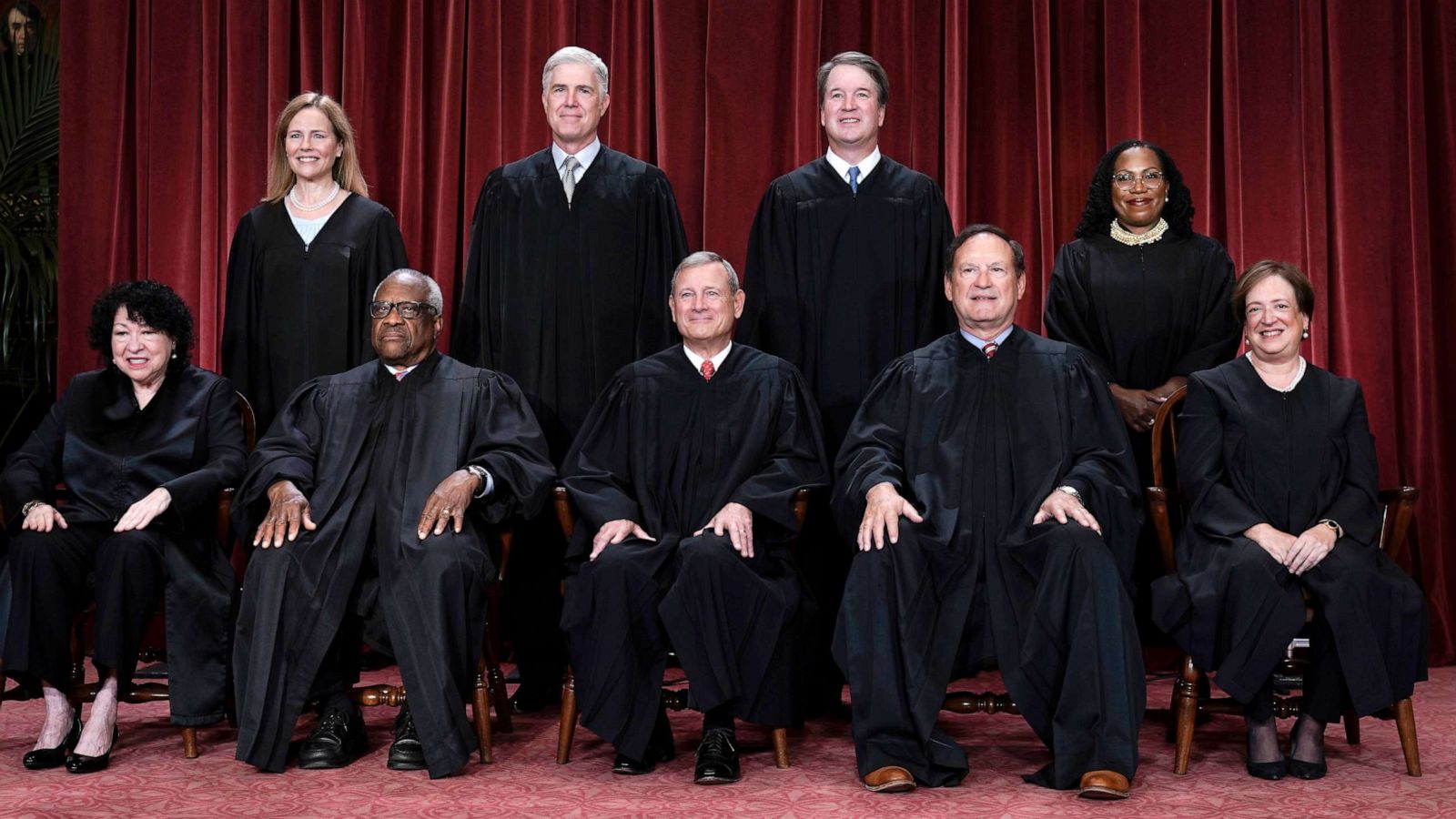

Two cases now sitting before the Supreme Court could fundamentally reshape the balance of power between the White House and the vast network of federal agencies that influence nearly every aspect of American life.
At the center of the legal battle is a question that sounds simple but carries enormous consequences: Can a president remove officials running independent federal agencies without having to satisfy restrictions imposed by Congress?
For nearly a century, the answer has generally been no.
That framework traces back to the Supreme Court’s 1935 decision in Humphrey’s Executor v. United States, a landmark ruling that limited presidential authority to remove members of the Federal Trade Commission. The decision became the foundation for the modern administrative state, allowing numerous federal agencies to operate with significant independence from direct presidential control.
Now, President Trump is asking the Court to reconsider that arrangement.
The most significant of the two cases is Trump v. Slaughter, involving former FTC Commissioner Rebecca Slaughter. After returning to office, President Trump removed Slaughter from her position, triggering a legal challenge over whether the statutory protections shielding FTC commissioners from removal violate the Constitution’s separation of powers.
The case goes directly at Humphrey’s Executor itself.
If the Court overturns or significantly narrows that precedent, the impact could extend far beyond the FTC. It could affect numerous agencies whose leaders currently enjoy protections from removal, giving future presidents substantially greater authority over officials who make regulations, enforce laws, and issue penalties affecting businesses and individuals across the country.
The Supreme Court has already signaled the importance of the case. The justices agreed not only to hear the dispute but also to consider whether Humphrey’s Executor should remain good law. They are also examining whether courts can order the reinstatement of officials after a president removes them from office.
That issue has become increasingly important as lower courts have repeatedly intervened in disputes between presidents and executive branch officials.
Meanwhile, the second case, Trump v. Cook, presents a narrower but equally significant question involving Federal Reserve Governor Lisa Cook.
Unlike the Slaughter case, Cook does not directly challenge the constitutionality of removal protections themselves. Instead, it focuses on whether President Trump had a legally sufficient reason to remove a Federal Reserve governor under existing law.
That distinction may provide the Court with a pathway to treat the Federal Reserve differently from other agencies.
The Fed occupies a unique position within the federal government. Its independence has long been viewed as critical to maintaining stability in financial markets, setting interest rates, and conducting monetary policy without political pressure from elected officials.
The Court’s handling of the case reflects that sensitivity. Rather than disposing of the matter through emergency proceedings, the justices placed it on their regular argument calendar and scheduled a full hearing before the entire Court.
Many court observers believe the justices may ultimately draw a distinction between the Federal Reserve and other independent agencies.
Such an outcome would allow the Court to expand presidential authority over much of the administrative state while preserving a special carveout for the central bank.
For supporters of President Trump’s position, the constitutional argument is straightforward. The president is elected by the American people and is charged with executing federal law. Agencies exercising executive authority, they argue, should ultimately answer to the elected chief executive rather than operate behind layers of bureaucratic insulation.
Critics contend that independent agencies serve as an important safeguard against political influence and provide continuity across administrations.
The Supreme Court has not yet issued its final decisions. But the stakes could hardly be higher.
If President Trump prevails in the Slaughter case, the nearly century-old wall separating many federal agencies from direct presidential oversight could be significantly weakened. Independent agencies would not disappear overnight, but their leaders could find themselves far more accountable to the president who occupies the Oval Office.
The Federal Reserve may remain an exception.
The rest of Washington’s administrative machinery may soon face a very different reality.
Leave a Comment