
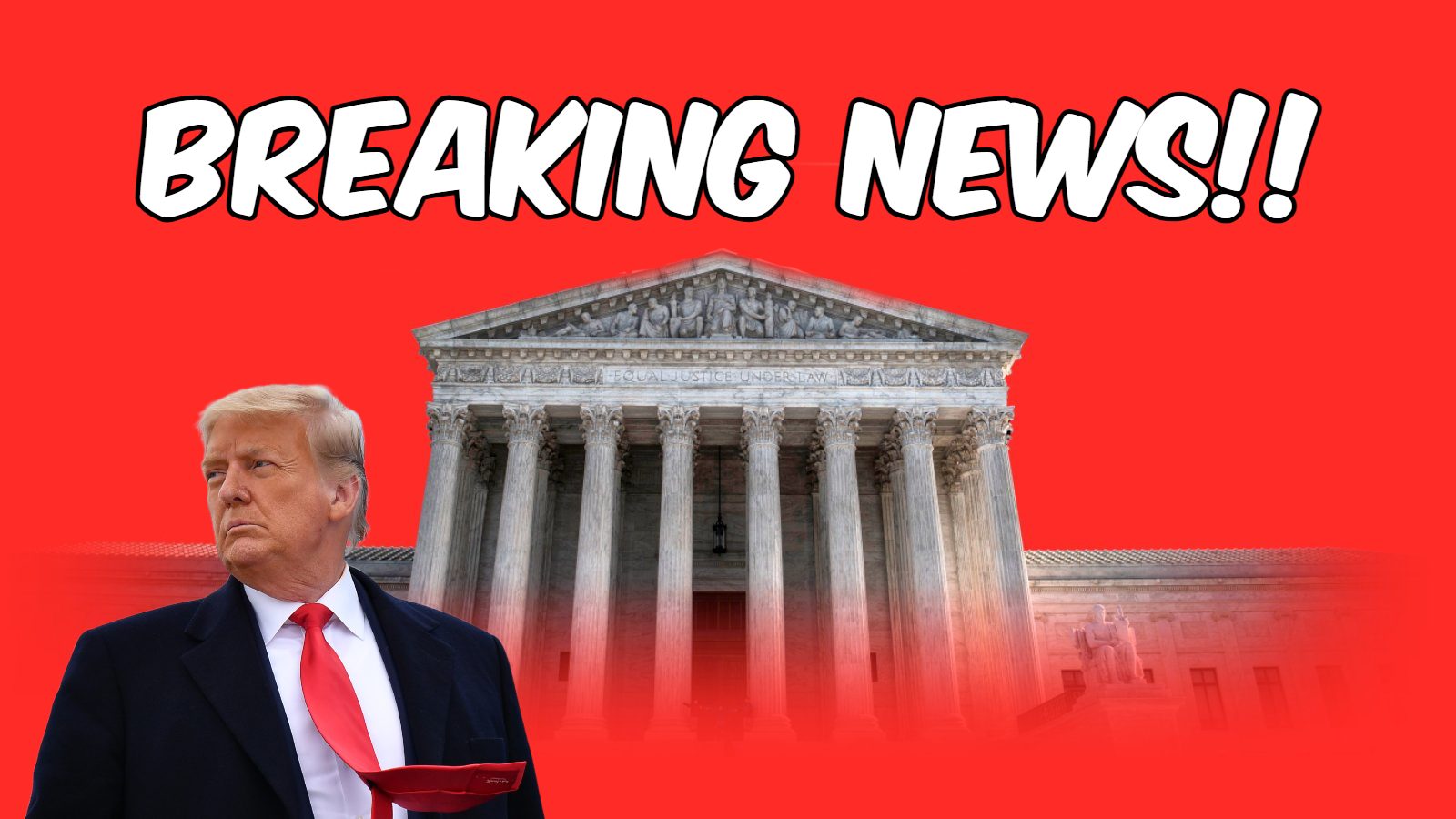

The Supreme Court delivered what supporters of President Trump are calling a significant victory for border security, issuing a 6-3 ruling that upholds the federal government’s authority to turn back asylum seekers before they step onto American soil. According to the decision, migrants who remain outside the United States have not legally “arrived” under federal immigration law and therefore cannot invoke the statutory protections available to those who have entered the country.
The ruling focused on the practice known as “metering,” a policy that was first implemented during the Obama administration to manage overcrowding at ports of entry. President Trump’s administration later expanded the practice as part of its broader effort to tighten border enforcement. Although the policy was eventually discontinued, the Court’s decision preserves the legal framework behind it should a future administration choose to reinstate it.
Writing for the majority, Justice Samuel Alito emphasized the ordinary meaning of the law’s language. “In ordinary speech, no one would say that a person ‘arrives in’ a place, for example, a house, a city, or a country, before the person enters that place,” Alito wrote. He continued, “An alien who is standing in Mexico does not ‘arriv[e] in the United States’ by attempting, and failing, to set foot in this country. An alien ‘arrives in the United States’ only when he crosses the border.”
Supporters of the ruling argue that the decision restores common sense to immigration enforcement by recognizing the distinction between reaching a port of entry and actually entering the United States. They contend that federal authorities must have the ability to control access to the border instead of being compelled to process every individual who presents themselves for asylum.
The Court’s liberal wing strongly disagreed. Justice Sonia Sotomayor read her dissent from the bench, arguing that immigration law requires officials to inspect individuals who arrive at ports of entry and determine whether they qualify for admission or asylum. She criticized the majority’s interpretation, writing that it focused too heavily on a single word while ignoring the broader context of the statute.
The lawsuit challenging the policy was filed in 2017 by the immigrant-rights organization Al Otro Lado and several asylum seekers after metering was implemented to address congestion at border crossings in Southern California.
For supporters of President Trump, the ruling represents another affirmation that the executive branch has broad authority to secure the nation’s borders and enforce immigration law. They argue that maintaining clear legal boundaries is essential to preserving an orderly immigration system and ensuring that the federal government, rather than illegal crossings or administrative backlogs, determines who is permitted to enter the United States.
Leave a Comment