
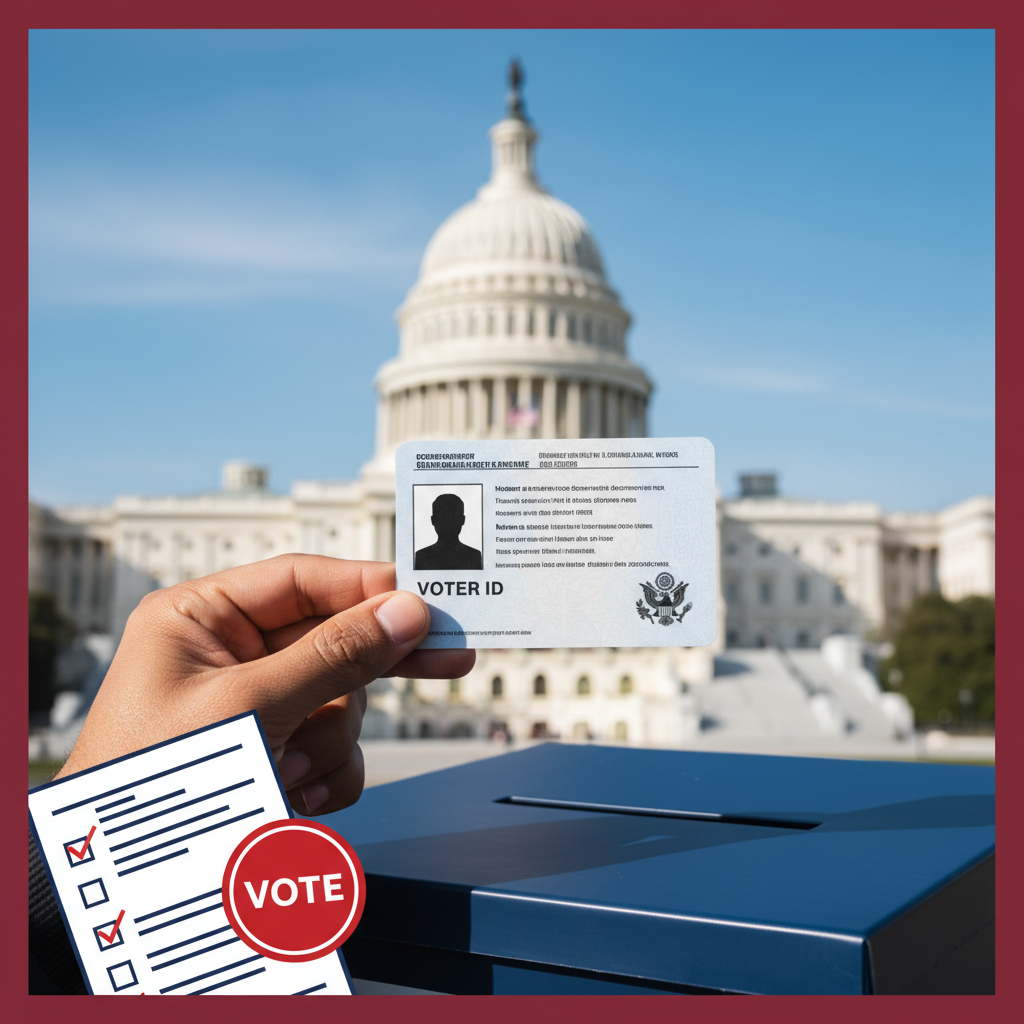

Ohio Gov. Mike DeWine is facing renewed criticism from election-integrity advocates after vetoing legislation that would have required absentee voters to include a copy of their photo identification when casting ballots by mail. The Republican-backed proposal was designed to strengthen voter verification, but DeWine argued the additional requirement would create unnecessary obstacles for voters without providing a meaningful boost to election security.
House Bill 472, sponsored by state Rep. Jodi Salvo, would have taken effect in 2027 and required absentee voters to submit a photocopy of a valid photo ID along with their completed ballot. Supporters viewed the measure as a common-sense safeguard that would bring absentee voting more in line with Ohio’s existing voter ID requirements for in-person voting.
Instead, DeWine rejected the proposal, saying Ohio already has one of the nation’s most secure election systems and that the bill risked discouraging lawful voters from participating.
“While on paper one can make the case that there is a pathway for absentee voters to overcome the hurdles to voting that this bill creates, if the net result is that a number of voters will be deterred from making the attempt to vote, that result is hurtful, not helpful, to our efforts to include all of our citizens in the most basic act that involves them in our democratic process,” DeWine wrote in his veto message.
The governor also expressed disappointment that the legislation included a provision allowing voters to apply for absentee ballots online, a reform he praised but said he could not preserve because it was packaged with the voter ID requirement.
The decision is likely to frustrate conservatives who have spent years advocating for tighter election procedures following widespread concerns over mail-in voting and election administration. Many supporters of stricter voter ID laws argue that requiring proof of identity for absentee ballots is a straightforward way to improve public confidence in elections while ensuring that every ballot is cast by an eligible voter.
Opponents of additional absentee voting requirements have argued that existing safeguards already protect the integrity of Ohio elections and that adding new documentation requirements could discourage participation, particularly among elderly voters, military personnel, and others who regularly vote by mail.
Beyond the election bill, DeWine vetoed House Bill 173, legislation dealing with submetered utility services. The governor said the bill would have weakened consumer protections by exempting certain submetering companies from the definition of a public utility while not providing customers with the same protections enjoyed by traditional utility consumers.
At the same time, DeWine signed several other measures into law covering education, transportation, veterans’ services, energy policy, oil and gas regulation, carbon capture technology, and employment certifications. He also issued a line-item veto in the state’s appropriations bill to preserve funding for outdoor recreation projects tied to the Baileys Trail System in Appalachian Ohio, arguing the investment supports economic development in the region.
While the governor defended his vetoes as balanced policy decisions, House Bill 472 is expected to generate the most debate. For supporters of stricter election safeguards, the proposal represented another step toward reinforcing voter confidence through stronger verification measures. For DeWine, however, the potential burden on absentee voters outweighed what he viewed as limited additional security benefits, setting up yet another policy disagreement between the governor and many conservatives within his own party.
Leave a Comment