
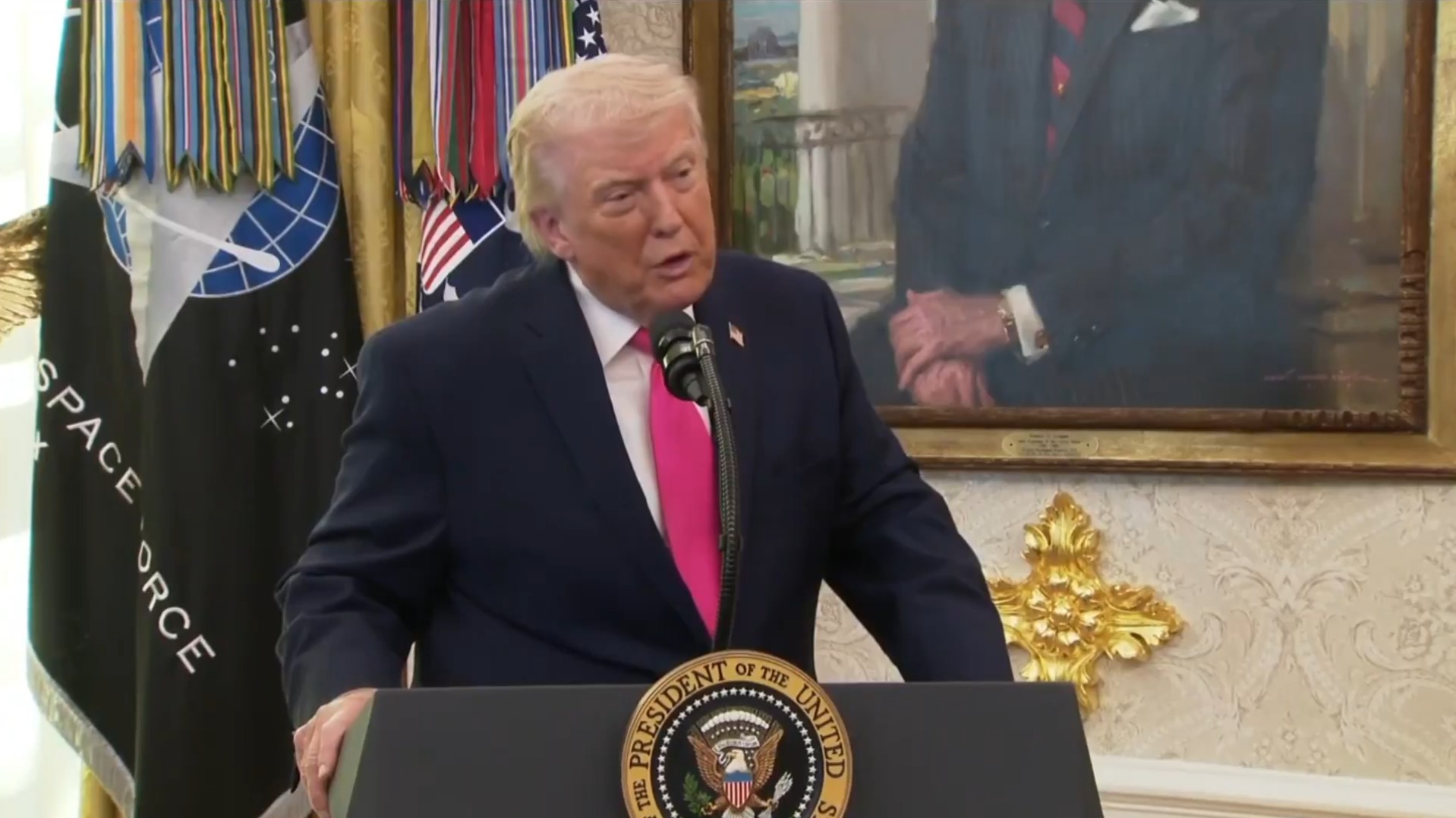

President Trump turned a promise into action Thursday night, announcing during a primetime address that his administration had officially declassified and released intelligence related to election security and transparency. After years of calls for more public disclosure about what federal agencies knew regarding election infrastructure, the White House says Americans can now examine the underlying material for themselves.
The timing was impossible to miss. As President Trump addressed the nation, the White House had already launched a public portal containing downloadable ZIP files packed with hundreds of pages of documents. Instead of promising future transparency, the administration flipped the switch while the speech was still underway, giving the public immediate access to the material.
According to the White House, the collection covers findings developed between January 2020 and June 2026. The documents are organized into four major categories: alleged vulnerabilities in electronic voting and ballot-counting systems, China’s alleged acquisition and exploitation of American voter data, a Michigan voter-registration investigation, and records concerning noncitizens appearing on state voter rolls.
President Trump said the material was assembled by the White House Government Transparency Task Force along with staff from the President’s Intelligence Advisory Board. He added that intelligence agency leaders reviewed the findings before the decision was made to declassify the documents.
The administration argues the release contains evidence that raises significant questions about election security and claims important intelligence had not previously been made available to the public. Those are substantial claims, and the debate over what the documents actually demonstrate has already begun.
CBS News independently confirmed that the White House was releasing the material while President Trump was speaking. According to its reporting, administration officials identified several key areas covered by the release, including alleged voting machine vulnerabilities, the Michigan voter-registration investigation, noncitizen registrations, security updates implemented ahead of the 2026 midterm elections, and shortcomings in information sharing across government agencies.
At the same time, CBS noted an important limitation. A White House official reportedly said the documents are not expected to claim that voting machines were hacked during the 2020 election or that certified vote totals were changed. Instead, the released material focuses on vulnerabilities, intelligence findings, registration issues, foreign activity, and security concerns. The outlet also pointed out that voter-registration data is often publicly available or commercially accessible, meaning access to such information alone does not establish election fraud.
The release also stands in sharp contrast to previous government assessments. In 2021, the Office of the Director of National Intelligence released a declassified assessment stating that intelligence agencies had found no indication that any foreign actor altered voter registration information, ballots, vote tabulation, or reported election results during the 2020 election. That report also revealed differing opinions among intelligence analysts regarding China’s intentions, with most concluding Beijing did not attempt to change the election outcome while a minority believed China took limited steps aimed at undermining President Trump’s reelection campaign.
Now the Trump administration is presenting a different narrative, arguing that critical intelligence remained hidden from public view. Whether the newly released documents ultimately support those claims will depend on what independent analysts, journalists, lawmakers, and the public discover as they examine the files.
What cannot be disputed is that the long-promised document release has now happened. The portal is live, the files are available for download, and a new chapter in the debate over election transparency has officially begun.
Leave a Comment