

President Trump is taking another swing at birthright citizenship, but this time the White House is using a scalpel instead of a sledgehammer.
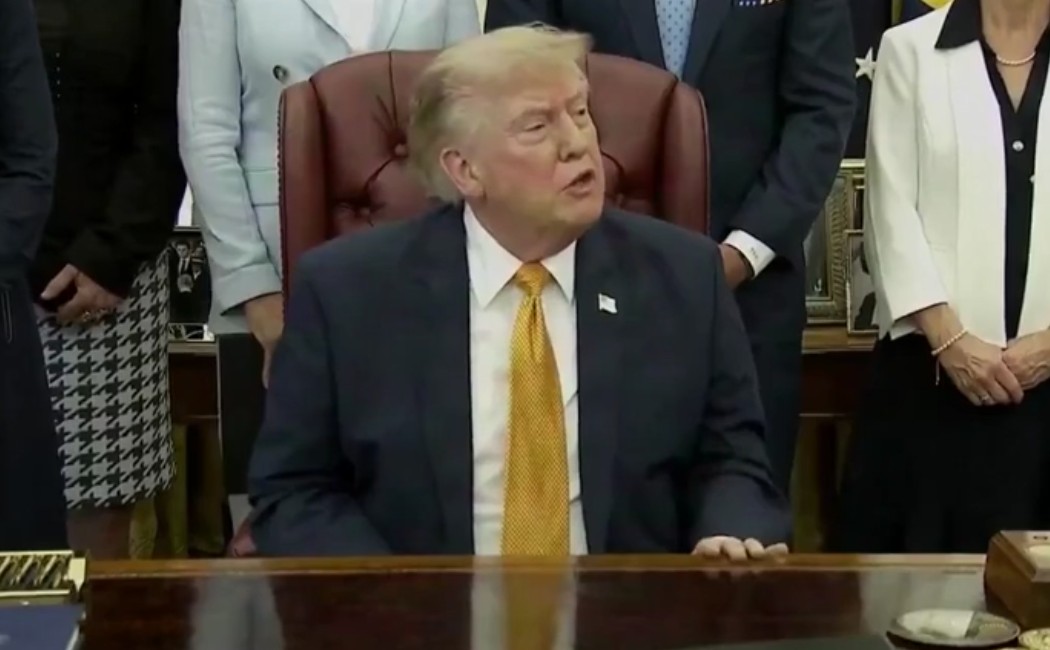
During an Oval Office signing ceremony Thursday, President Trump signed two narrower executive actions aimed at citizenship questions and the practice commonly known as “birth tourism.” The new strategy follows the Supreme Court’s June ruling against the administration’s broader approach.
“Our country suffers because of it, and we’re ending it a different way,” President Trump said, calling the Court’s earlier decision “very unfair.”
That “different way” matters.
Rather than simply repackaging the original policy and waiting for another federal judge to hit the copy-and-paste button on an injunction, the administration is attempting to build its new approach around specific legal authorities and narrower categories.
The first action identifies categories of children the administration argues could fall within historical exceptions to automatic citizenship. The second directs the Secretary of State and Secretary of Homeland Security to use existing immigration authority against birth tourism, particularly organized schemes in which foreign nationals enter the United States intending to give birth and secure American citizenship for their children.
The White House says it wants immigration authorities to stop travelers involved in fraudulent schemes before the planned birth occurs, while also targeting businesses and syndicates that organize such arrangements.
That second avenue could prove especially significant because it shifts part of the fight away from what happens after a child is born and toward whether a foreign national should have been admitted into the country under those circumstances in the first place.
White House Deputy Chief of Staff Stephen Miller pointed to Section 215(a) of the Immigration and Nationality Act while defending the administration’s position. The basic argument is that the executive branch already possesses substantial authority over the rules governing the entry and departure of noncitizens.
In other words, if somebody is entering under false pretenses as part of a commercial scheme, the administration argues that Washington does not have to sit around pretending nothing unusual is happening until after the citizenship consequences become irreversible.
The constitutional side of President Trump’s strategy will undoubtedly produce another courtroom battle.
According to the administration’s description, the new framework focuses on narrower circumstances involving certain foreign-government personnel, people designated as alien enemies, particular territorial questions and deliberate commercial birth-tourism fraud.
Critics are likely to argue that President Trump is stretching historically limited exceptions beyond their constitutional boundaries. The administration’s answer is essentially that the Supreme Court’s ruling did not eliminate every exception or strip the executive branch of its separate immigration-enforcement powers.
And that is where this gets interesting.
The White House is not acting as though the previous Supreme Court decision disappeared. Instead, President Trump’s team is attempting to operate within what it believes are the openings left by that ruling while simultaneously relying upon statutory immigration powers.
It is a more sophisticated strategy than simply issuing the same sweeping order with slightly different wording.
The birth-tourism crackdown also gets at a broader question Americans have every right to ask: Should citizenship effectively become the prize at the end of a commercial transaction arranged specifically to exploit U.S. immigration rules?
There is nothing unreasonable about expecting immigration law to distinguish between legitimate travel and organized efforts to manipulate the system.
The harder legal battle will concern the citizenship categories themselves. Courts will have to determine whether President Trump’s interpretation fits within the Constitution, federal statutes and the Supreme Court’s ruling. Lawsuits are about as predictable here as humidity in Washington during August.
But President Trump’s response demonstrates something his opponents have repeatedly underestimated. Losing one legal argument does not require an administration to abandon its policy objective entirely. Presidents can examine what authority remains, adjust policy and pursue narrower measures capable of surviving judicial review.
President Trump lost the broader route. Now his administration is pursuing a more targeted one, combining historical citizenship exceptions with existing immigration authority and aggressive enforcement against birth-tourism operations.
The courts will determine where the constitutional boundaries ultimately sit. In the meantime, President Trump has made clear that the June ruling ended one strategy, not the larger fight.
Leave a Comment