
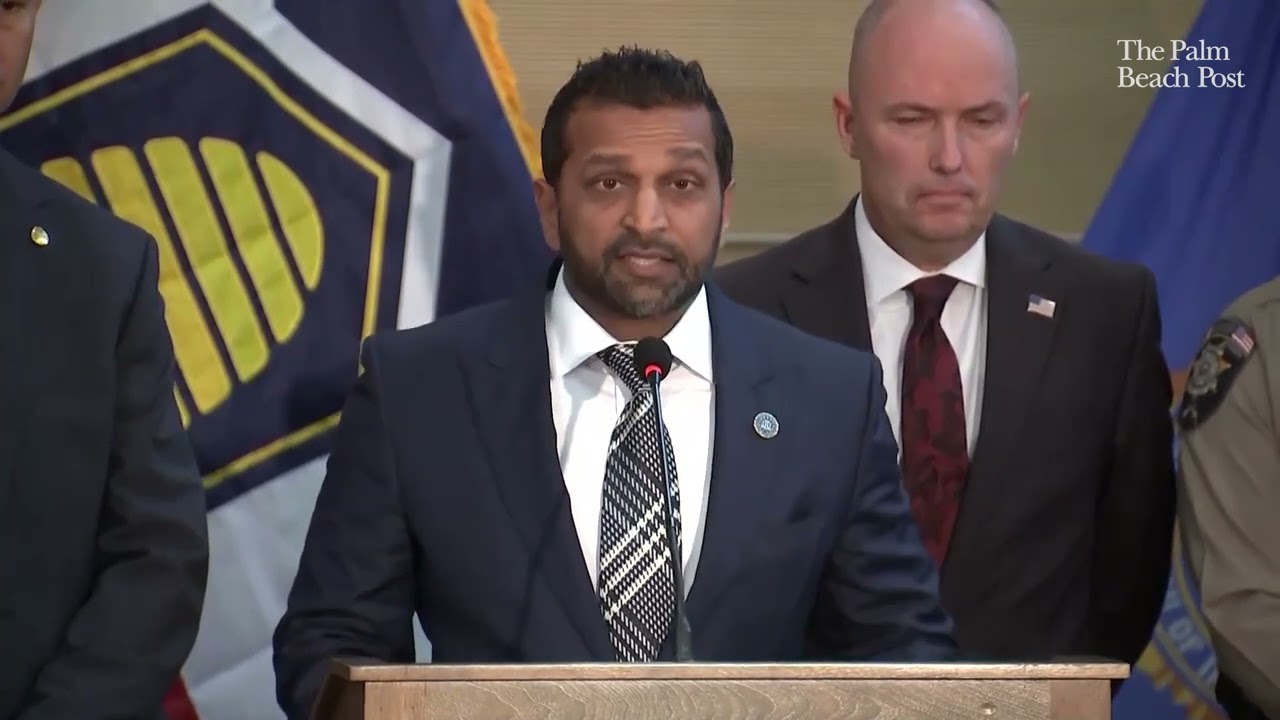

Andrew Bailey, one of FBI Director Kash Patel’s highest-ranking deputies, is leaving the bureau after just over a year in the job, creating another vacancy near the top of an agency that has undergone substantial leadership and personnel changes.
Bailey, the former Republican attorney general of Missouri, announced Monday that he will step down as FBI co-deputy director and return to his family in Missouri. His resignation takes effect October 2.
“With great pride in what we have accomplished, I am announcing that I am stepping down to return to my family in Missouri,” Bailey said.
Bailey also made clear publicly that he continues to support Patel’s leadership.
“I am confident Director Patel will continue to reform the FBI, combat violent crime, defend the homeland, ensure strong organizational accountability, and restore public trust in this institution of excellence,” Bailey said.
His departure closes an unusual chapter in FBI leadership.
Bailey joined the bureau in September 2025 after resigning as Missouri attorney general. He was appointed co-deputy director alongside Dan Bongino, creating a leadership arrangement that was unprecedented at the FBI. Bongino subsequently departed, and Bailey later shared the co-deputy position with longtime FBI official Christopher Raia.
Bailey brought a very different résumé to FBI headquarters than a traditional deputy director. Before becoming Missouri attorney general in 2023, he served in the U.S. Army and worked in Missouri state government. His appointment placed another political appointee near the top of an organization where senior operational positions have traditionally been occupied by longtime bureau officials.
During his FBI tenure, Bailey became publicly involved in several major investigations and enforcement initiatives. FBI records show him appearing at press conferences involving violent crime and public corruption operations.
His resignation also arrives amid broader changes inside the bureau under Patel. Reporting from multiple outlets has described departures, reassignments and disputes involving senior FBI personnel. Some reports have also described friction between Bailey and Patel, although Bailey’s own resignation statement did not cite disagreements with the director as his reason for leaving. CBS News reported, citing unnamed sources, that Bailey was sometimes excluded from meetings and had a strained relationship with Patel.
Bailey’s public explanation was straightforward: he wants to return to Missouri and spend more time with his family.
Patel responded by praising Bailey’s service, saying his “fantastic contribution instituting critical reforms” would continue to have an impact after his departure.
The FBI has not publicly announced whether Bailey will be replaced or whether Raia will remain as the bureau’s sole co-deputy director.
For an agency already experiencing significant changes in leadership and organization, Bailey’s exit adds another transition. His departure may have been announced as a family decision, but it leaves Patel with another important personnel question as he continues reshaping the FBI.
Leave a Comment