
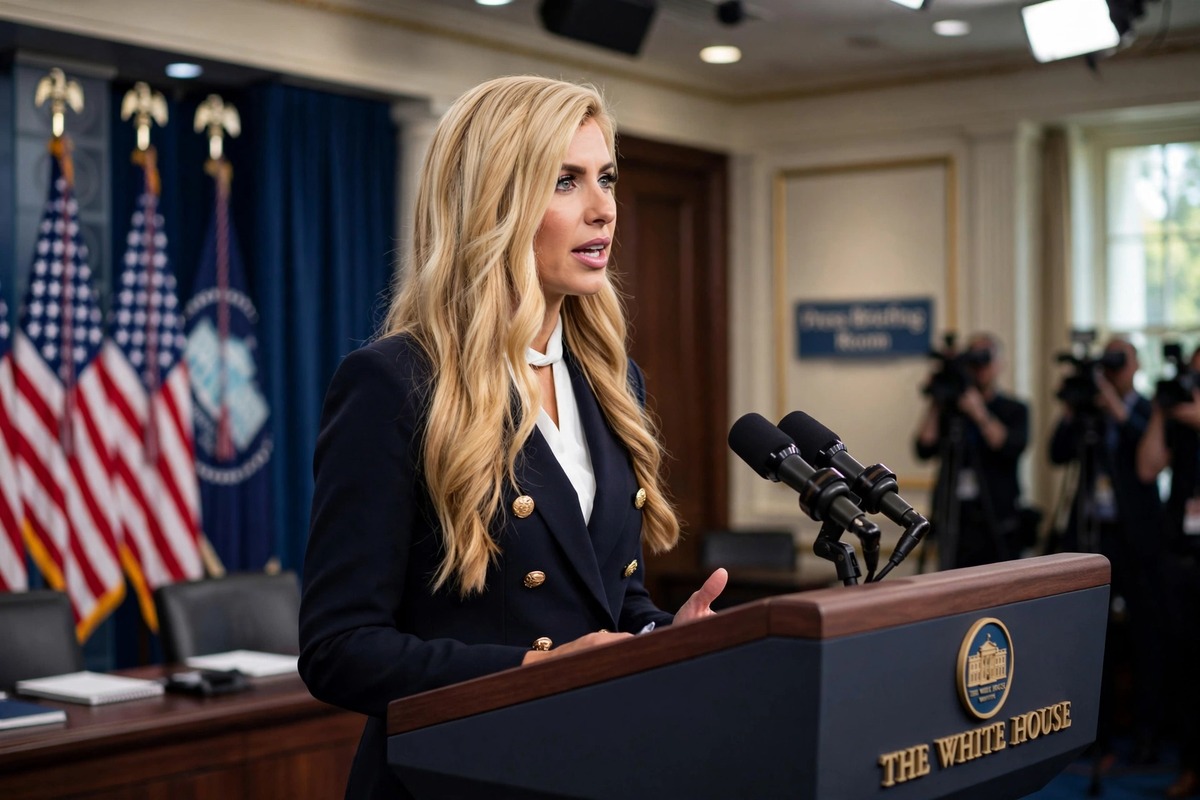

Katie Zacharia is reportedly transitioning out of her job as White House press secretary just one week after President Trump announced her appointment, and only three days after her first briefing from the podium. A senior White House official gave that description to Fox News correspondent Peter Doocy on Friday. The wording matters because the White House has not publicly named a replacement, and President Trump denied that Zacharia was fired. For now, Washington has a press secretary situation living somewhere between a resignation and a staffing announcement.
This is an astonishingly fast turn for one of the most visible jobs in government. Zacharia stepped into the role after Karoline Leavitt’s departure and immediately faced the full force of political media scrutiny. The White House podium is not exactly a quiet desk job. Every answer can be clipped, replayed and turned into the day’s outrage cycle before the person giving the answer has even left the room.
President Trump discussed the situation with reporters on the White House lawn before leaving for Georgia. He said he wanted Zacharia to have a good life, argued that she had been treated unfairly and said she had been “brutalized” by the press. He also said, “I think you’re better off being happy.” President Trump added, “There’s nothing easy about this job,” while questioning whether the position was right for her.
That is a notably personal explanation for a sudden staffing change. President Trump’s comments do not sound like an attempt to publicly humiliate a departing staffer. They sound like a president who believes the pressure surrounding the job may have become too much for Zacharia and that stepping away could be better for her and her family.
When reporters asked who might replace Zacharia, President Trump named no candidate and said many people would want the job. The Associated Press described his remarks as casting doubt on her future without presenting a formal resignation announcement or identifying a successor. That is not exactly the kind of orderly transition Washington usually claims to prefer, but political staffing rarely follows a neat calendar.
Zacharia’s first week had already been rough. Her inaugural briefing took place Tuesday, just days after President Trump announced her selection. She fielded only a handful of questions, and critics quickly focused on the briefing’s brevity as well as questions about her legal credentials. Fox News reported Thursday night that Zacharia had been on the job for less than eight hours before entering the briefing room. She defended her performance and said she had done her best with limited preparation time.
Zacharia also pushed back against criticism that she took questions only from conservative outlets. She pointed to the Daily Mail as one of the organizations she called on. She said the short briefing was planned because President Trump would answer reporters’ questions later that morning. Whether that explanation satisfied the press corps is another matter, since the media’s outrage machine rarely offers a grace period for new officials.
The same interview addressed Zacharia’s legal background. She confirmed that she failed the California bar exam after graduating from Pepperdine Law, did not retake it, and said she had expected to move to China after graduation. Because of that plan, she said the result seemed inconsequential to her at the time. Those details became another point of criticism during a debut that was already under a microscope.
The press secretary’s job is one of the most unforgiving positions in government. A new official can enter the room with almost no runway, face hostile questioning immediately and then watch every sentence become political ammunition. The political class demands instant perfection and then acts surprised when someone has not mastered a brutal public job after a few days.
For now, the official language remains “transitioning out,” not fired. The White House has not announced a replacement, and President Trump has not named a successor. Zacharia’s tenure at the podium appears headed toward an extraordinarily short ending, while the administration decides who is willing to step into a job where even a routine briefing can become a national spectacle.
Leave a Comment