
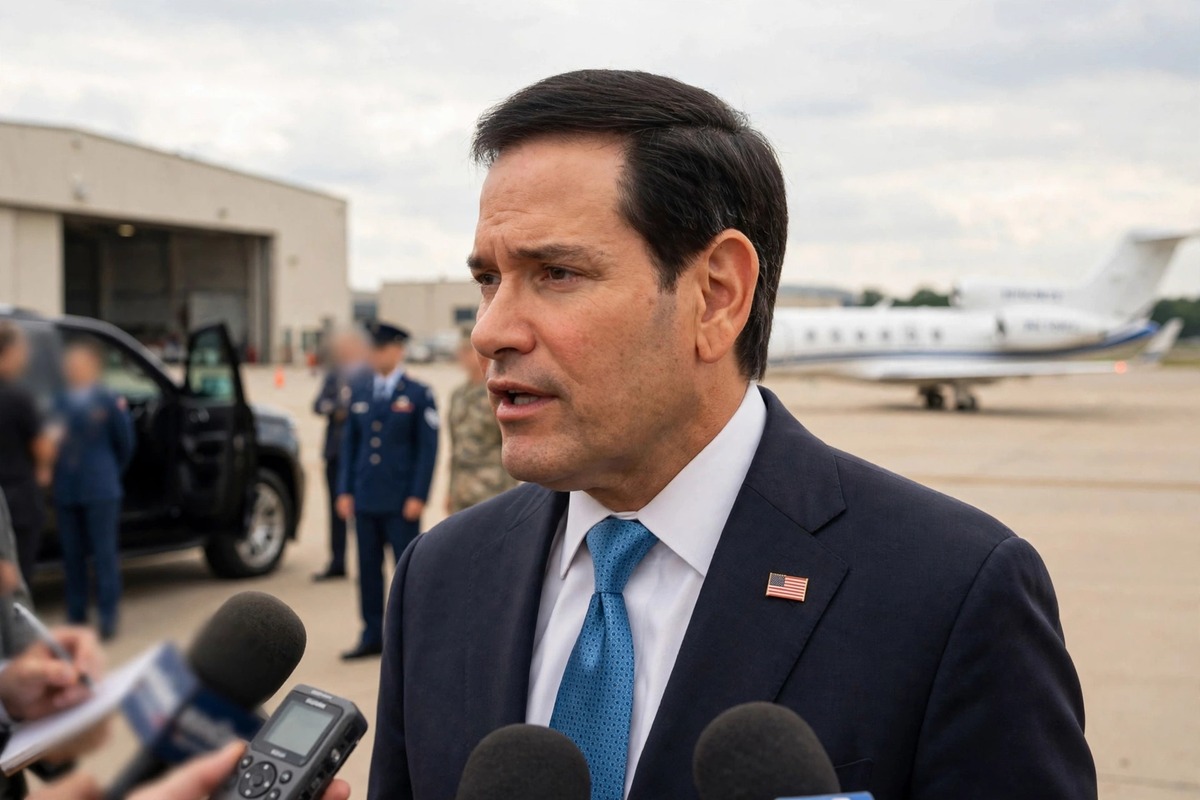

According to the WLT Report, Secretary of State Marco Rubio used a Friday night address before conservative lawyers to deliver a message the movement needed after a bruising election: one bad night does not erase a righteous cause. The political class loves to treat every election like a series finale, complete with panic, recriminations, and instant presidential speculation. Rubio took the opposite approach, arguing that political movements are built by people willing to keep working when the scoreboard looks ugly.
Rubio pointed to the history of the Federalist Society, tracing its rise back to 1982. Conservatives were demoralized, Ronald Reagan’s standing had slipped, and a small group of law students decided the country’s legal culture could still be changed. Antonin Scalia was then a 46-year-old law professor, not yet the conservative legal giant he would become.
The lesson was larger than nostalgia. The Federalist Society did not transform American law by waiting for the next election or hoping a single candidate would fix everything. It invested in ideas, institutions, students, lawyers, judges, and a constitutional worldview over decades. That kind of patience may not produce a dramatic cable-news moment, but it has a better chance of producing results that last.
Rubio explained that judicial appointments were never the entire project. Conservatives also have to compete in universities, newsrooms, corporate boardrooms, churches, civic groups, and the culture that shapes how Americans understand their country. He contrasted that patient institution-building with the Left’s long march through those same institutions. Winning the White House or Congress cannot, by itself, reverse a culture shaped elsewhere every day.
“The Federalist Society victories were built on this insight. It’s not just about placing good judges in positions to interpret law, it’s about shaping the world in which they do so, about shaping the norms and values, the ideas and beliefs, the expectations, and the assumptions that underpin how they think and reason and act.”
The official event record preserved by DVIDS identifies Rubio’s November 13 keynote at the Federalist Society’s National Lawyers Convention in Washington. The roughly 84-minute program included his prepared Barbara K. Olson Memorial Lecture and questions from law students. Rubio connected the conservative legal movement’s long-term work with a broader defense of American sovereignty and national power. He discussed faith, assimilation, the economy, Iran, and the responsibility of Americans to pass a stronger country to their children.
Rubio also criticized the modern “rules-based international order,” arguing that it has too often become a weapon for global bureaucrats and activist judges who claim authority over sovereign nations without answering to their people. That was not a case for American retreat. It was a case for an American government that remembers whom it serves, while recognizing that foreign governments do not apologize for pursuing the interests of their own citizens.
The Washington Examiner described the speech as Rubio’s first major address since the midterm elections. Although some Republicans have floated him as a possible 2028 contender, he offered no declaration that he was leaving the administration or launching a presidential campaign. Instead, he made the case for perseverance, coalition-building, and work that reaches beyond a single election cycle. Rubio was not asking conservatives to ignore defeat. He was warning them not to confuse a setback with the death of the movement. In a political culture addicted to instant victories, that may be the most practical advice available: keep building, even when the headlines are having a tantrum.
Leave a Comment