
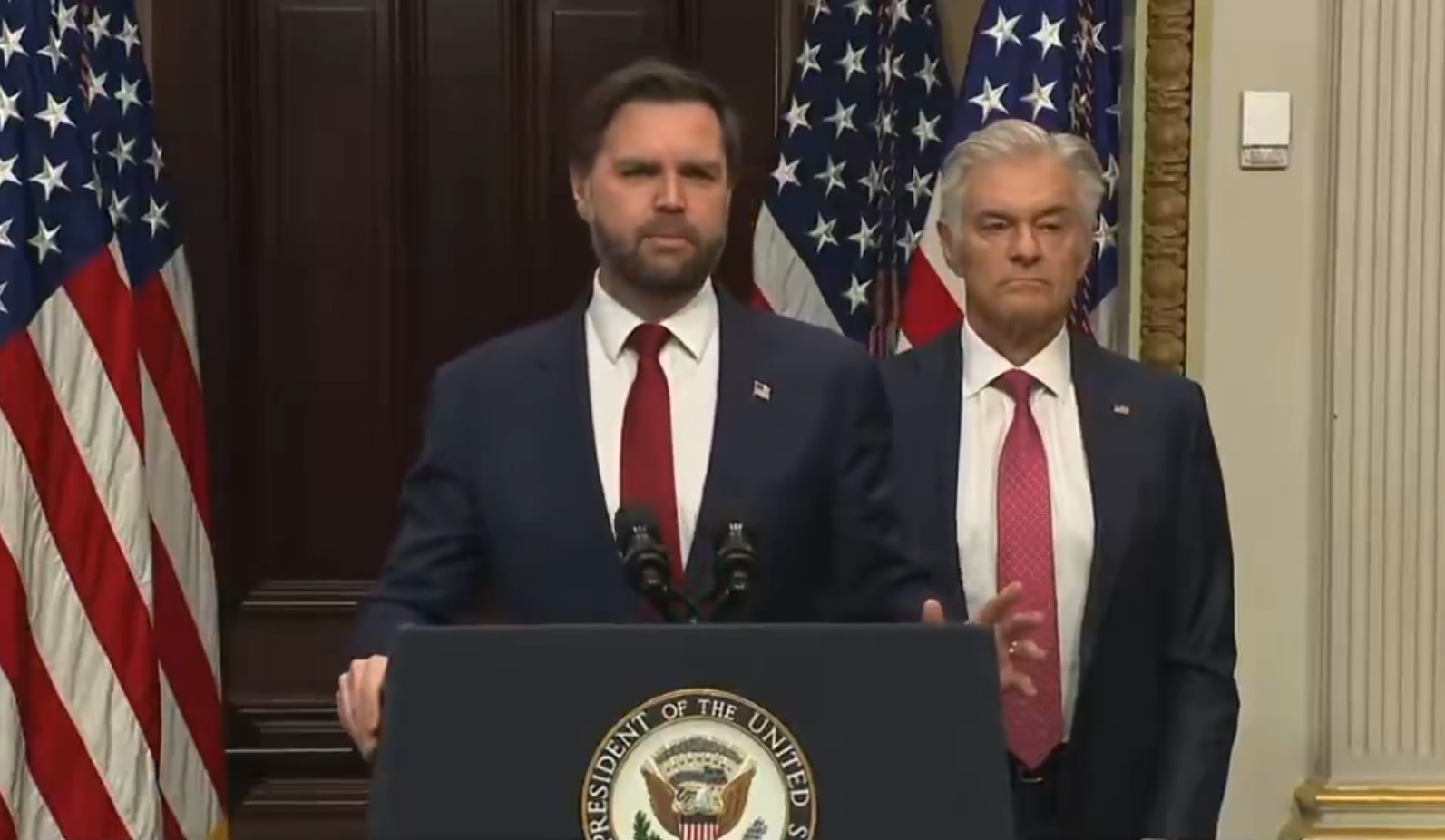

Vice President JD Vance is stepping into a role that a lot of Americans have been wondering about for years, namely, who is actually watching the money. Turns out, somebody finally is. After Donald Trump tapped him to lead a new anti-fraud task force, the administration is rolling out a crackdown that looks less like the usual bureaucratic shuffle and more like a long-overdue audit with teeth.
And here is the twist that probably has a few career paper-pushers sweating, they are bringing artificial intelligence into the mix. Not the buzzword kind that gets tossed around at tech conferences, but a system designed to flag suspicious Medicare and Medicaid claims in real time and shut off funding fast. That last part matters, because historically the government has been about as quick as molasses in January when it comes to stopping fraud once it starts.
Working alongside Mehmet Oz at the Centers for Medicare and Medicaid Services, the task force is already showing what this approach can do. In Los Angeles alone, 70 hospice and home health providers were flagged as high-risk and had their funding paused within a week. A week. That is practically light speed compared to the old system, where bad actors could keep billing for months or even years while paperwork crawled through the system.
The numbers coming out of Minnesota tell an even bigger story. Earlier this year, Vance and Oz announced that $259.5 million in Medicaid funds would be withheld over fraud concerns. That is not a rounding error, that is a massive chunk of taxpayer money that would have otherwise disappeared into a maze of questionable claims. And this is tied to a broader history of fraud in the state, including the infamous Feeding Our Future case, where investigators uncovered roughly $250 million in bogus pandemic-related claims and charged 78 individuals. Prosecutors have hinted the total could climb into the billions, which is the kind of number that makes you wonder how nobody hit the brakes sooner.
President Trump has not exactly been subtle about where he thinks a lot of this fraud is concentrated. He pointed out that many of the worst cases seem to pop up in Democrat-run states, while also making it clear that no state gets a free pass. That alone is a shift from the usual political dance where accountability tends to stop at party lines.
The real game changer here is the AI-driven system. Instead of waiting for someone to manually dis-enroll a shady provider, the system can flag patterns, block suspicious claims, and escalate cases almost immediately. It is proactive instead of reactive, which is exactly how you deal with fraud that evolves as quickly as the people committing it.
Vance’s team is now looking to scale this nationwide, recruiting CMS technologists to expand the system across the country. The goal is pretty straightforward, stop the bleeding before it turns into another billion-dollar headline.
There is also a broader message baked into all of this. When Vance talks about a “War on Fraud,” it is not just rhetoric. It is an acknowledgment that for years, the system has been exploited by people who saw government programs as an easy payday. Meanwhile, the taxpayers funding those programs and the people who actually need them were left holding the bag.
And if this effort keeps moving at the pace it has started, a lot of those fraudsters might finally find the money tap turning off a lot sooner than they expected.
Leave a Comment