
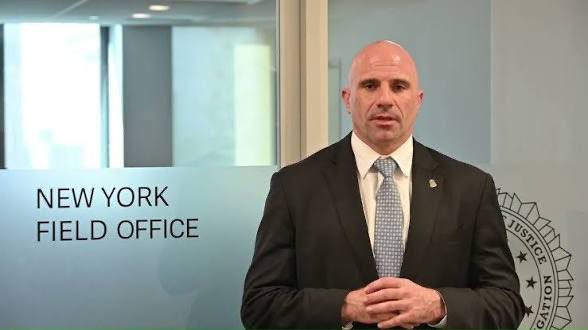

After the departure of Dan Bongino from his role as deputy director at the FBI, the bureau wasted no time naming a replacement, and the choice says a lot about where things are headed. Christopher Raia, a longtime FBI agent who has been running the powerful New York Field Office, is stepping into the role of co-deputy director alongside Andrew Bailey. He is expected to report to Washington, DC, as early as Monday.
Let’s start with the obvious. Raia is not a political media figure. He is not a cable news regular. He is not a former podcaster who terrifies the permanent bureaucracy. He is a career FBI agent who has been with the bureau since 2003. For the institutional FBI, that matters. For better or worse, this appointment signals a return to the traditional structure the bureau prefers, where the number two job is held by someone who came up through the ranks.
This move also fulfills a promise that FBI Director Kash Patel reportedly made earlier this year to the FBI Agents’ Association. According to those discussions, Patel assured leadership that an active agent would hold the deputy director role. That obviously did not happen when Bongino took the job, and the tension never really went away. Even after former Missouri Attorney General Andrew Bailey was brought in as a co-deputy director, there still was not an active agent in that position. Now there is.
The New York Post reports that Raia was asked to take the role and accepted. As co-deputy director, he will help manage an agency of more than 30,000 employees, no small task considering the FBI’s battered public reputation. Raia previously served as the bureau’s top counterterrorism official before leading the New York Field Office, which gives him serious operational credentials. That background is likely why he was tapped, especially with global threats still looming.
Interestingly, this appointment means the FBI’s unusual three person leadership structure is sticking around. That setup was put in place when Bailey was hired amid reports of infighting tied to the bureau’s handling of the Jeffrey Epstein investigation. Keeping that structure suggests the internal power struggles are not fully resolved, no matter what the press releases claim.
What happens next is the real question. It is still unclear who will replace Raia in New York, one of the most influential field offices in the country. That decision will matter just as much as this one.
Bongino’s exit marked the end of a disruptive chapter for the FBI, one that clearly made the old guard uncomfortable. Raia’s arrival looks like an olive branch to career agents who want stability and predictability. Whether that translates into real reform or just a quieter status quo is something Americans will be watching closely.
Leave a Comment