
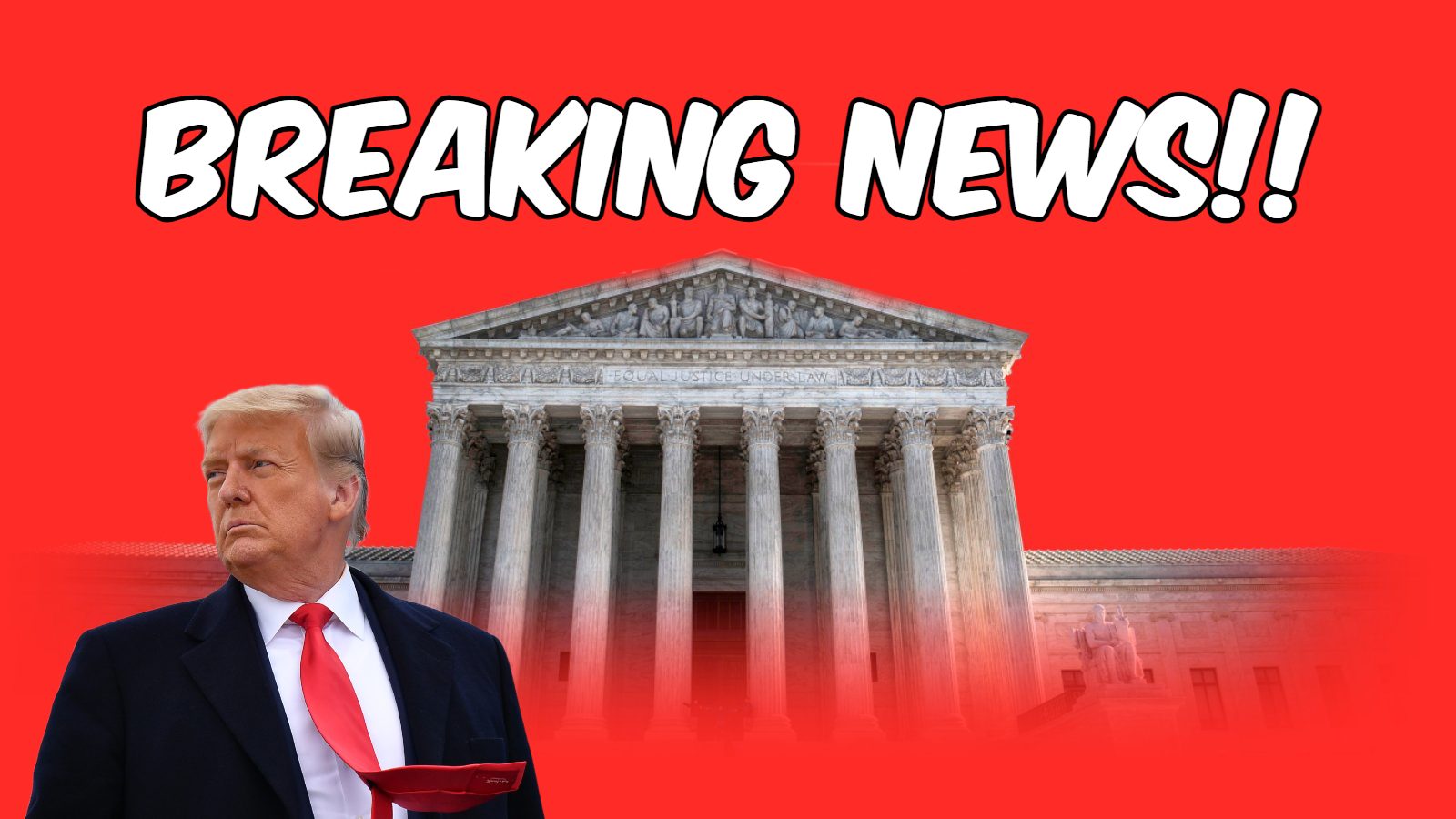

The Supreme Court just dropped a political earthquake, and the timing could not be more perfect. The justices announced they will officially take up the question of whether President Trump has the authority to end birthright citizenship for children born on American soil to parents who are in the country illegally. This is the case everyone knew would eventually land in front of the Court, but few expected them to take it up this quickly. It is huge.
On day one of his second term, President Trump signed an Executive Order stating that the United States will not recognize automatic citizenship for children born to illegal aliens. Predictably, lower courts pounced on it within hours. For nearly two years the issue has been tied up in legal knots, shuffled from district courts to appellate courts, with activist judges trying to block the policy everywhere it landed. Now the Supreme Court is stepping in, and this time there is no hiding behind local injunctions or clever procedural maneuvers.
CNN called it the biggest Supreme Court case of the year. The Guardian practically had a panic attack reporting on it, warning that the order would “transform” the interpretation of a 19th century provision. They of course left out the obvious part, which is that the current reading of birthright citizenship was stretched far beyond what the framers intended. Nobody writing the 14th Amendment was imagining a global airport where foreign nationals could stroll in, have a child, and secure citizenship as an inheritance prize.
According to The Guardian, multiple lower court judges issued injunctions claiming the policy violated the 14th Amendment and federal statute. That became the basis for a class action lawsuit filed by parents whose children were shielded by those rulings. Trump appealed every blockade, and earlier this year the Supreme Court already smacked down the habit of issuing nationwide injunctions. They left the core question unresolved though, and that is exactly the question they are now preparing to answer.
The justices will hear the Justice Department’s appeal of a ruling that prevented agencies from enforcing Trump’s directive. At stake is whether the Constitution truly mandates automatic citizenship for the children of people who are in the United States illegally, or whether Congress and the executive branch retain the authority to define what citizenship means in the modern world.
If the Court rules in Trump’s favor, the impact on immigration will be massive. It would shut down one of the biggest incentives for illegal entry, reshape federal policy for generations, and restore a basic idea that used to be common sense. Citizenship is not an accident. It is a commitment.
This case is about far more than paperwork. It is about sovereignty, responsibility, and whether the country gets to decide its own future. The stakes could not be higher.
Leave a Comment