
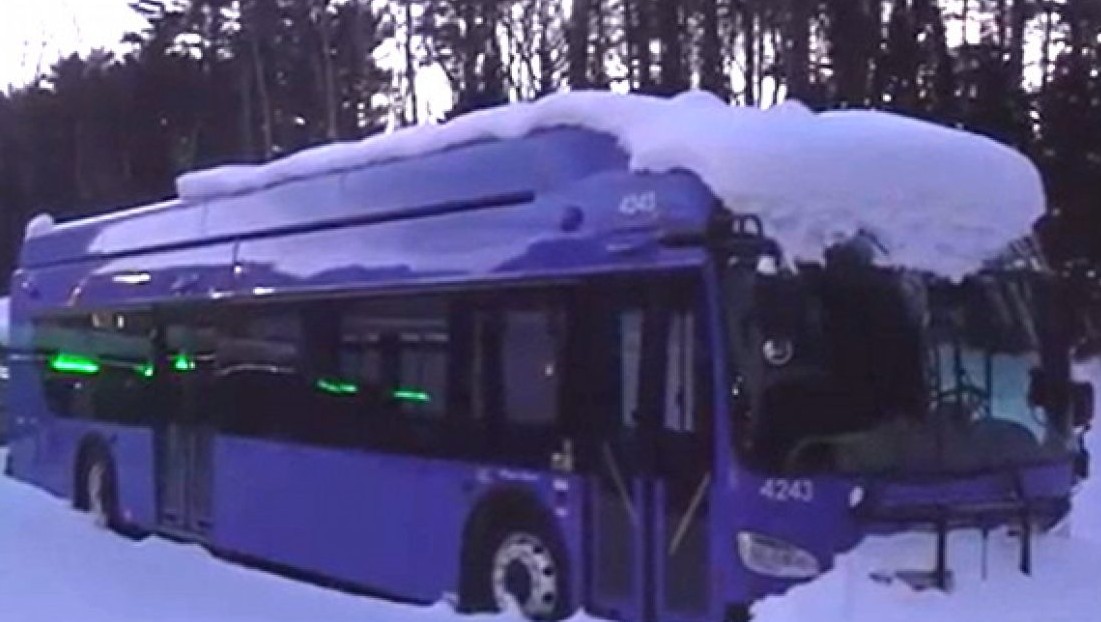

Behold the genius of modern liberal policymaking, now on full display in the great state of Vermont. In their never ending quest to save the planet one press release at a time, state officials decided to spend millions of dollars on electric buses. Because nothing says practical New England transportation like battery powered vehicles that apparently need spring break weather to function.
According to the Vermont Daily Chronicle, Vermont’s Green Mountain Transit is learning the hard way that electric buses and brutal winters are not exactly a match made in heaven. The buses reportedly need temperatures above 41 degrees to charge. That is not a typo. Forty one degrees. In Vermont. A state where winter is not a season, it is a lifestyle.
To make matters even better, due to a battery recall, these buses are considered a fire hazard and cannot be charged inside a garage. So even if you could find a rare balmy January afternoon in Burlington, you still have to worry about whether plugging the thing in will spark a bonfire.
Larry Behrens, spokesman for the energy workers advocacy group Power the Future, did not mince words. “Taxpayers were sold an $8 million ‘solution’ that can’t operate in cold weather when the home for these buses is in New England,” he said. That is about as polite as you can be while describing what looks like a very expensive experiment gone wrong.
He went further, adding, “We’re beyond the point where this looks like incompetence and starts to smell like fraud.” That is a serious accusation, and it underscores the frustration many Americans feel watching public dollars get funneled into trendy projects that collapse under basic scrutiny. Behrens also noted that when government rushes money out the door to satisfy green mandates, basic questions about performance, safety, and value for taxpayers are often ignored.
On the other side, Green Mountain Transit general manager Clayton Clark pointed out that the federal government provides new buses through a competitive grant process, and success is not guaranteed. That may be true, but common sense should not require a grant application. If you are buying buses for a state where temperatures routinely dip below freezing for months at a time, maybe test whether they can actually charge in the cold.
This is the recurring theme in so many blue states. Grand environmental gestures, glowing headlines, and then the inconvenient reality of physics. Batteries lose efficiency in low temperatures. Charging systems are affected by the cold. These are not obscure scientific mysteries.
Of course, supporters will argue that every new technology has growing pains. That is fair. But when those growing pains cost taxpayers $8 million and leave commuters stranded during a Vermont winter, patience wears thin.
In the end, the buses may eventually improve. Technology evolves. But for now, Vermont residents are left with a fleet of expensive electric buses that struggle in the very climate they were purchased to serve. At least the press releases were carbon neutral.
Leave a Comment