
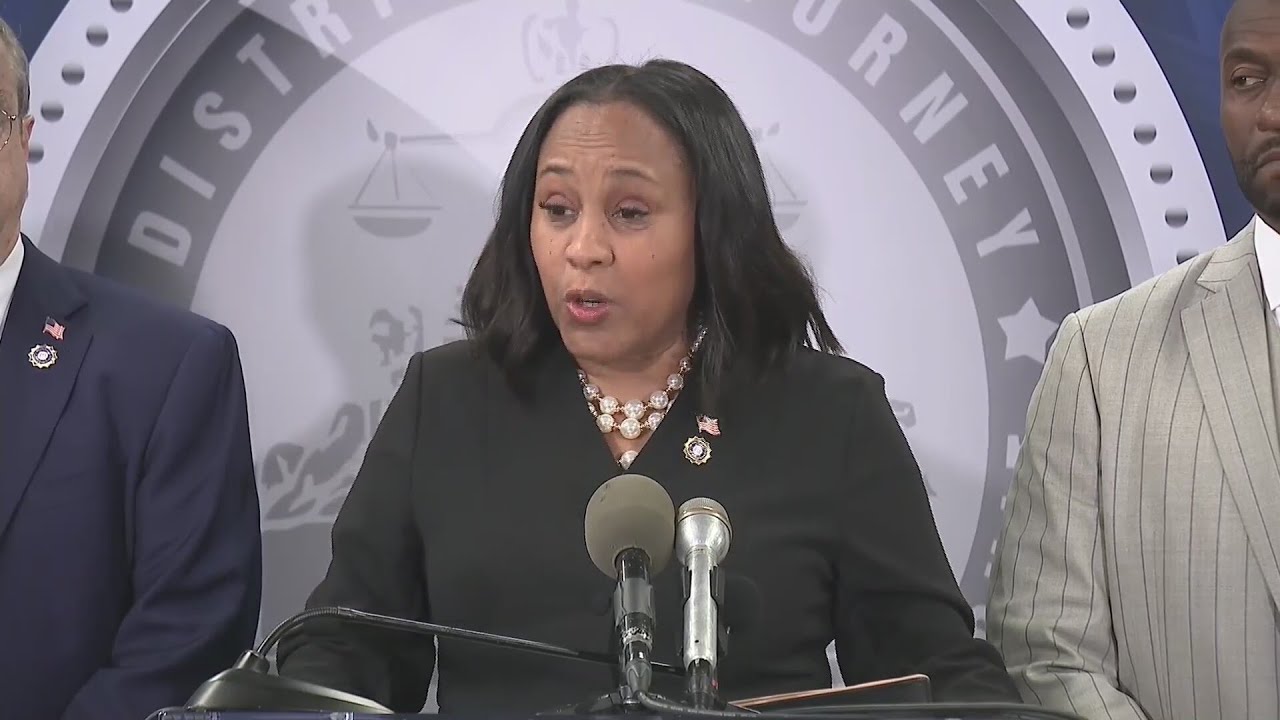

Fulton County District Attorney Fani Willis just ran headfirst into another legal wall, and this time it involves the rather uncomfortable topic of paying back millions of dollars to the very people she tried to prosecute. A Georgia judge ruled Wednesday that Willis and her office cannot participate in the ongoing fight over attorney fees tied to the collapsed racketeering case against President Trump and several of his allies.
That case, which once made national headlines and endless cable news panels, ultimately fell apart after Willis was disqualified due to misconduct allegations tied to her handling of the prosecution. Now the financial consequences are coming into focus, and they could be enormous.
Former defendants in the case, including President Trump and thirteen others, are asking for roughly 16.85 million dollars in reimbursement for their legal expenses. President Trump alone is seeking more than 6.2 million dollars in attorney fees.
The requests are based on a Georgia law passed in 2025 that allows defendants to recover legal costs when a prosecutor is disqualified and the case is later dismissed. Supporters of the law argued it was necessary to protect citizens from politically motivated prosecutions that collapse after serious misconduct. Critics called it controversial. Either way, the law is now front and center in this dispute.
Willis tried to insert herself back into the process by filing a motion to intervene. Her office argued the new law should not apply to this case, questioned whether some of the legal expenses were legitimate, and claimed parts of the statute might even be unconstitutional.
Judge Scott McAfee was not persuaded. In a ruling issued Wednesday, he made it clear that Willis and her office no longer have a seat at the table.
Because Willis and her team were “wholly disqualified” from the prosecution due to a conflict of interest, the judge ruled they cannot reenter the proceedings to defend their actions or fight the reimbursement claims. In other words, the prosecutor who launched the case is not allowed to argue against paying the bill that came from it.
McAfee did allow Fulton County government officials to step in on behalf of taxpayers, which makes sense considering the money at stake could ultimately come from county resources.
The legal mess traces back to Willis’ racketeering case against President Trump and eighteen co defendants tied to challenges over the 2020 election results. What began as a high profile prosecution quickly turned into a courtroom circus after it was revealed Willis had a romantic relationship with special prosecutor Nathan Wade, a lawyer she hired and paid large sums to work on the case.
Defense attorneys argued the relationship created a serious conflict of interest and potentially allowed Willis to benefit financially. The Georgia Court of Appeals agreed and disqualified her entire office in December 2024. Her attempt to get the Georgia Supreme Court to reverse the decision went nowhere.
After Willis was removed, a replacement prosecutor was appointed, but the case sputtered and eventually collapsed last month.
Now the focus has shifted from criminal charges to financial consequences. The judge’s latest ruling does not determine whether the defendants will receive the full 16.85 million dollars they are requesting. That fight is still ongoing.
What is clear, however, is that the prosecutor who launched the case will not be allowed to step back into court to defend it. That chapter is closed. The next question is how big the final bill will be.
Leave a Comment