
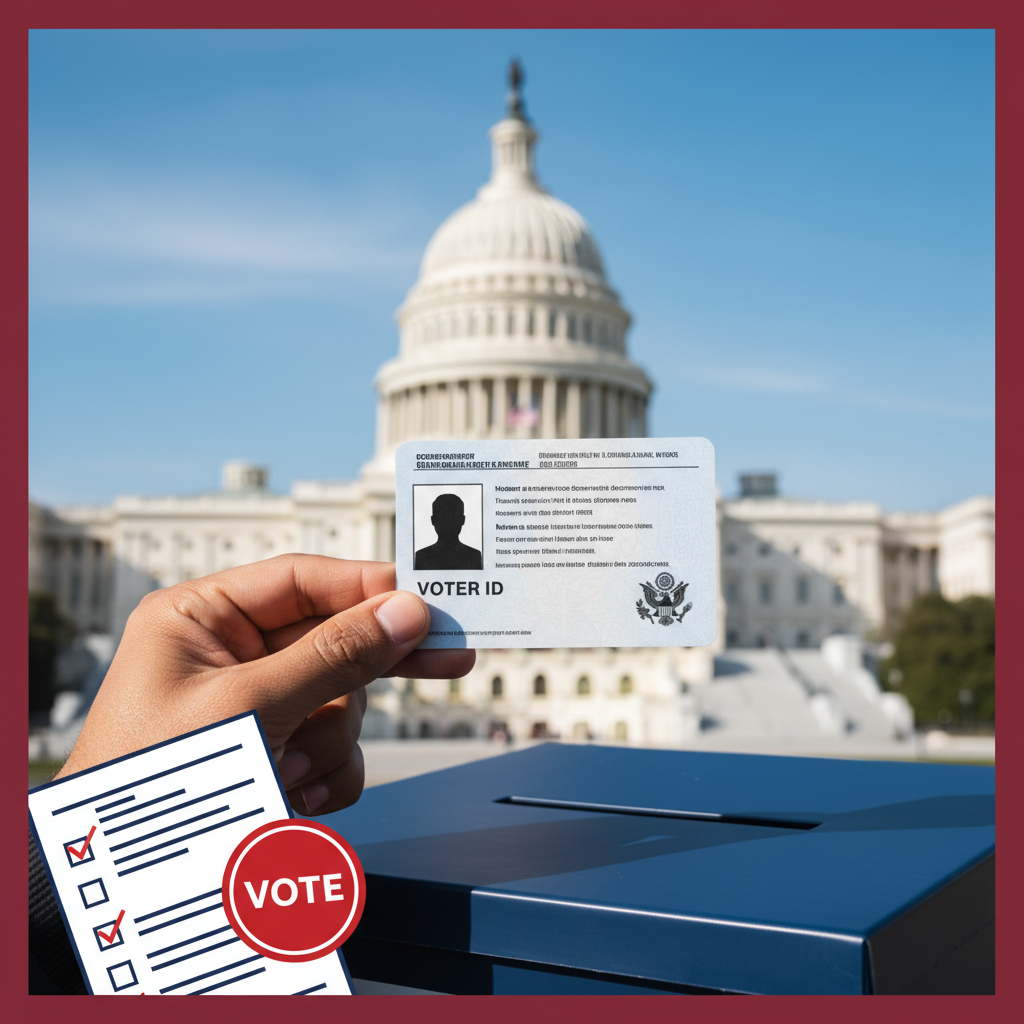

If you have ever wondered why showing an ID to board a plane is considered normal but showing proof of citizenship to vote is somehow controversial, Wednesday was your day.
The House passed the SAVE America Act, formally known as the Safeguard American Voter Eligibility Act, in a 218 to 213 vote. Republicans were unified in support, and all but one Democrat voted against it. The lone Democrat crossing the aisle was Rep. Henry Cuellar of Texas.
The bill is straightforward. It requires documentary proof of citizenship, in person, when registering to vote in a federal election. That means something concrete, like a U.S. passport or a birth certificate. It also requires photo identification to cast a ballot in person and tightens rules for mail in voting by requiring a copy of an eligible ID when requesting and submitting an absentee ballot.
In other words, it treats voting with the same seriousness we treat almost every other major civic or financial transaction.
NBC News reported that the 32 page legislation was revised from an earlier version to include additional demands from President Trump. Speaker Mike Johnson summed up the rationale in plain terms. “It’s just common sense. Americans need an ID to drive, to open a bank account, to buy cold medicine, to file government assistance,” he told reporters. “So why would voting be any different than that?”
That is not exactly a radical question.
There was some brief confusion about Rep. Thomas Massie of Kentucky, with reports initially claiming he voted against the SAVE Act itself. Massie quickly clarified on X that he did not oppose the substance of the bill. “There’s a false rumor that I voted against the Save America Act today,” he wrote. “I’ll vote for it when it comes to the floor.” He explained that he had voted against a procedural rule attached to the bill because it also allowed spending measures to come to the floor without 24 hour notice. “I voted against a ‘rule’ that allows it to get a vote, but the ‘rule’ also suspends house rules and allows spending bills to come to the floor with no 24hr notice!”
The House first advanced the rule in a tight 216 to 215 vote, clearing the way for final passage of the SAVE America Act along with three other measures.
Critics argue that requiring proof of citizenship could complicate voter registration. Supporters argue that ensuring only citizens vote in federal elections is the bare minimum of election integrity.
Now the bill heads to the Senate, where the real political fight will begin. But in the House at least, the message was clear. Voting is a foundational right of American citizens. Requiring proof of that citizenship is not suppression. It is accountability.
Leave a Comment