
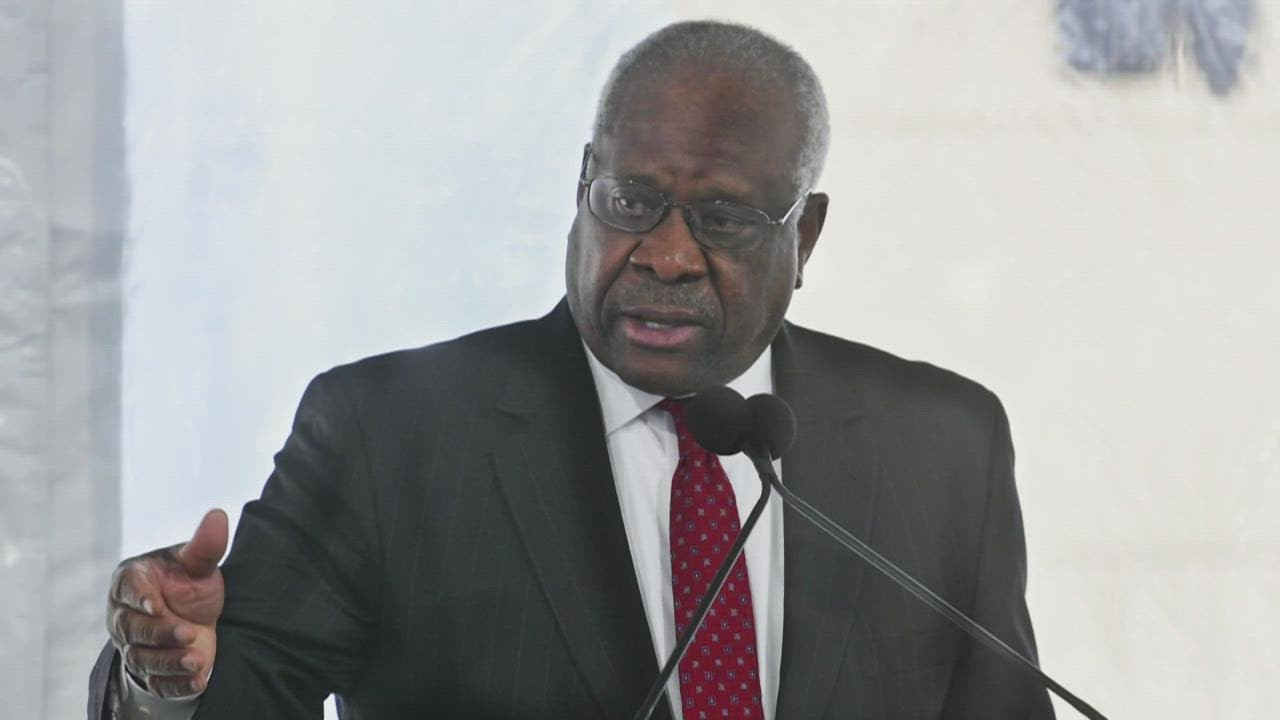

Lost in the media frenzy over the Supreme Court’s ruling limiting President Trump’s tariff authority was a quieter case that revealed something just as important, the steady, disciplined hand of Justice Clarence Thomas.
The case involved a Texas murder trial where the defendant’s testimony was interrupted by an overnight recess. The trial judge instructed defense counsel not to “manage” or discuss the defendant’s ongoing testimony during the break. However, the judge made clear that attorneys could still discuss other matters, such as potential sentencing issues. The defendant was later convicted, and his attorneys appealed, arguing that the restriction violated his Sixth Amendment right to counsel.
The Supreme Court ruled unanimously against the defendant. Justice Ketanji Brown Jackson, writing for the majority, held that existing precedent allowed trial judges to restrict discussions about testimony while a defendant is effectively still on the stand, even if court is temporarily recessed.
On the outcome, Justice Thomas agreed. The trial judge followed established law. No constitutional violation occurred. Case closed.
Except it wasn’t, at least not for Thomas.
In a concurring opinion joined by Justice Neil Gorsuch, Thomas took issue with what he described as the majority’s “needless” expansion of precedent. “I cannot join the Court’s opinion because it opines on hypothetical situations not before the Court and needlessly expands our precedents,” Thomas wrote. He concurred only in the judgment.
His concern was not about who won. It was about how the Court got there.
Thomas argued that existing precedent already resolved the issue. There was no need to “announce” a new rule or identify additional hypothetical circumstances in which a defendant might have a constitutional right to discuss testimony during a recess. In his view, the majority went beyond what the case required, effectively sketching out broader constitutional principles not squarely before the Court.
That distinction matters.
Thomas has long maintained that the Court should decide cases narrowly, based on text and original meaning, not by crafting expansive doctrines. When the majority suggested a new framework balancing the Sixth Amendment against the interest in untutored testimony, Thomas saw the seeds of future litigation and judicial overreach.
Critics might call this hair splitting. Supporters call it restraint.
In an era where courts are often accused of legislating from the bench, Thomas continues to draw a firm line. Decide the case. Apply the law as written. Do not invent new constitutional rights or frameworks unless absolutely necessary.
The ruling was unanimous in result. But Thomas’ concurrence served as a reminder that even agreement on the outcome does not justify stretching precedent. For those concerned about judicial activism, his opinion was not dramatic, but it was telling.
Leave a Comment