
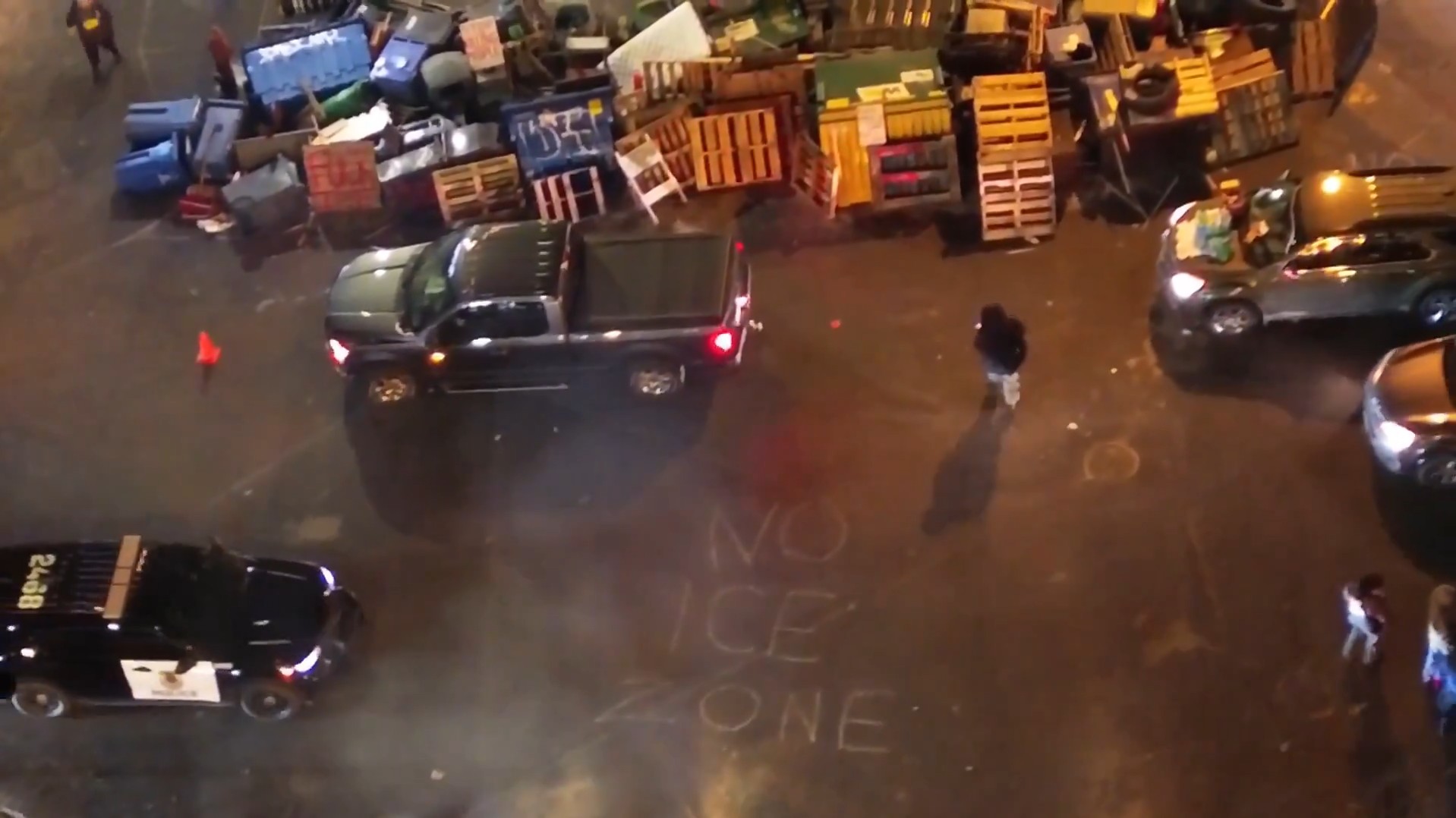

In the days after the shooting death of Renee Good, protesters erected makeshift barricades around the site and took control of the block where Good was killed, using chairs, trash cans, pallets, bicycles, and other objects to block the street. At least temporarily, that stretch of Portland Avenue saw minimal police presence even as agitators directed traffic and prevented regular vehicle access.
Officials removed some barricades later, but protesters also established memorials and continued gatherings near the scene. The city emphasized keeping streets open for public safety and emergency response while allowing memorial activity.
These Minneapolis protests have not been isolated. Across the country, anti-ICE demonstrations were organized, with events in many U.S. cities in response to Good’s death and in some cases to additional related incidents.
What adds to the broader context is that federal enforcement tensions in Minnesota have not eased since the first shooting. Thousands of federal immigration agents had been deployed in the Minneapolis-St. Paul area as part of a larger enforcement initiative, drawing criticism from local leaders and civil rights groups before the protests. Efforts by local officials to impose restrictions on how federal immigration agents could engage with protesters were challenged in court, with a federal appeals court lifting an earlier order intended to limit arrests and crowd control measures by those agents.
Some have drawn parallels between the present situation and past occupations like the so-called CHAZ zone in Seattle, although the specifics and scale clearly differ. The Minneapolis events reflect frustration over federal immigration policy, the use of force in enforcement operations, and questions about federal and local jurisdiction.
In short, the block around the fatal shooting has become a symbolic and practical flashpoint, with protesters attempting to hold space and local authorities attempting to balance access, safety, and the right to demonstrate.
Leave a Comment