
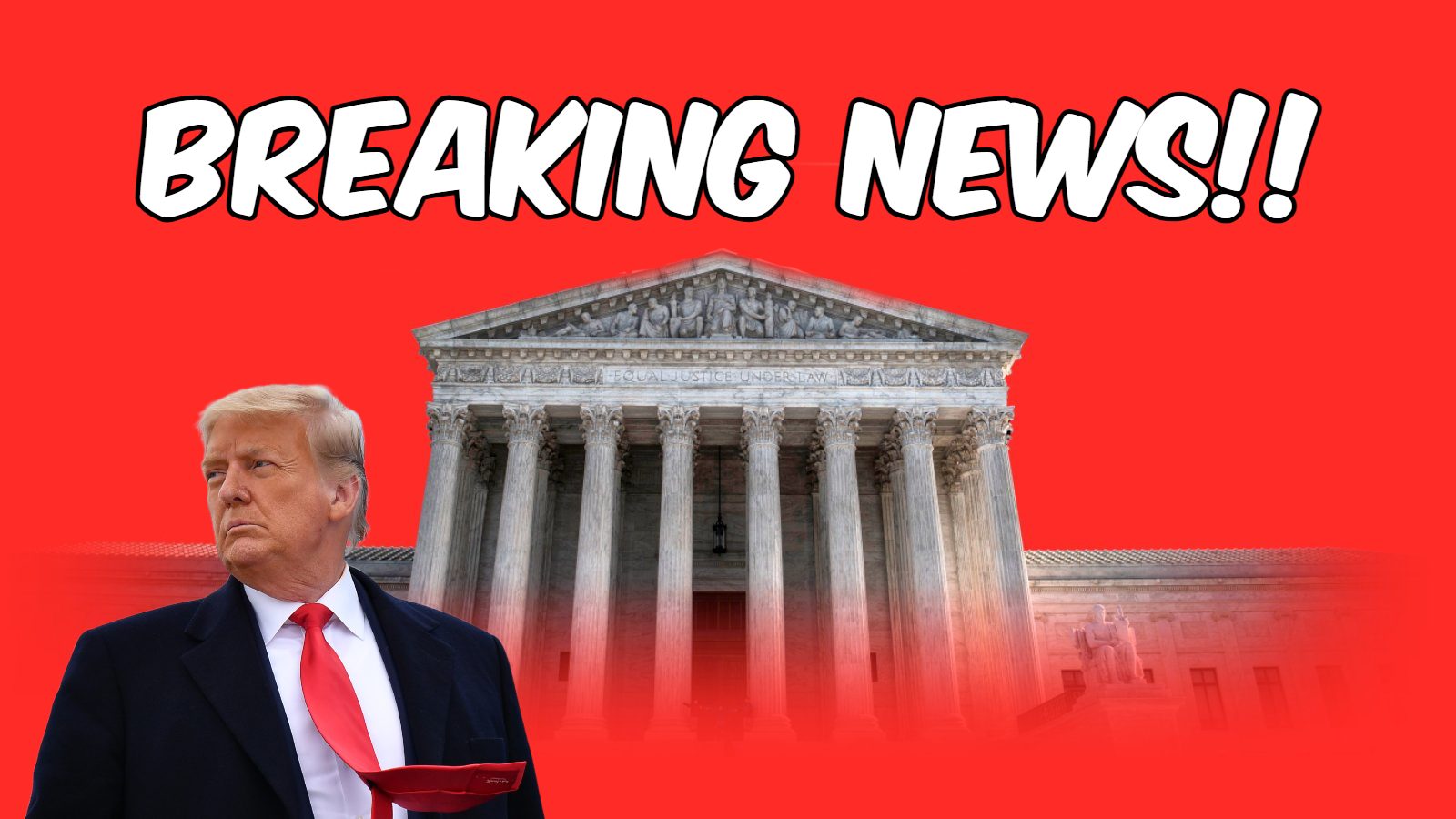

The Supreme Court just handed President Trump one of the biggest legal setbacks of his second term, striking down most of his sweeping tariffs and ruling that he overstepped his authority by using an emergency powers law to reshape global trade.
In a decision that cuts straight to the heart of executive power, the Court rejected the administration’s reliance on the International Emergency Economic Powers Act, known as IEEPA. That 1970s era statute allows presidents to “regulate” imports in response to an “unusual and extraordinary” national emergency. President Trump became the first president in the law’s nearly 50 year history to use it as the basis for broad based tariffs on nearly every country.
The justices were not persuaded.
“We claim no special competence in matters of economics or foreign affairs,” Chief Justice John Roberts wrote. “We claim only, as we must, the limited role assigned to us by Article III of the Constitution. Fulfilling that role, we hold that IEEPA does not authorize the President to impose tariffs.”
That is about as direct as it gets.
Beginning in February, President Trump declared a national emergency tied to fentanyl trafficking and used it to justify tariffs on Canada, China, and Mexico. He later invoked what he described as a trade deficit emergency to roll out reciprocal tariffs on dozens of trading partners. The administration argued that the measures were essential to national security and economic stability, and that the president needed flexibility to counter economic threats from abroad.
Lower courts had allowed the tariffs to remain in place while the legal battle unfolded. Now, most of those levies are invalidated. Importantly, tariffs imposed under separate authorities, including sector specific duties on steel, aluminum, and copper, were not part of this case and remain intact.
The ruling is significant not just economically but constitutionally. It signals that even a Court that has delivered several wins for President Trump is not willing to endorse an expansive reading of executive power without clear statutory backing. The justices appeared skeptical that the emergencies cited justified such a sweeping economic program affecting nearly every trading partner.
The practical consequences could be enormous. Companies that paid billions under the now invalidated tariffs are expected to seek refunds. Major firms, including Costco, parts of the Toyota Group, and Revlon, had already filed legal actions to preserve their claims. Now that the legal foundation has been knocked out, a wave of repayment demands is likely.
President Trump had warned that a ruling against him could trigger serious economic consequences, calling the case one of the most important in U.S. history. Instead, the Court has drawn a firm line, saying that if Congress wants to grant a president the power to impose sweeping tariffs under emergency authority, it must do so clearly.
For now, the message from the Court is simple. Economic policy may be bold, but it still has to fit inside the Constitution.
Leave a Comment