
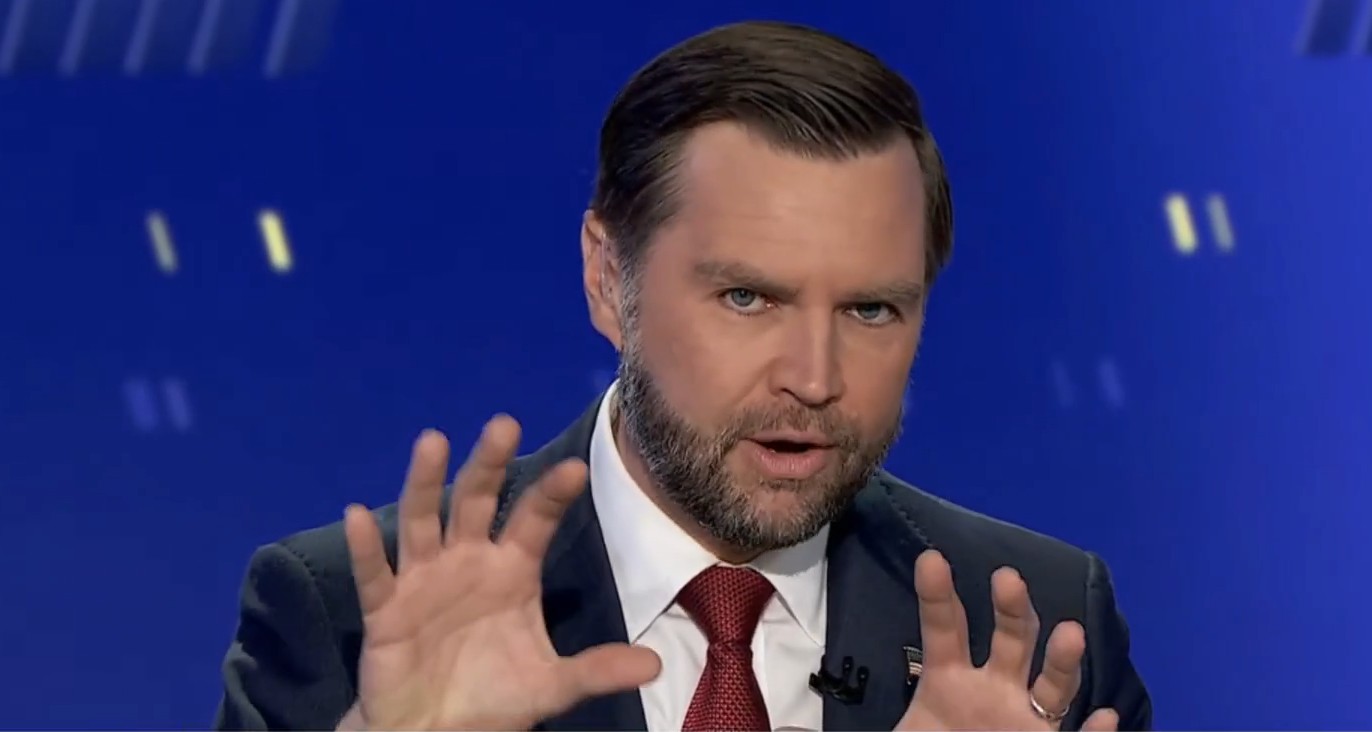

Vice President JD Vance is finding himself at the center of an increasingly aggressive online campaign from critics inside the Republican Party, but his allies say the effort looks far more like a coordinated political operation than a genuine grassroots revolt. With the 2028 Republican presidential primary still two years away, supporters argue the attacks reveal just how seriously many already view Vance as the frontrunner to succeed President Trump.
In recent days, social media has been flooded with posts from the growing “Never Vance” movement, accusing the vice president of being “unfit” to serve because of his efforts to pursue a peace agreement with Iran. Other critics have claimed, without providing evidence, that Vance is promoting policies that conflict with President Trump’s agenda. Some have even attempted to compare him to former President Barack Obama and Sen. Bernie Sanders, comparisons that many Republicans would likely reject outright.
Despite the volume of criticism online, Vance’s political team appears largely unconcerned. According to a close ally who spoke anonymously to The Washington Post, many of the attacks appear to be coordinated rather than organic. Two additional individuals familiar with the vice president’s political strategy reportedly agreed with that assessment, suggesting the online campaign has failed to gain meaningful traction among Republican voters.
The polling appears to support that argument. JD Vance continues to lead early surveys of potential 2028 Republican primary candidates, with his favorability among GOP voters closely tracking President Trump’s own numbers. Secretary of State Marco Rubio has gained support among more traditional, business-oriented Republicans, but Rubio has publicly stated he would support Vance if the vice president ultimately enters the race.
Vance’s advisers believe the attacks could actually strengthen his standing by reinforcing the perception that establishment Republicans and foreign policy hawks remain uncomfortable with his America First approach.
Conservative commentator Steve Cortes dismissed the online criticism, saying, “Loud Washington establishment voices form an online cacophony, but they do not remotely represent the consensus views of Republican voters.”
Opposition to Vance did not begin recently. Before President Trump selected him as his running mate, several major Republican donors, conservative media personalities and foreign policy hawks urged the president to instead choose Rubio or then-North Dakota Gov. Doug Burgum, who now serves as secretary of the interior.
Much of the latest criticism has centered on Vance’s foreign policy positions, particularly regarding Israel. The attacks intensified after critics accused him of antisemitism for expressing sympathy toward voices skeptical of aspects of the U.S.-Israel relationship.
The controversy grew even louder following Vance’s nearly three-hour interview with Joe Rogan on July 15. During the discussion, Vance described himself as a “reasonable moderate” when discussing U.S.-Israel relations. He also referenced a Time report describing an alleged online pro-Israel influence campaign run by a former Trump campaign official.
“You know, my response to that is, ‘Well, go to hell,'” Vance told Rogan. “I’m going to do what I have to do for the American people. I represent Americans first, and that’s the way that I’ve tried to do this job.”
The interview sparked another wave of criticism from prominent commentators including Ben Shapiro, Marc Thiessen and Batya Ungar-Sargon, along with numerous right-wing influencers whose anti-Vance posts quickly spread across X. A Washington Post analysis found criticism of the vice president surged immediately after the Rogan appearance. Some accounts promoting opposition to Vance while encouraging support for Rubio in 2028 reportedly appeared to be operated by users outside the United States.
Still, Vance allies insist the online campaign has produced plenty of noise but very little political impact. One close ally argued it was “obvious to anyone with an IQ above 70” that the attacks were “totally inauthentic and probably coordinated to a certain extent.”
That ally also noted there has been no measurable decline in Vance’s standing among Republican voters despite months of sustained criticism. “The upsurge in online criticism hasn’t been reflected in any data correlating with Vance’s image among GOP voters, which currently tracks President Trump’s image to a T,” the person said.
A spokesperson for the vice president emphasized that JD Vance remains focused on advancing President Trump’s agenda and delivering results for the American people rather than engaging with critics on social media. Meanwhile, supporters continue pushing back publicly, arguing that the online campaign has failed to accomplish its apparent goal of weakening the vice president’s standing within the Republican Party.
Leave a Comment