
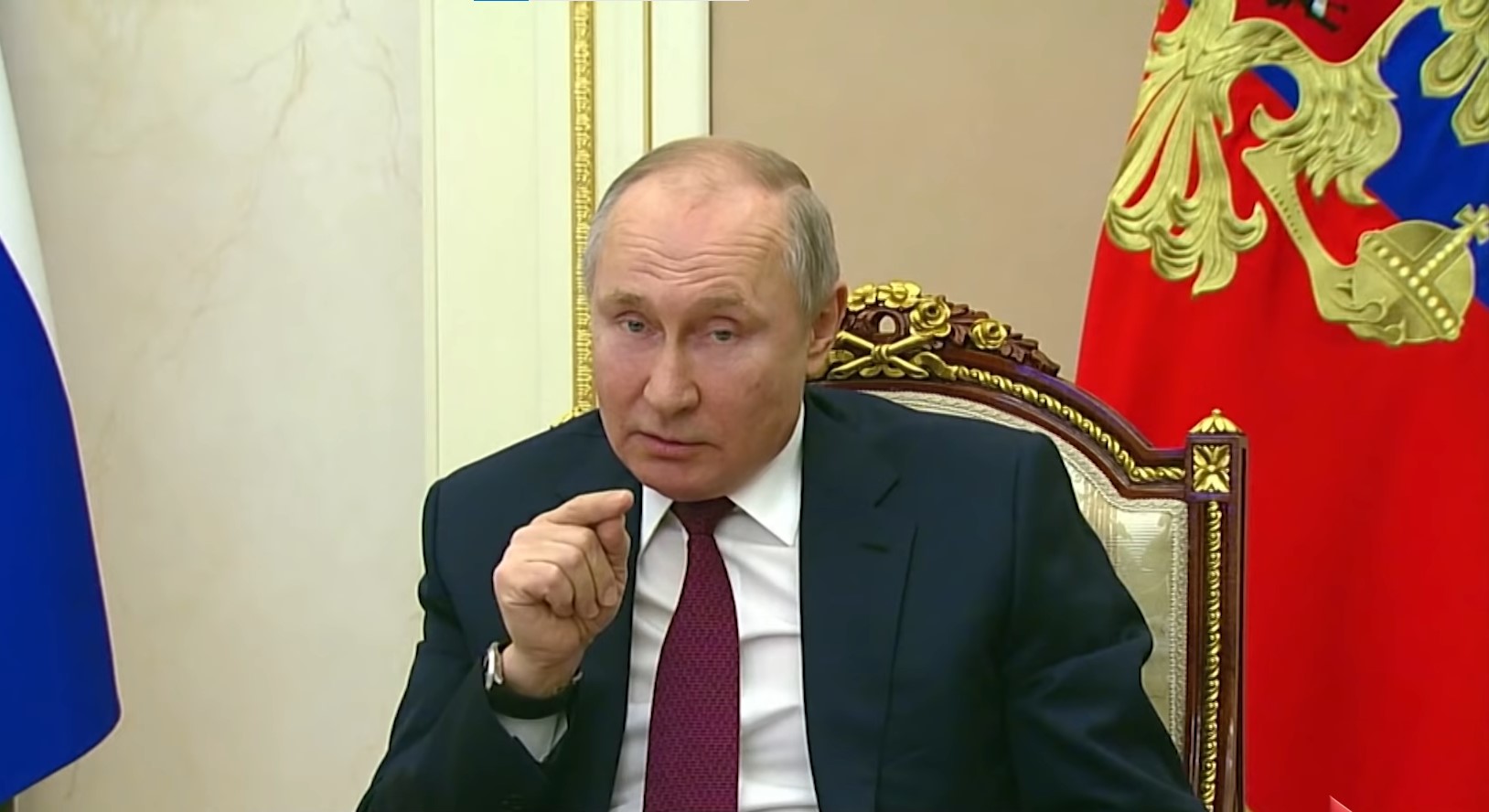

Russian President Vladimir Putin may be preparing to test NATO’s resolve with a limited attack on a member nation as soon as this fall, according to a new U.S. intelligence assessment reported by The Wall Street Journal.
And if the assessment is accurate, NATO may soon discover whether all those speeches about unity and collective defense translate into actual military readiness when somebody starts shooting.
The potential Russian action could reportedly range from a major cyberattack to direct military action, including a limited ground incursion. U.S. officials are increasingly concerned that Moscow could attempt such a move even while Russian forces remain heavily committed to the war in Ukraine.
“The assessments, described by U.S. officials, come amid a shortfall in certain critical munitions that the military would need to confront Russia or China in a potential future war. The U.S. has severely degraded its stockpile of these weapons because of transfers to Ukraine after Russia’s invasion, as well as the U.S. conflict with Iran.”
That is hardly a comforting backdrop for a potential NATO confrontation.
President Trump has rejected reports suggesting that America is dangerously short of critical weapons. He has also vowed to identify Pentagon officials responsible for leaking claims about depleted U.S. stockpiles.
Still, the broader issue cannot simply be waved away. America has spent years sending enormous quantities of military equipment and ammunition overseas, and eventually somebody has to ask the rather obvious question: Do we have enough left for ourselves?
U.S. officials reportedly believe a carefully calibrated Russian attack could create precisely the kind of dilemma Putin would want. Instead of attempting to conquer a NATO nation outright, Russia could conduct an operation limited enough to create disagreement over whether the alliance should risk a much larger war in response.
“The question mark is how the United States would respond in that case,” Heather Conley, a senior fellow with the American Enterprise Institute, told the Journal.
Conley added, “It has always been a goal to challenge the credibility of NATO and to separate the United States from its allies.”
For years, American intelligence officials generally believed Russia would avoid opening another front while fighting Ukraine. That calculation may be changing, with some officials now reportedly believing Putin could accept the risks of a smaller operation designed to expose divisions within NATO rather than seize large amounts of territory.
The timing also highlights why President Trump’s pressure on European NATO members to spend more on defense matters.
For decades, European governments have enjoyed the luxury of knowing American taxpayers and the American military were standing behind them. That arrangement works wonderfully until Washington suddenly faces multiple potential conflicts, strained ammunition supplies and adversaries willing to test exactly how much America is prepared to sacrifice.
NATO’s collective-defense commitment is supposed to deter precisely this kind of gamble. But deterrence depends upon military capability and political credibility, not communiques from comfortable conference rooms.
If Putin believes European governments lack either, he has every incentive to probe for weakness.
Europe has been warned repeatedly that it needs to shoulder more of its own defense burden. President Trump has taken plenty of criticism for delivering that message without the diplomatic sugarcoating Washington traditionally prefers.
A Russian test of NATO would make the debate considerably less theoretical.
If Moscow makes a move this fall, European NATO members may have to demonstrate that their commitment to collective defense extends beyond expecting the United States to provide the weapons, manpower and money whenever trouble arrives.
Putin would be taking an enormous risk by attacking any NATO member, even on a limited scale. But the possibility itself should serve as another reminder that military strength prevents wars only when adversaries believe that strength is real, ready and backed by the political will to use it.
Leave a Comment