
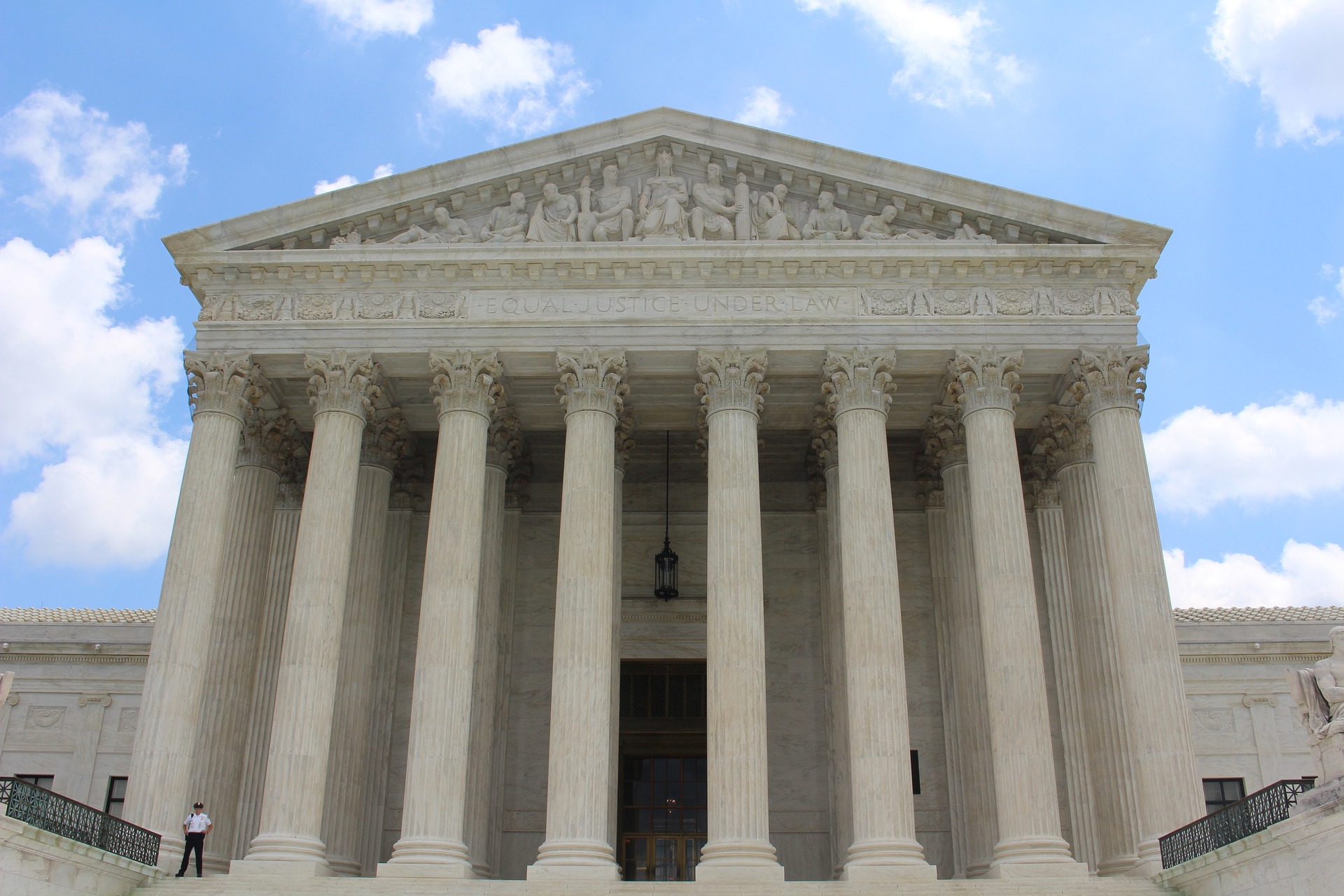

The Supreme Court on Monday declined to let the Trump Administration immediately implement a new U.S. Postal Service rule governing mail ballots for the November 2026 midterm elections, leaving a lower-court injunction in place while litigation continues.
In an unsigned order issued September 14, the Court denied the Postal Service’s request to stay a nationwide preliminary injunction entered by a federal judge in Massachusetts. The Court said the government was “unlikely to succeed on the merits” of its challenge to the injunction and that the equitable factors governing emergency relief did not support a stay.
That means election officials will not have to scramble to implement the new federal requirements just weeks before Election Day.
The dispute stems from a March executive order from President Trump that directed the Postal Service to develop new requirements for federal election ballot mail. USPS ultimately published its final rule in late August, less than 70 days before the November 3 midterms.
The rule required federal ballot mail envelopes to contain an election-mail logo, work with high-speed automated processing equipment, and carry specialized barcodes unique to individual voters. States would also have to submit envelope designs to USPS for review and upload certain voter information to a Postal Service portal. Mailings failing to comply could be returned to election officials for correction.
Justice Brett Kavanaugh agreed with the Court’s decision, although his reasoning left the door open for similar rules in the future.
Kavanaugh wrote that there was “at least a fair prospect” that USPS possesses statutory authority to issue the rule. His problem was the timing. Applying the requirements during the 2026 elections, he concluded, would be “arbitrary and capricious” because state and local officials lacked sufficient time to implement them reasonably.
Justices Samuel Alito and Clarence Thomas saw the case differently.
Alito, joined by Thomas, argued that the government had made the necessary showing for a stay. His dissent questioned whether some organizational challengers had standing and argued that the states faced significant legal hurdles in claiming USPS exceeded its statutory authority. Alito emphasized that federal law gives the Postal Service broad authority over the collection, handling, transportation and delivery of mail.
Alito also acknowledged concerns about implementing the rule close to Election Day but noted that 12 states supporting the rule had told the lower court that compliance remained practicable.
The decision is significant for the 2026 midterms, but it is not a final Supreme Court ruling on whether the Postal Service can ever impose these requirements.
The litigation can continue through the lower courts, and Kavanaugh’s concurrence explicitly suggests the underlying statutory-authority question remains open. For this election, however, the practical result is straightforward: the injunction remains in effect, and USPS cannot enforce the challenged requirements for federal ballot mail while that order governs.
Leave a Comment