
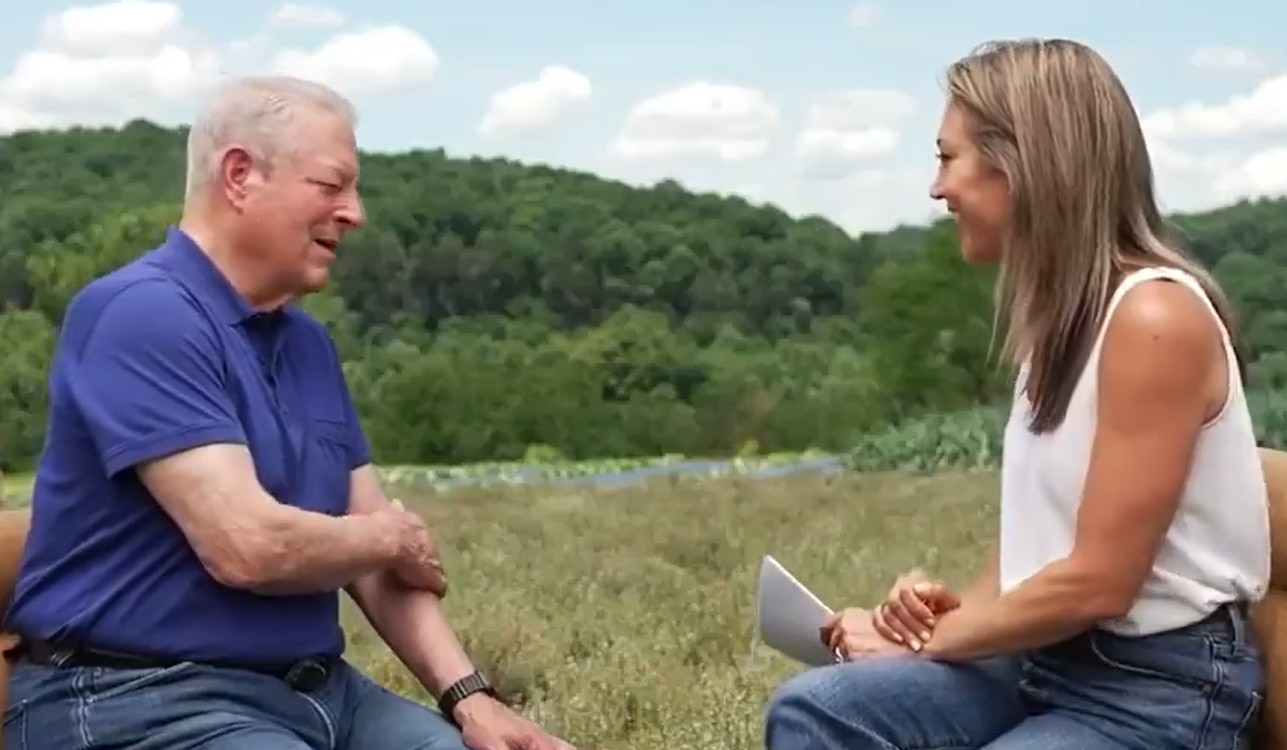

Former Vice President Al Gore returned to the spotlight this week to celebrate the 20th anniversary of his climate change film An Inconvenient Truth, but his attempt to take a victory lap quickly ran into a wall of criticism.
During an interview with ABC News on Wednesday, Gore reflected on the legacy of the 2006 documentary and argued that scientists have been proven correct about the dangers of global warming. The film, which became a centerpiece of the climate movement, helped launch Gore into a new role as one of the world’s most prominent environmental activists after his political career ended.
The problem for Gore is that many of the predictions associated with the film and his public statements over the years have become a source of controversy.
While speaking with ABC, Gore claimed that the scientific community had essentially been vindicated.
“The scientists were dead right,” Gore said while discussing climate projections and environmental concerns.
The interviewer then raised a question that climate activists rarely like to address.
“If scientists were dead right, why has so much been made about this documentary and what was wrong?” the host asked.
Gore responded by suggesting critics had focused on a handful of relatively minor issues.
“Uh, well, they cherry-picked a few little…About how many years the Arctic is ice-free, the snows of Mount Kilimanjaro,” Gore replied. “The main elements the scientific community has confirmed are right.”
The ABC interviewer appeared satisfied with the explanation. Social media users, however, were not.
Almost immediately, critics began circulating examples of climate predictions that either failed to materialize or remain far from the timelines originally presented to the public.
One of the most frequently cited examples involves Gore’s warning that Arctic sea ice could disappear entirely within a decade. Years later, Arctic ice still exists, despite ongoing concerns about long-term reductions in sea ice coverage.
Critics also highlighted predictions regarding the disappearance of the snows atop Mount Kilimanjaro, the loss of glaciers in Montana’s Glacier National Park, dramatic sea-level increases, and forecasts of ice-free Arctic summers that have yet to occur as predicted.
The reaction online was swift. Users posted side-by-side comparisons of past headlines, scientific claims, and current conditions, arguing that Gore was attempting to rewrite history by minimizing predictions that turned out to be inaccurate or exaggerated.
Of course, supporters of Gore argue that climate change should be evaluated over decades rather than through individual forecasts. Critics counter that many of the movement’s most dramatic warnings were used to justify sweeping policy proposals and generate public fear.
What made the interview notable was not merely Gore defending his record. Politicians and activists do that all the time. It was the confidence with which he dismissed criticism despite the existence of numerous predictions that remain subjects of debate twenty years later.
For many viewers, the exchange served as a reminder that when it comes to climate alarmism, failed predictions rarely disappear. They simply get rebranded as misunderstood warnings while the people who made them insist they were right all along.
Leave a Comment