
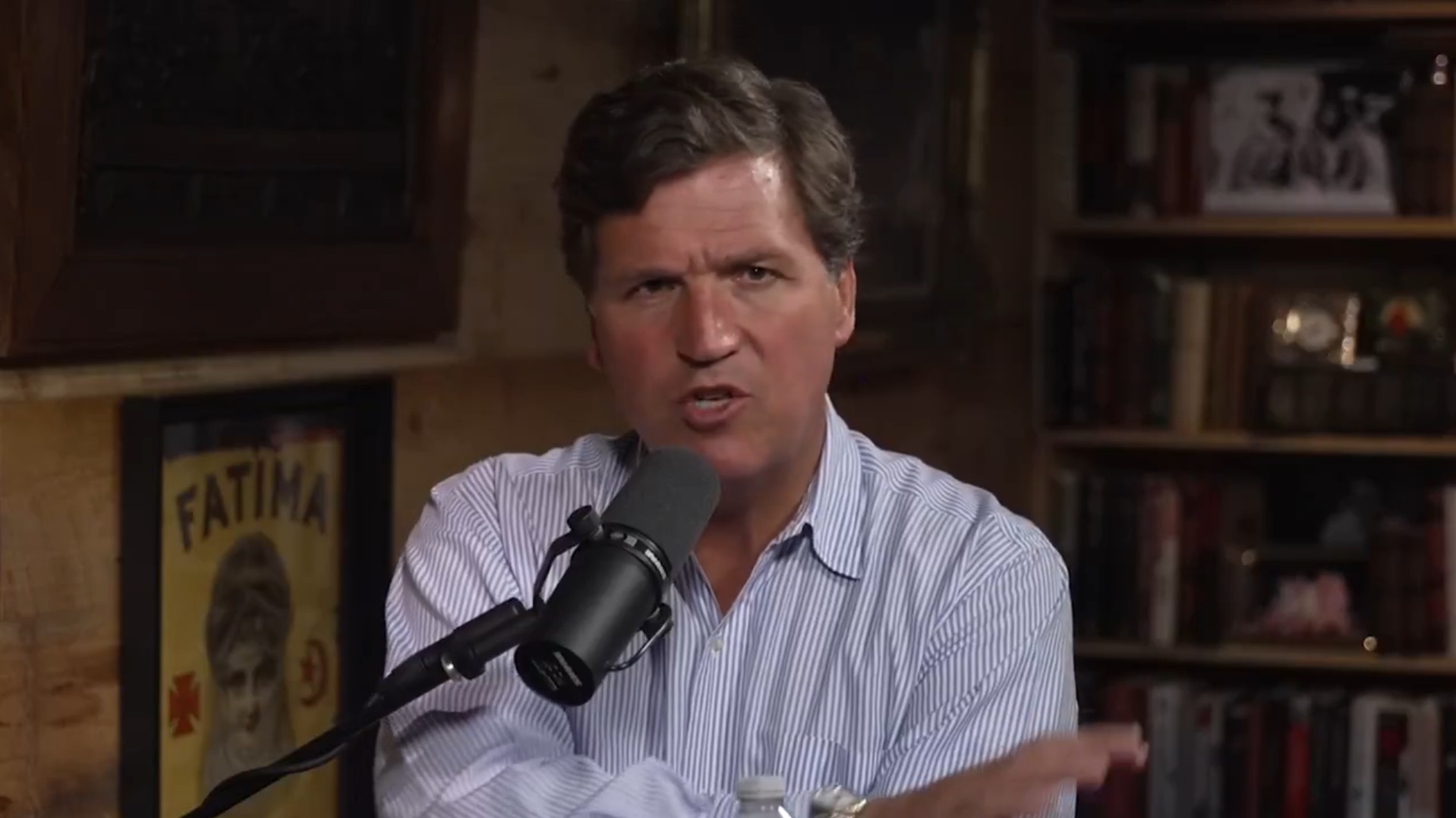

Tucker Carlson has spent decades as one of the most influential voices in conservative media, defending Republican candidates, policies, and political priorities through multiple administrations. Now, in a move that has stunned many longtime supporters, Carlson says he is officially done supporting the Republican Party.
During a recent appearance on the Canadian podcast “Can’t Be Censored,” Carlson announced that he can no longer back the GOP ahead of the upcoming midterm elections. The declaration marks a dramatic shift for a commentator who was once viewed as one of the party’s most prominent defenders.
“I’ve been a consistent defender for 35 years of the Republican Party, I mean very consistent defender, but there’s no defending this,” Carlson said. “So no, I’m out. And if I’m out, then I think a lot of other people are out.”
At the same time, Carlson made it clear that he is not embracing the Democratic Party either.
“Not gonna support the Democratic Party,” he said. “I don’t know what I’m going to do.”
Carlson’s political break appears to stem largely from disagreements over foreign policy, particularly following President Trump’s decision to launch military action against Iran earlier this year. Carlson, who strongly supported President Trump during the 2024 election campaign, has become one of the administration’s most vocal critics on the issue.
In the interview, Carlson argued that Republican leaders have become disconnected from the interests of their voters and are increasingly influenced by outside interests and political donors. He accused party leaders of making decisions based on factors other than the interests of American citizens.
The comments highlight a growing divide within segments of the political right over foreign policy and America’s role overseas. While many Republicans continue to support a strong international posture, others have argued for a more restrained approach focused primarily on domestic concerns.
Carlson’s interview generated even more attention when he discussed Maine Democratic Senate candidate Graham Platner. Republicans have criticized Platner over several controversies, including allegations surrounding a tattoo that opponents claim has connections to Nazi symbolism.
Carlson pushed back on those attacks, arguing that critics have focused on personal controversies rather than debating Platner’s policy positions.
“Rather than respond to what the guy’s positions are, they just have called him a Nazi for the last month,” Carlson said.
He also suggested that some opposition to Platner may be tied to disagreements over foreign policy positions, particularly regarding Israel.
The remarks have raised eyebrows across the political spectrum. Carlson’s willingness to defend a Democratic candidate, while simultaneously announcing his departure from the Republican Party, represents a significant departure from the role he occupied for much of his career.
Whether Carlson’s political break signals a broader movement among disaffected conservative voters remains to be seen. What is clear is that one of the most recognizable media figures associated with the modern conservative movement is openly questioning the direction of the Republican Party at a critical moment before voters head to the polls.
For Republicans preparing for the midterms, Carlson’s comments serve as a reminder that political coalitions are rarely permanent, and maintaining voter support requires more than simply relying on past loyalties.
Leave a Comment