
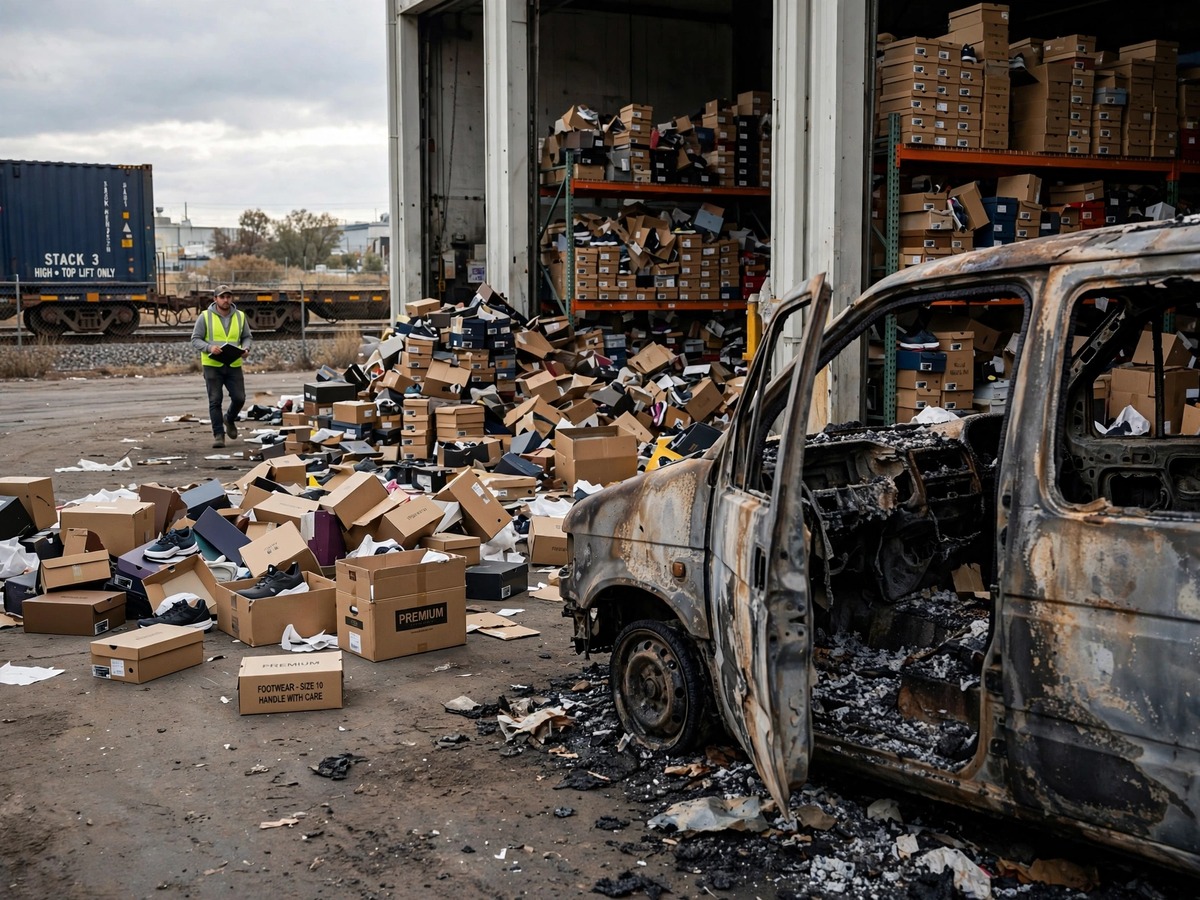

Southern California’s rail network is becoming a target for organized cargo thieves, and investigators say the operation is growing more sophisticated. More than 65,000 train heists occur nationwide each year, investigators told The California Post, with 25% to 40% hitting Southern California annually. Sources familiar with the crimes say the stolen goods are worth tens to hundreds of millions of dollars. Many thefts go unreported, so the real scale may be even worse.
LAPD Supervisor Detective Carlos Monteroso described the method bluntly: “We call it shopping. The crews break into individual containers until they find what they’re looking for that’s high value. Then they’ll do their thing.” Calling this “shopping” is certainly an inventive bit of criminal marketing. Investigators say the crews target shoes, clothing, tools, electronics and other merchandise that can be quickly flipped online.
Investigators also say insiders at the Port of Los Angeles can access sensitive computer files showing which train loads contain valuable goods. The port has handled the busiest container operation in the Western Hemisphere for 25 years, with roughly 2.65 million 20-foot containers leaving annually by rail. Because many thefts occur on private railways, they are not always reported. With Christmas approaching, Monteroso warned that stolen shipments could disrupt the supply of sought-after holiday gifts.
The crews reportedly identify vulnerable points along the tracks, then force trains to stop in remote areas. Monteroso explained: “These crews have identified vulnerable points along the tracks where they’ll get onto the trains coming from the Port of Los Angeles. They’ll ride them out to into a remote part of the desert where they cut the brake hose, to force an emergency stop.” Once a train is stopped, masked thieves use electric handsaws to open containers. Vans, SUVs and box trucks arrive with additional accomplices, some of whom film the thefts and post them online.
“You’re seeing 20 guys, offloading several hundreds or thousands of boxes,” Monteroso said. “You know, just taking as much of the property as they can.” The goods are then sold through resellers and online platforms including eBay and OfferUp. Investigators described a network in which different buyers specialize in electronics, shoes, tools or e-bikes. Apparently, even organized crime has departments.
Monteroso’s team recently cracked a million-dollar stolen-shoe case involving an unreleased collaboration between Brooks and Disney. Undercover investigators purchased some of the shoes and traced them to a Chatsworth warehouse containing 35 pallets of Hoka, New Balance, Adidas, ON and Salomon shoes, along with JanSport backpacks. Heros Tasci, 51, of Simi Valley, was booked at Van Nuys Jail for receiving stolen property. Investigators said he used DesignerDeals4Less to sell the merchandise.
Investigators say midlevel sellers are only part of the operation. They have linked the broader networks to Russian organized crime, Turkish organized crime and Mexican cartels. In a separate San Bernardino County case, deputies arrested nine train-theft suspects connected to the Sinaloa Cartel and seized $333,000 in stolen goods, including speakers, computer hardware, clothing, shoes and tools. They also recovered four semiautomatic handguns, a surveillance drone, cash, cargo-access tools, suspected fentanyl and four vehicles. The investigation remains ongoing.
Keith Lewis, a cargo theft expert with 45 years of experience and vice president of operations at Verisk CargoNet, said the people directing these operations are far harder to reach than the thieves doing the physical work. “The shot caller is sitting somewhere drinking a margarita or a glass of vodka, telling these guys what to do,” Lewis said. “The shot caller is not going out and breaking in, so you really never get to shot caller.”
Rail lines use drones, fences and cameras, but thousands of miles of remote track are difficult to secure. Investigators also say light punishments for property theft make it harder to turn suspects into informants. One investigator said stolen merchandise may exceed tens of billions of dollars nationally each year, though the amount is difficult to establish because so much goes unreported. That leaves a sprawling theft business, plenty of online buyers and the people at the top comfortably out of reach.
Source: nypost.com
Leave a Comment