
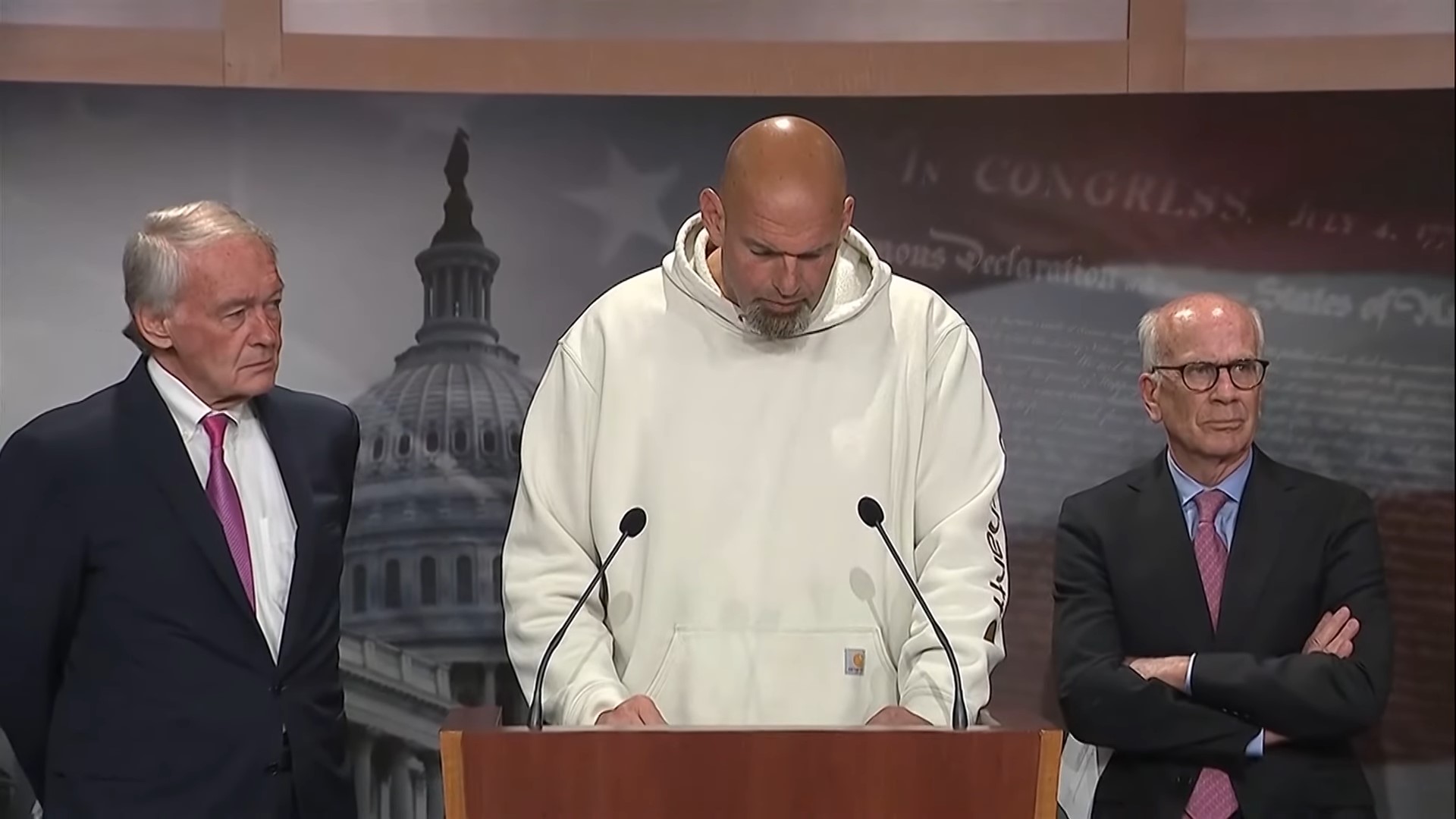

Sen. John Fetterman of Pennsylvania has become one of the most unpredictable figures in Washington, which in today’s Senate is saying something. Since taking office, the Democrat has repeatedly broken with his party on several high-profile issues, frustrating progressives, confusing pundits, and now sparking open speculation that he could eventually leave the Democratic Party altogether.
The latest public alarm bell came from longtime Democratic strategist James Carville, who suggested Republicans would be wise to court Fetterman if the political math made sense. Carville said Fetterman may realize he has “no chance in a Democratic primary” if he seeks reelection, and argued Republicans could offer him committee assignments, relevance, and a warm welcome.
That is the sort of comment that makes Democratic staffers spill coffee.
Carville is not exactly known for understatement, but he touched on a real problem. Fetterman still embraces many left-wing domestic positions, yet he has shown a repeated willingness to defy party orthodoxy, especially on national security, immigration, and support for President Trump’s foreign policy actions involving Iran. In a party increasingly policed by ideological activists, independence is often treated like betrayal.
That tension was on full display when Fetterman became the deciding vote against a Democrat-led resolution seeking to restrict President Trump from launching further military operations in Iran without congressional approval. One Democrat crossing over was enough to sink the measure, and that Democrat was Fetterman.
The move was not entirely surprising. He had already signaled opposition and has frequently backed a tougher posture abroad than many in his caucus would prefer. While progressives demanded more restraints on executive power, Fetterman sided with Republicans and the White House.
Naturally, that sent speculation into overdrive.
To be fair, Fetterman has consistently denied any interest in joining the GOP. Publicly, he has brushed off rumors and maintained that he remains a Democrat. But in politics, denials often last until they do not. Ask anyone who has watched party switches over the last few decades.
The deeper issue for Democrats is not whether Fetterman flips tomorrow. It is that members of their own coalition now see the possibility as plausible. That alone reflects growing fractures inside the party between traditional labor-state Democrats, progressive activists, foreign policy doves, and lawmakers trying to survive in competitive states.
Pennsylvania is not San Francisco, and statewide politicians there often need broader appeal than social media activists appreciate. Fetterman seems to understand that. He talks like a populist, votes unpredictably, and refuses to play by neat partisan scripts.
Republicans, meanwhile, would be foolish not to keep the door open. A senator from a key battleground state crossing over would be a political earthquake.
Whether it happens or not, Fetterman has already achieved something rare in modern politics. He has made both parties nervous at the same time.
Leave a Comment