
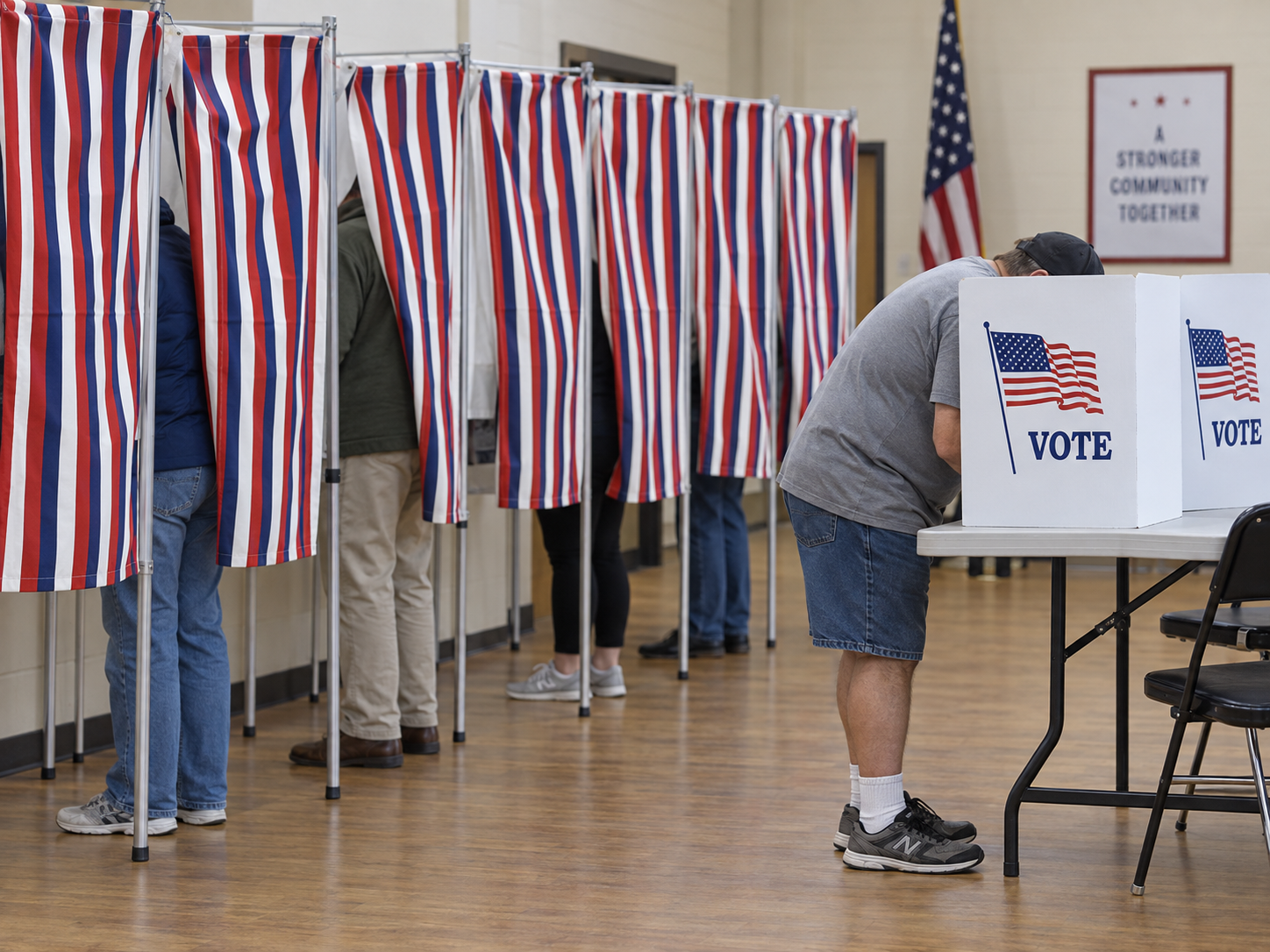

Democrats are changing how they plan to vote in the 2026 midterms, and the shift is significant enough to scramble some familiar assumptions about Election Day.
According to an NBC News survey reported by Axios, just 23 percent of registered Democratic voters say they plan to vote by mail this November. At a comparable point in the 2024 campaign, that number stood at 34 percent. Meanwhile, 36 percent now plan to vote early in person, up six percentage points, while another 36 percent expect to vote on Election Day.
That is quite a change for a party whose voters became closely associated with mail ballots during recent election cycles.
The partisan difference was especially noticeable in 2024. Pew Research Center found that 44 percent of Democratic voters ultimately cast absentee or mail ballots, compared with 26 percent of Republicans. Republicans were more likely to vote on Election Day, 39 percent compared with 28 percent of Democrats.
Now Democrats appear increasingly interested in physically showing up, particularly during early voting.
The NBC survey cited in the source material questioned 1,000 registered voters from September 11 through September 15 and had a margin of error of plus or minus 3.1 percentage points. So this is a snapshot of intentions, not a crystal ball. Voters can change their plans, and saying how you intend to vote is obviously different from actually casting a ballot.
Still, the movement fits with a broader Democratic strategy. Axios reports that Democrats have launched their first national early-voting campaign, encouraging supporters to “bank their vote” before Election Day, either in person or by mail.
There is a practical logic behind that strategy that has nothing to do with partisan rhetoric. Once somebody has voted, a campaign can redirect volunteers and resources toward supporters who have not. Early in-person voting also removes potential complications involving mail delivery and ballot-return deadlines.
The change is particularly interesting because voting habits tend to stick. Pew found that 87 percent of experienced voters in 2024 used a voting method already familiar to them. Only 13 percent used a new method.
That makes an 11-point decline in Democrats currently planning to vote by mail worth watching.
It also means Republicans and Democrats alike should be cautious about drawing conclusions from early ballot-return numbers. Fewer Democratic mail ballots would not necessarily mean fewer Democratic votes. Some of those voters could simply be standing in an early-voting line instead.
The old shorthand of “mail ballots equal Democrats, Election Day equals Republicans” was always an oversimplification, and it may become even less useful in 2026. Democrats are adapting their turnout operation, while voters themselves appear willing to reconsider how they cast their ballots.
Election night analysts may need a new calculator.
Leave a Comment