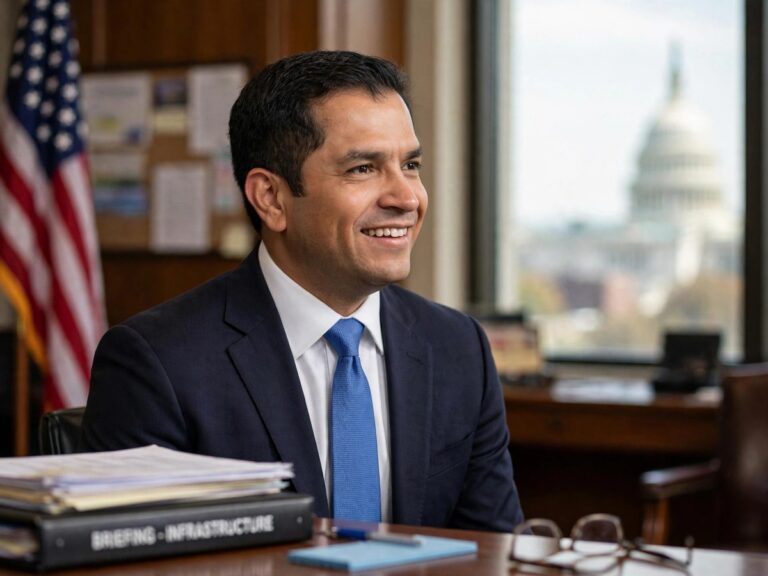
For nearly 70 years, Ian Murray lived in the United States, worked as a lawyer, held public office, and helped guide Democratic politics in Pennsylvania. Then a passport application opened a bureaucratic trapdoor beneath a life he thought was settled.
Murray, now 75, is a former Erie City Council member, longtime Erie County Democratic Party chairman, and veteran member of the Democratic National Committee. Federal officials determined he had never acquired U.S. citizenship. He left the United States for Canada on November 12, then relocated to Nova Scotia with his wife. For a man whose life included government identification, legal work, and political service, the reversal is extraordinary. Government paperwork apparently can sleep for decades and still wake up cranky.
According to WLT Report, the problem surfaced roughly a year and a half ago, when Murray applied for his first American passport while planning a trip to Scotland and Ireland. That application triggered a review of his mother’s residency history. Murray was born in Canada in 1951 to Canadian-born parents. His mother, Dorothea Murray, also held U.S. citizenship, and the family believed that status passed automatically to Ian. Federal reviewers reached a different conclusion.
The legal issue turned on the Nationality Act of 1940. Under the law in effect when Murray was born, a child born abroad to one American parent and one non-American parent could acquire citizenship only if the American parent had accumulated 10 years of prior residence in the United States. Dorothea Murray had moved to Erie in 1939, but she later spent about four years studying at the University of Toronto. Summers and holiday periods in the United States reportedly left her with roughly eight and a half or nine qualifying years. Close, but apparently not close enough for federal paperwork to show mercy.
The Erie Times-News traced the case to the passport review and reported that the Department of Homeland Security issued Murray a Notice to Appear on July 10. The document identified him as a native and citizen of Canada who was present in the United States without having been admitted or paroled. That transformed a passport question into a formal immigration proceeding. A Notice to Appear lists the government’s allegations and legal charges, requiring the recipient to answer before an immigration judge.
Murray appeared before an immigration judge in the Boston area. On September 1, the judge granted voluntary departure and gave him until December 30 to leave. Murray and his wife departed weeks before that deadline and moved to Nova Scotia. The result is remarkable: after nearly seven decades in the United States, his legal status came down to a residency calculation involving his mother’s time away at school. Political credentials did not change the determination, and government identification did not erase it.
John Solomon described the episode with the words “Lifetime misunderstanding leads former Erie Democratic leader to self-deport”. Ian Furstrand asked: ‘This is such an insane story. Does anyone believe this guy “didn’t know” he wasn’t a US Citizen?’ That reaction captures the disbelief surrounding a case in which an old family assumption survived for generations before a passport application brought it back to life. Politics can change, campaign arguments can shift, but paperwork has a memory that never seems to retire.
The online discussion included the following posts: