
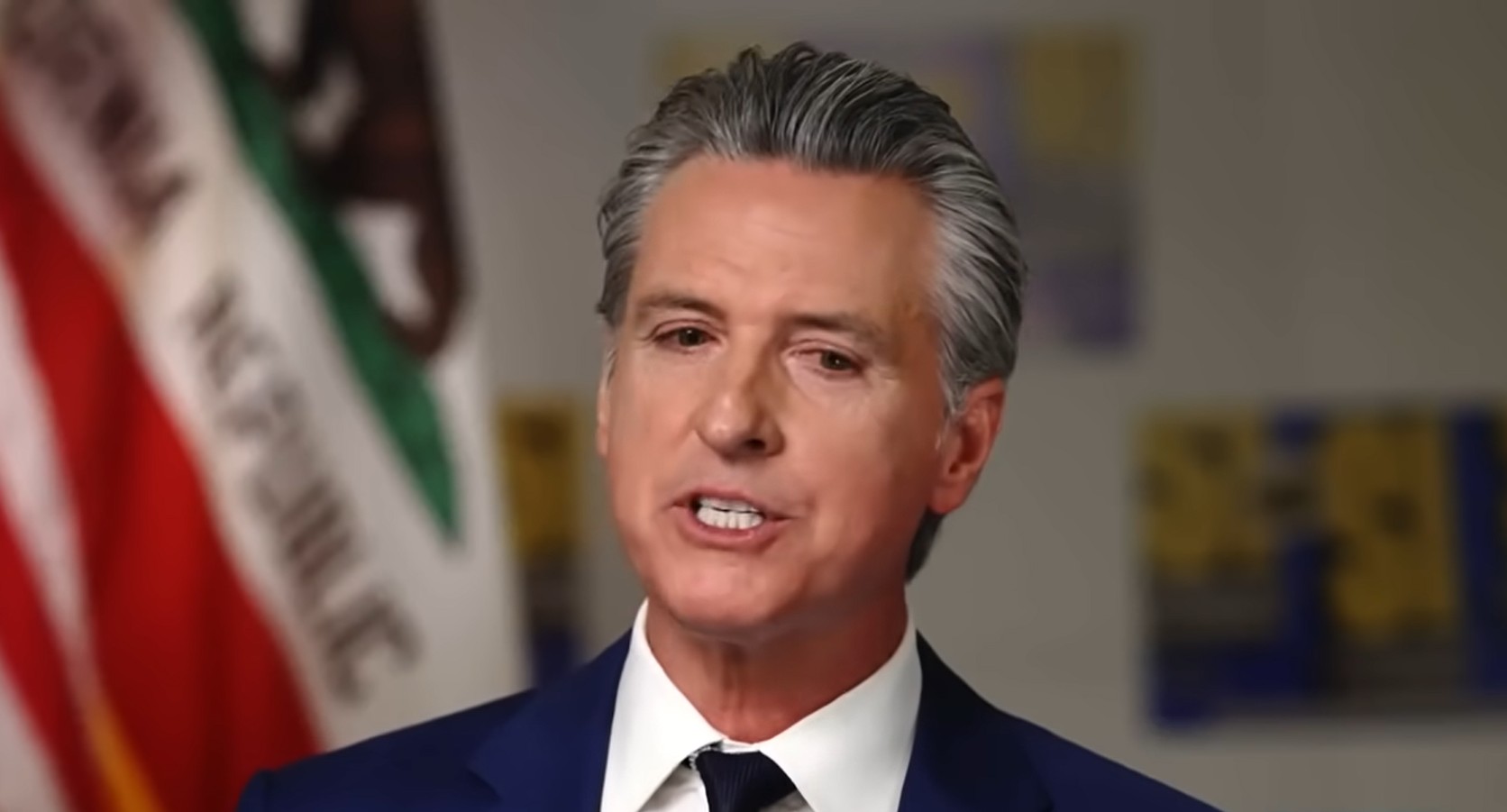

California Gov. Gavin Newsom has decided that the latest battleground between Sacramento and Washington will be two letters: AI.
Newsom signed an executive order Wednesday requiring California state agencies to continue calling artificial intelligence “Artificial Intelligence” or “AI,” directly rejecting the new “Super Intelligence” terminology adopted by President Trump’s administration.
“I just signed an executive order permanently declaring Artificial Intelligence ‘Artificial Intelligence’ in California,” Newsom wrote on X, before adding, “You’re welcome, America.”
The order requires agencies and departments under Newsom’s authority to continue using “Artificial Intelligence,” “AI,” or “Artificial Intelligence (AI).”
Newsom also couldn’t resist turning a terminology dispute into another opportunity to jab at the White House.
“Super intelligence is clearly not coming from the White House, that’s why California continues to lead,” Newsom said while announcing the state’s latest AI policies.
President Trump’s executive order, signed September 29, officially inaugurated what the White House calls the “Era of Super Intelligence.” It directs executive departments and agencies to use “Super Intelligence” and “SI” instead of “Artificial Intelligence” and “AI” in official correspondence, websites, reports, policy documents and other non-statutory materials.
The Trump administration’s argument is that the technology has advanced so rapidly that the old name no longer adequately describes what frontier systems can accomplish.
“The extraordinary technologies being pioneered by American innovators far exceed what was envisioned when the term ‘Artificial Intelligence’ first came into use,” President Trump’s order states.
According to the White House, “Super Intelligence” better represents technologies capable of amplifying human ingenuity and unlocking new forms of creativity rather than merely imitating or automating human intelligence.
Importantly, the order does not magically rename the technology everywhere in America. It governs terminology within the federal executive branch, and previously issued regulations, contracts, grants and historical documents do not have to be rewritten. For now, the order also uses the existing federal statutory definition of artificial intelligence when defining “Super Intelligence.”
That makes Newsom’s order largely a declaration about how California’s own government will speak.
And, naturally, it arrived wrapped in politics.
Newsom paired the announcement with a package of new California laws regulating AI in the workplace. Among other provisions, the measures restrict employers from using AI to infer workers’ emotional states from biometric information, require notification when AI is involved in certain mass layoffs, and restrict reliance on AI when firing employees.
“AI should expand opportunity, not come at the expense of workers and families,” Newsom said.
Newsom has accused Washington of failing to provide sufficient federal leadership on AI regulation, while the Trump administration has emphasized innovation, economic growth and American technological leadership. Those are competing policy approaches, and now they apparently come with competing dictionaries too.
Strip away the social-media trolling and the episode illustrates a broader federal-state divide over emerging technology. President Trump wants federal agencies thinking in terms of a rapidly advancing era of “Super Intelligence.” Newsom wants California to retain the familiar terminology while pursuing its own regulatory framework.
So Americans can now add another difference between Washington and Sacramento to the list.
In federal executive-branch documents, increasingly expect “SI.”
In California government, it remains “AI.”
Apparently even the robots have been dragged into American politics.
Leave a Comment