
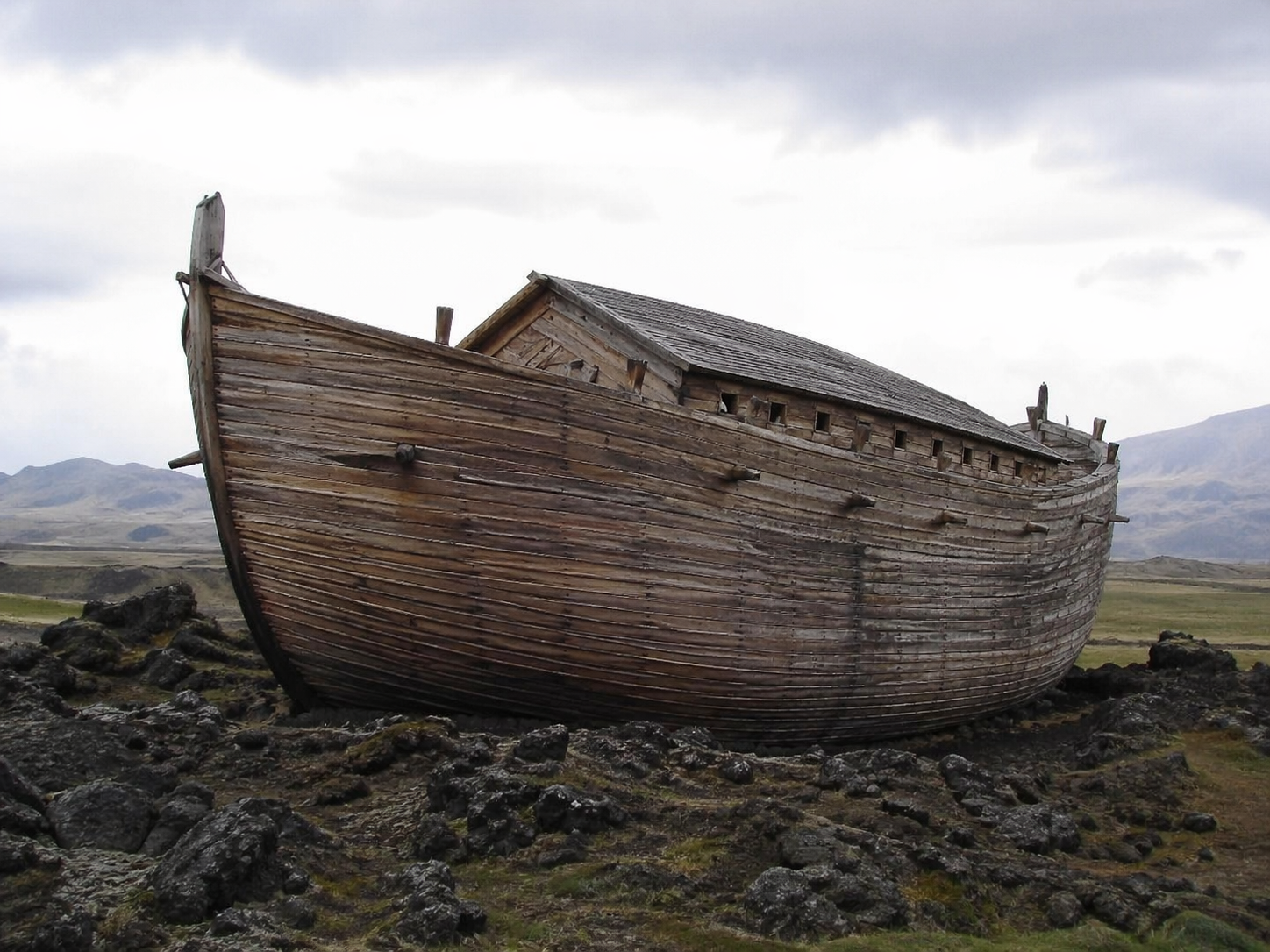

A discovery in eastern Turkey is once again stirring one of history’s oldest debates, and predictably, the skeptics are already warming up their eye-roll muscles. Researchers studying a boat-shaped land formation near the Iranian border say new evidence may support the claim that the site contains the buried remains of Noah’s Ark.
To many believers in the historical authority of the Bible, this is not some fringe curiosity. It is another possible confirmation that Scripture describes real events, real places, and real history. To others, it is an inconvenient headline that interrupts the modern habit of dismissing anything ancient and biblical as myth.
Andrew Jones, a researcher with the Noah’s Ark Scans team, recently appeared on Fox News to discuss what his group has uncovered. He did not hedge his words behind the usual academic fog machine.
“I do believe that this is the real, decayed, buried remains of Noah’s Ark, the famous ship,” Jones said. “And we’re doing our best to convince the skeptics and show the world this site.”
That alone was enough to send internet critics into their usual routine of smug certainty. But Jones also described new findings that deserve attention.
According to the research team, scans of the formation revealed tunnels roughly four meters below the surface and around two meters high, running down the center and along the inner edges of the structure. Jones said they may also have identified support beams and walls, features that would strongly suggest human construction rather than a random geological bump in the landscape.
In other words, this may be more than just a strangely shaped hill with good public relations.
The dimensions of the site are another reason researchers remain interested. Jones says the measurements align closely with the biblical description of Noah’s Ark, listed as 300 cubits in the Book of Genesis. That sort of correspondence does not automatically prove the claim, but it certainly keeps the conversation alive.
Then there is the soil testing. In 2024, the team reportedly collected 88 random soil samples inside and outside the formation. Jones said the soil inside showed three times more organic matter and 38 percent more potassium than the surrounding ground. Researchers also observed differences in grass color, with yellower vegetation appearing inside the outlined shape.
That suggests the site may contain material unlike the natural terrain around it.
Adding to the mystery, fossilized seashells and coral have reportedly been found in the area, which now sits around 6,500 feet above sea level. Jones argues that such finds indicate the region was underwater at some point, a detail that naturally sparks flood-related discussion.
Now, none of this guarantees that archaeologists will soon uncover a giant wooden nameplate reading “Noah’s Ark, established post-flood.” Real science takes time. But discoveries like this matter because they challenge the lazy assumption that biblical history must always be fiction until proven otherwise.
Maybe the skeptics are right. Maybe they are not. But every time new evidence surfaces, faith looks a little less irrational and critics look a little more annoyed.
Leave a Comment