
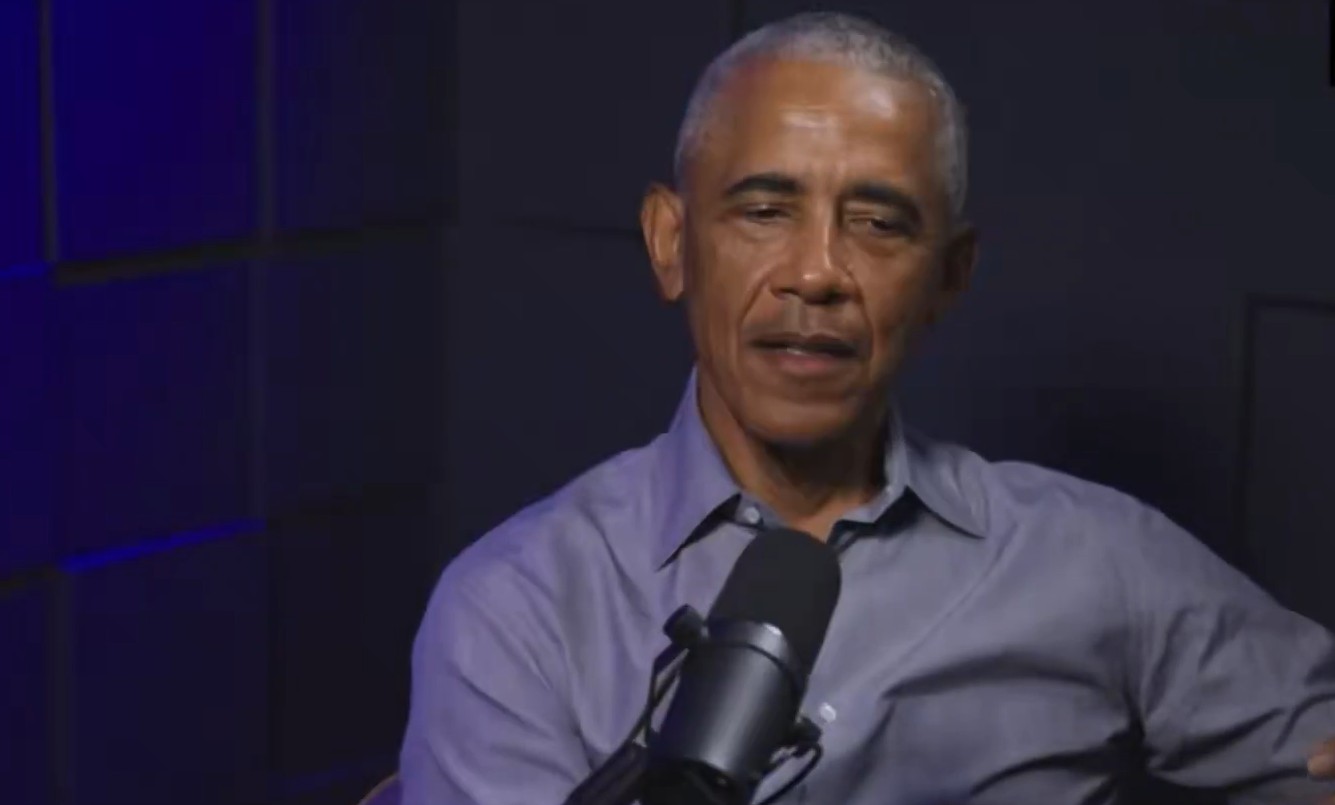

Former President Barack Obama launched a sharp attack on the Supreme Court Wednesday after its blockbuster ruling on Louisiana redistricting, accusing the conservative majority of gutting a core protection of the Voting Rights Act. The reaction was swift, dramatic, and entirely predictable.
In a post on X, Obama claimed the decision “effectively guts a key pillar of the Voting Rights Act,” arguing it frees state legislatures to weaken minority voting strength through partisan gerrymandering. He also accused the Court of abandoning its historic role in protecting minority rights and equal participation in elections.
That is the political framing. The legal reality is more complicated.
The ruling came in the Louisiana map case, where the Court struck down a congressional district plan that created a second majority-black seat. In a 6-3 opinion written by Justice Samuel Alito, the justices held that Louisiana relied too heavily on race when drawing the district, making it an unconstitutional racial gerrymander under the Equal Protection Clause.
That distinction matters. The Court did not erase the Voting Rights Act of 1965. It did not outlaw protections for minority voters. It ruled that states cannot use race as the dominant factor in district design unless the law clearly requires it.
For years, Section 2 of the Voting Rights Act has been used to challenge maps alleged to dilute minority voting power. Critics say lower courts stretched that authority so far that states were pressured into sorting voters by race to avoid lawsuits. The majority opinion signaled that enough was enough.
Alito wrote that Section 2 was designed to enforce the Constitution, not collide with it. That line goes to the heart of the case. Equal protection does not become optional because mapmakers invoke noble intentions.
Obama, however, cast the decision as part of a broader trend. He argued the Court has repeatedly reduced protections for minority groups and warned that states will now exploit politics as cover for racial discrimination.
That warning will resonate with activists, but it also overlooks an inconvenient truth. Politics has always shaped redistricting. Every census cycle becomes a knife fight with spreadsheets. The Court’s ruling simply says racial engineering cannot be the automatic solution.
Obama did end with a familiar call to action, urging citizens to mobilize and vote in record numbers. On that point, there is little disagreement. Elections matter, which is exactly why district lines matter.
Louisiana’s case arose after activists successfully challenged the state’s earlier map, claiming black residents, roughly 30 percent of the population, were underrepresented with only one majority-black district. Lawmakers revised the lines, then other voters sued, saying race had become the controlling factor. The Supreme Court agreed.
This ruling will reshape map battles nationwide heading into 2026. Expect more litigation, more outrage, and more cable news panels pretending polygons are sacred texts.
What happened Wednesday was not the death of voting rights. It was the Court reminding everyone that constitutional limits still apply, even when politicians wrap themselves in civil rights rhetoric.
Leave a Comment