

Alabama’s congressional redistricting battle has once again become a national political flashpoint, and this time Republicans in the state are arguing the GOP may still be leaving seats on the table despite a major legal victory at the U.S. Supreme Court.
In May 2026, the Supreme Court cleared the way for Alabama to move forward with its 2023 congressional map after vacating lower-court rulings that had blocked the plan. The decision followed the Court’s recent Louisiana ruling that narrowed how Section 2 of the Voting Rights Act is applied in redistricting disputes involving race.
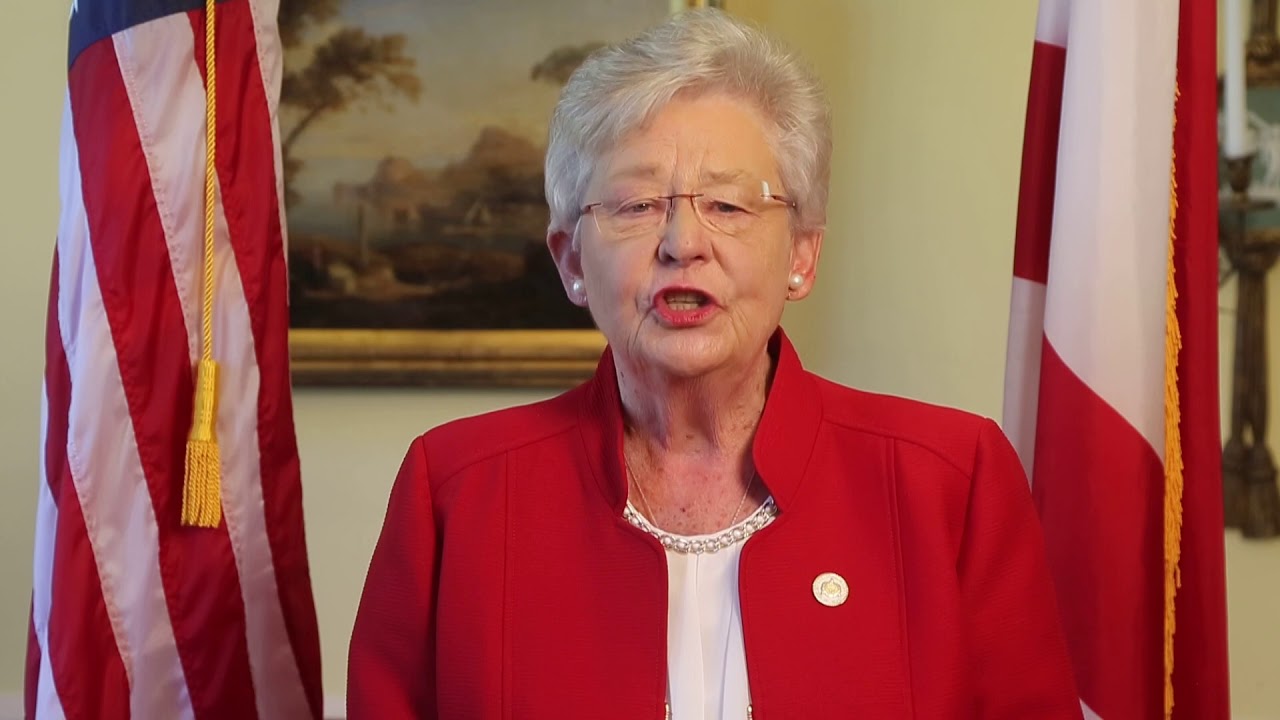
That shift immediately changed the political landscape in Alabama. Governor Kay Ivey quickly responded by scheduling a special primary election for August 11, 2026, allowing candidates to run under the restored 2023 district boundaries. Earlier primary results in several districts were voided as part of the transition.
The restored map maintains Alabama’s seven congressional districts while preserving a single majority-black district, the Seventh Congressional District, which has long elected Democrat Terri Sewell. The remaining six districts are expected to strongly favor Republicans, likely resulting in a 6-1 Republican advantage in Alabama’s congressional delegation.
For many Republicans, that outcome still is not aggressive enough.
Critics inside the GOP argue Alabama’s political makeup should easily support a fully Republican congressional delegation. The state voted overwhelmingly for President Trump in 2024, with Trump winning more than 64 percent of the vote compared to Kamala Harris’ 34 percent. Republicans point to those numbers and ask a simple question: why should Democrats still be guaranteed a congressional seat in a state where Republican candidates dominate statewide elections by double digits?
Conservative commentator Ryan Girdusky voiced that frustration directly, criticizing Governor Ivey for preserving the Seventh District in its current form.
“For absolutely no reason [Governor Kay Ivey] is giving Democrats a free seat in AL-07,” Girdusky said. “The seat is racially gerrymandered, drawing in black voters from across the state into one district.”
That criticism reflects a growing argument among conservatives nationwide that racial gerrymandering has distorted congressional representation for decades under the banner of Voting Rights Act compliance. Republicans increasingly contend that voters should be grouped geographically and politically, not sorted primarily by race to engineer predetermined electoral outcomes.
Supporters of Alabama’s map counter that the Seventh District preserves minority representation and complies with longstanding legal precedent. Still, the Supreme Court’s latest rulings suggest the judicial appetite for race-centered redistricting mandates may be fading rapidly.
The comparison with Massachusetts has also fueled conservative frustration. Despite Massachusetts voting roughly 61 percent Democrat and 36 percent Republican in the 2024 presidential election, Democrats hold all nine congressional seats in the state. Meanwhile, Alabama Republicans are preserving a Democrat-controlled district in a state that gave President Trump nearly two-thirds of the vote.
That contrast has many Republicans asking why redistricting standards seem to operate differently depending on which party benefits. In Alabama, the legal fight may be winding down, but the political argument inside the Republican Party is clearly just heating up.
Leave a Comment