
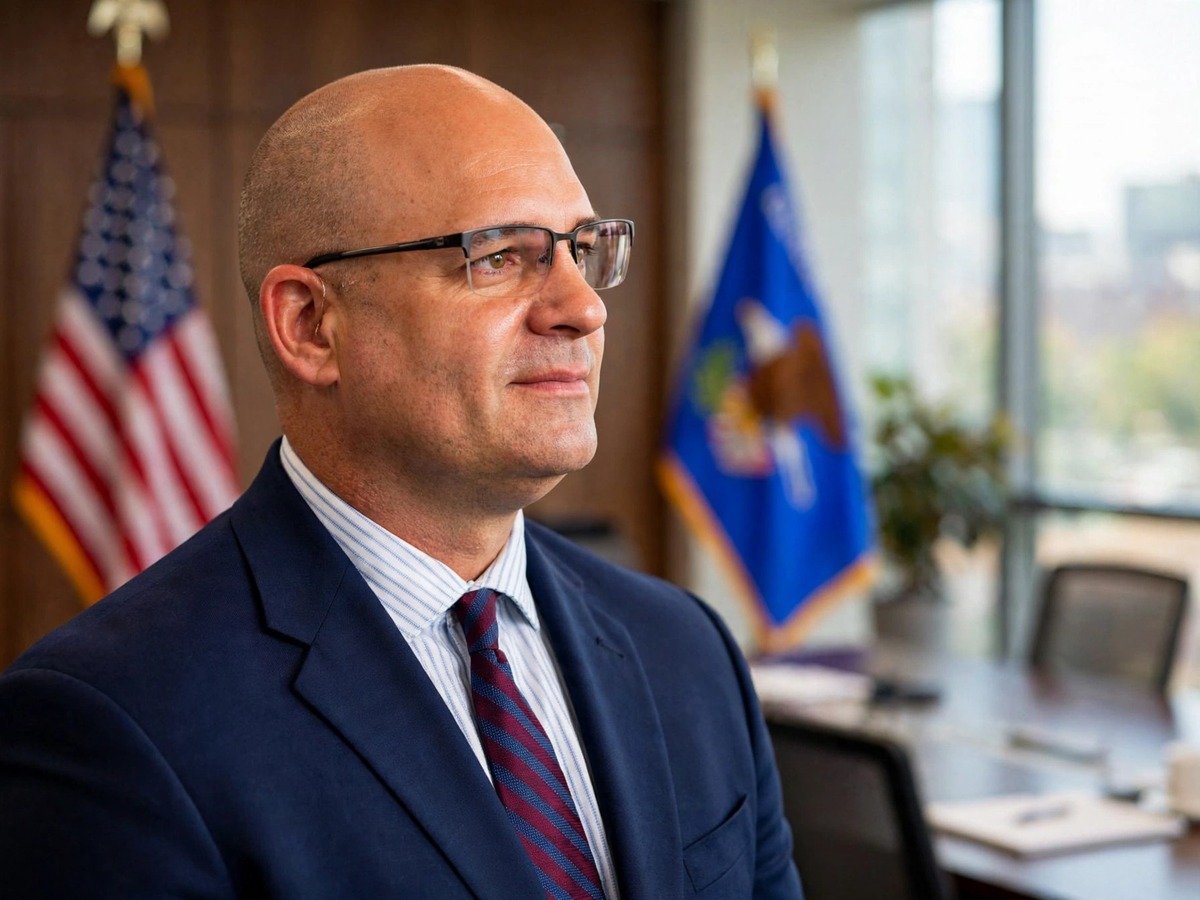

Harmeet Dhillon, one of President Trump’s most consequential Justice Department officials, is stepping down as assistant attorney general for the Civil Rights Division. Her departure follows a dramatic overhaul of the office’s priorities, one that turned the division into a battlefield over race, free speech, gun rights, religious liberty and voter records.
Attorney General Todd Blanche confirmed the departure Thursday and praised Dhillon’s public service.
“Harmeet Dhillon has led the Civil Rights Division with conviction. She has defended the civil liberties of every American and enforced the law without fear or favor. The Department is grateful for her dedicated public service, and we wish her every success in her future endeavors.”
The announcement does not provide Dhillon’s final day, identify her successor or explain why she chose this moment to leave. That timing is already attracting attention because it came two days after Republicans suffered major midterm losses. Washington’s speculation machine will not be taking the day off, but the public record does not establish that the election result caused her resignation.
The Associated Press reported that Dhillon radically changed the direction of the Civil Rights Division. During her tenure, the office pursued cases involving alleged race preferences, antisemitism on college campuses, gun rights and voter records. She also rejected what she described as ideological enforcement left over from the prior administration. Critics accused her of abandoning older enforcement priorities, while Dhillon argued that federal civil-rights law should apply equally to every American rather than advance what she called woke ideology.
That argument made her a deeply polarizing figure inside and outside the department. Apparently, applying one legal standard to everyone remains a controversial concept in modern Washington.
Dhillon was not a conventional Washington bureaucrat. President Trump nominated the longtime conservative attorney in December 2024, the Senate confirmed her on April 3, 2025, and she was sworn in four days later. Before joining the administration, she founded the Dhillon Law Group and the Center for American Liberty. Her private legal work included challenges involving Big Tech censorship, government COVID restrictions, religious worship and race-based policies.
The Justice Department’s official biography also traces her legal career through New York, London, Silicon Valley and San Francisco after a federal appellate clerkship. She earned her law degree from the University of Virginia, served on the editorial board of the Virginia Law Review and built a national profile before taking charge of federal civil-rights enforcement.
Those priorities soon appeared in the division’s public docket. In October, Dhillon announced findings that UCLA Law had used race-keyed admissions standards after the Supreme Court’s decision against racial preferences in university admissions. Her division said UCLA Law’s academic bar moved according to an applicant’s race and warned that the department would sue if the school did not correct the alleged violations.
Her office also created a Second Amendment enforcement section, investigated alleged antisemitism at major universities, challenged DEI programs and demanded access to state voter records. Supporters saw an overdue course correction and welcomed federal action involving Christians, gun owners, Asian applicants, white applicants and parents who believed institutions had dismissed their rights.
Opponents saw the same moves as political weaponization of a division created to protect historically disadvantaged groups. The dispute produced a fierce personnel battle, with large numbers of career lawyers leaving. Dhillon openly welcomed the chance to rebuild with attorneys who shared the administration’s commitment to race-neutral enforcement.
Her resignation leaves basic questions unanswered, including when she will officially depart, who will replace her and why she chose this particular moment. The record does show that her tenure challenged the old operating assumptions at the Civil Rights Division, and that fight will continue long after her exit.
Leave a Comment