
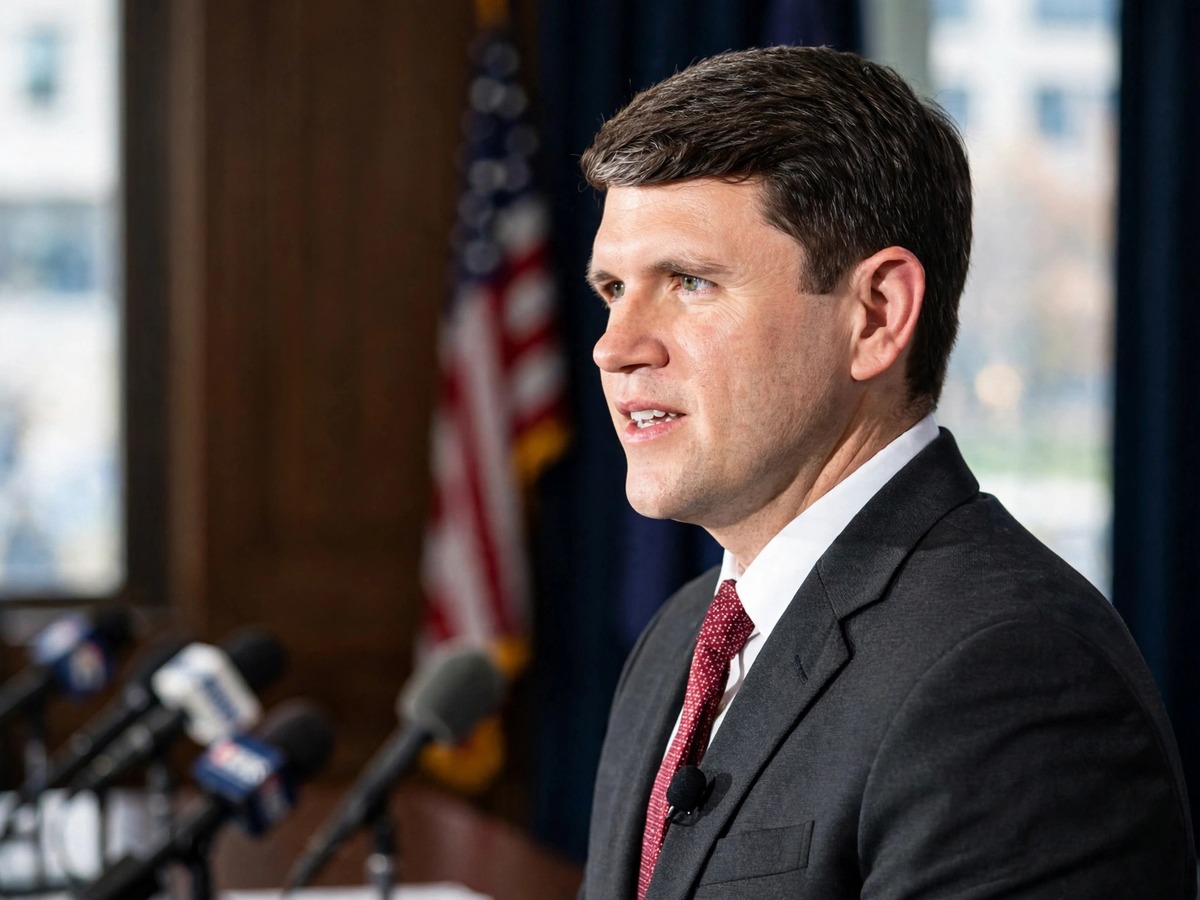

President Trump put a serious Kansas election allegation in the national spotlight Sunday night, but the state attorney general’s office had already taken action. President Trump said Kansas Attorney General Kris Kobach told him an operative was caught on camera going door to door in Wichita and offering gift cards for votes. He called the alleged conduct a “criminal offense” and said photographic evidence exists.
The claim did not arrive only as an anonymous social-media post. On October 31, Kobach’s office issued a formal cease-and-desist letter to Bluestem Kansas after receiving evidence from a Kansas voter. The office said the voter reported being offered a $5 gift card by a canvasser who identified himself as working with the group. The release did not identify the voter or canvasser, and it did not say how many voters may have received similar offers.
The attorney general also ordered Bluestem Kansas to preserve records connected to its canvassing work. That includes emails, text messages, scripts, training materials, payment records and communications with vendors or canvassers. That paper trail could help establish what happened, who knew about it and whether the alleged offer went beyond one reported encounter. Election campaigns are noisy enough without turning door-to-door canvassing into a checkout line. If the allegation is substantiated, offering something of value for a vote would be a serious matter, not a clever campaign gimmick.
There is an important legal distinction, however. The attorney general announced a cease-and-desist action and an investigation-related demand to preserve records. The office did not announce a criminal charge or conviction. That distinction matters, especially when the allegation lands during the final weekend before voters head to the polls.
At President Trump’s November 1 rally in Salina, he described the alleged operative as a “radical left PAC operative” and said the person was caught on camera offering gift cards and money to get people to vote. President Trump said photographic evidence exists and called the alleged conduct a “criminal offense.” He then called Kobach to the stage.
Kobach praised President Trump’s focus on election integrity and said “voter fraud is real and must be confronted,” but he offered no additional details about the Wichita allegation. The exchange came roughly 32 minutes into the speech, after President Trump urged Kansas Republicans to turn out Tuesday. The transcript presents the allegation as information Kobach had given President Trump, not as evidence President Trump said he had personally reviewed.
The timing is politically significant. Kansas voters were scheduled to go to the polls Tuesday, and the allegation surfaced during the final weekend of a closely watched midterm campaign. Kobach was also on the ballot and spent the closing days emphasizing his law-enforcement support. He thanked Woodson County Sheriff Jacob Morrison for backing him in a final campaign post.
KCTV5 independently reported the cease-and-desist and described the same alleged $5 gift-card offer. The station said it contacted Bluestem Kansas for comment but had not received a response when its report was published. That leaves the organization’s position unanswered, including whether it disputes the canvasser’s account, denies authorizing an incentive or plans to comply with the records demand.
KCTV5 also reported that Kobach’s office is asking anyone offered cash, a gift card or another voting incentive to provide dates, locations, photos, videos and any material a canvasser left behind. Those reports could help investigators determine whether the alleged $5 offer was isolated or part of a wider practice.
Leave a Comment