
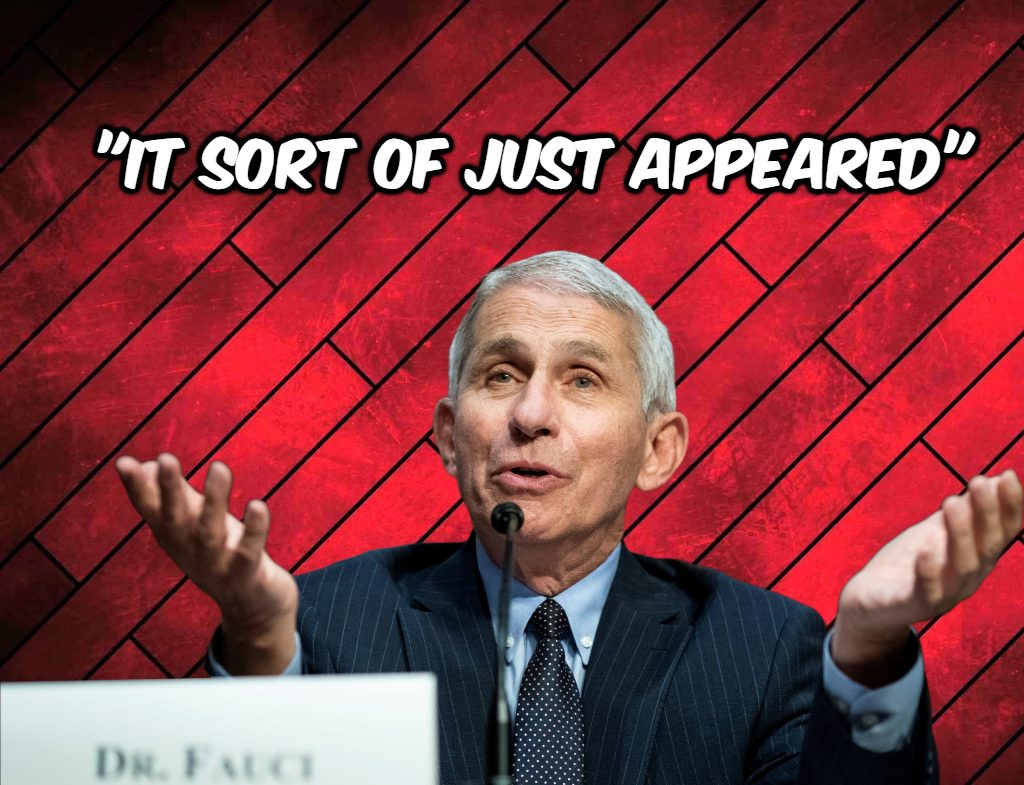

Tulsi Gabbard chose not to spend her final day as Director of National Intelligence quietly packing boxes and collecting farewell plaques. Instead, she released what she described as hundreds of “never-before-seen” documents and communications that she says expose Dr. Anthony Fauci’s role in funding dangerous gain-of-function research, influencing intelligence assessments on COVID-19, and misleading Congress under oath.
According to Gabbard, the newly declassified material was the result of a yearlong review process conducted by the Office of the Director of National Intelligence. She argues the documents reveal a coordinated effort involving Fauci and elements within the intelligence community to suppress information about the origins of COVID-19 and protect officials from accountability.
In a video statement announcing the release, Gabbard alleged that Fauci, while serving as head of the National Institute of Allergy and Infectious Diseases, directed millions of taxpayer dollars toward gain-of-function research involving bat coronaviruses at the Wuhan Institute of Virology. She further stated that the research is now widely viewed as being connected to the laboratory leak theory surrounding the pandemic’s origins.
Gabbard did not stop there.
She claimed that hundreds of reviewed emails demonstrate Fauci’s involvement in discussions with intelligence officials regarding COVID-19, despite his sworn testimony to Congress in 2024 in which he reportedly denied participating in such discussions. According to Gabbard, the documents directly contradict those statements and expose what she called a deliberate cover-up.
She characterized the effort as being “straight from the deep state playbook,” arguing that career officials worked to suppress dissenting views and marginalize analysts who challenged the preferred narrative surrounding the virus’s origins.
Among the most significant allegations are claims from intelligence community whistleblowers. Gabbard said multiple witnesses described retaliation against analysts and contractors who supported the lab leak hypothesis or questioned official conclusions. According to her account, some employees faced threats to their careers, while others allegedly suffered professional setbacks after expressing dissenting opinions.
One example cited by Gabbard involved a contractor who was reportedly terminated shortly after coming forward as a whistleblower. She also claimed managers reminded analysts that leadership would ultimately determine promotions, creating pressure to conform to approved conclusions.
Gabbard further alleged that Fauci acted as a behind-the-scenes advisor in shaping intelligence assessments that favored a natural-origin theory for COVID-19. She argued that financial interests connected to pharmaceutical companies and the pursuit of universal vaccines played a role in protecting that narrative.
The release immediately drew praise from Senator Rand Paul, one of Fauci’s most persistent critics during and after the pandemic. Paul noted that he had referred Fauci to President Trump’s Department of Justice multiple times and hinted that additional developments could be forthcoming.
The announcement also follows Gabbard’s recent disclosure of declassified materials involving U.S.-funded biological laboratories around the world, including facilities in Ukraine. She argued that Americans had been denied access to critical information regarding government-funded research involving highly infectious pathogens and gain-of-function experimentation.
Whether the newly released documents ultimately lead to criminal referrals, congressional action, or additional investigations remains to be seen. What is certain is that Gabbard’s final act as Director of National Intelligence has reignited one of the most controversial debates of the COVID era.
For millions of Americans who spent years questioning official narratives surrounding the pandemic, the release is being viewed as a major moment in the ongoing fight for transparency and accountability. The political and legal fallout could be substantial if the allegations contained in the documents withstand scrutiny.
Leave a Comment