
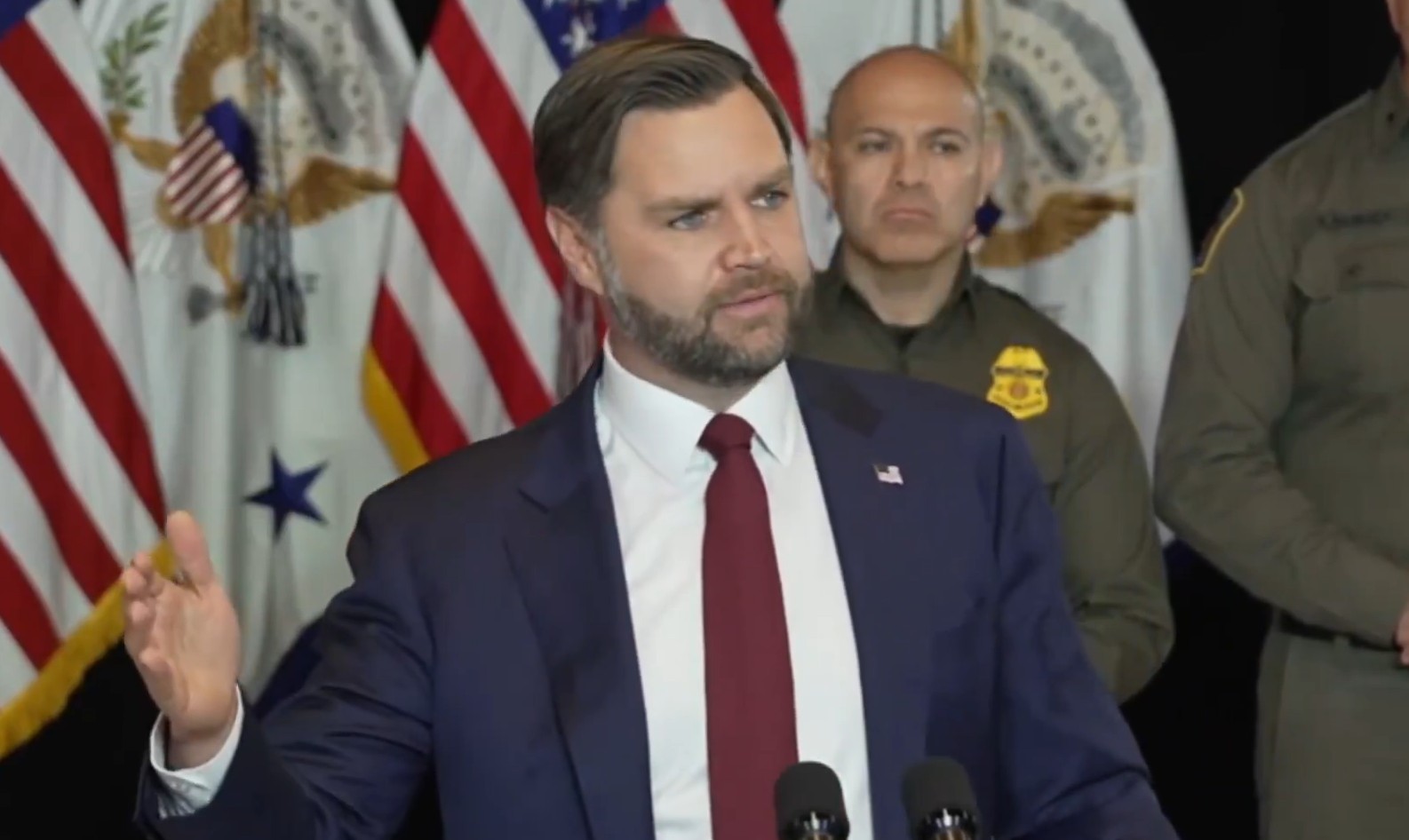

Vice President JD Vance announced a major expansion of the federal government’s pandemic-fraud crackdown Monday, saying roughly 870,000 borrowers suspected of abusing COVID-era small-business programs will be blocked from receiving future federal small-business loans.
The action involves borrowers connected to an estimated $39 billion in suspected fraud involving the Paycheck Protection Program and Economic Injury Disaster Loan program. Both initiatives were dramatically expanded during the pandemic to provide emergency assistance to businesses struggling with shutdowns and economic disruption.
Vance said the government’s position is straightforward: people determined to have cheated programs funded by taxpayers should not be allowed to return later and seek additional government-backed assistance.
“As it happens with so many of the programs that are born out of the generosity of the American taxpayer, we had many, many people who took advantage of those programs, people who decided to steal from the American taxpayer, steal money that was supposed to go to small businesses and American workers as well,” Vance said Monday.
He followed that with an even more direct warning.
“If you screw the American taxpayer, the government is now gonna say you’re cut off, no more.”
The announcement represents the Small Business Administration’s largest suspension action in its ongoing review of pandemic loans. According to reports on the announcement, the affected borrowers span 45 states, six territories and the District of Columbia.
The government’s effort does not mean that every one of the approximately 870,000 borrowers has been criminally convicted of fraud. The action concerns borrowers suspected of fraudulent activity, and federal officials have described procedures allowing affected borrowers to challenge their suspensions. Criminal fraud cases require separate investigations and prosecutions.
The latest move follows months of state-by-state reviews by the SBA. In July, for example, the agency announced that it had suspended approximately 7,800 Wisconsin borrowers connected to $375 million in suspected fraudulent PPP and EIDL activity. SBA Administrator Kelly Loeffler said at the time that the agency was working with the White House Task Force to Eliminate Fraud to examine pandemic lending records.
Federal prosecutors have simultaneously continued pursuing criminal cases involving applicants accused of fabricating businesses, payrolls, employees and financial records to obtain pandemic money.
Those prosecutions are not merely theoretical. Earlier this month, the Justice Department detailed a case involving a former Indiana medical student who petitioned to plead guilty to wire fraud after prosecutors said he fraudulently obtained more than $326,000 through PPP and EIDL applications. Prosecutors said some applications involved a purported tutoring business that had no customers, employees or revenue, while other applications used the identities of friends and relatives.
Other recent cases demonstrate how varied the alleged schemes became. The Justice Department announced coordinated arrests in June involving defendants accused of submitting fraudulent pandemic-relief applications, while prosecutors around the country have continued securing convictions and sentences in older PPP and EIDL cases.
The scale of suspected pandemic fraud has remained a significant concern years after the emergency programs ended. The SBA’s inspector general has previously estimated that potentially fraudulent PPP and EIDL disbursements could total approximately $200 billion.
Monday’s announcement adds another consequence beyond criminal prosecution or collection efforts. Borrowers placed under suspension can lose access to future SBA-backed financing, effectively preventing them from returning to the same federal lending system they are suspected of abusing.
Vance chairs the White House Task Force to Eliminate Fraud, while the Justice Department has established a National Fraud Enforcement Division aimed at investigating fraud against federal programs. Recent Justice Department announcements specifically describe its work as supporting the administration’s broader task force.
For hundreds of thousands of borrowers now under scrutiny, the government’s response to suspected pandemic fraud is no longer limited to attempting to recover old money. Federal officials are increasingly looking to determine who should be allowed access to taxpayer-backed programs in the future.
Leave a Comment