
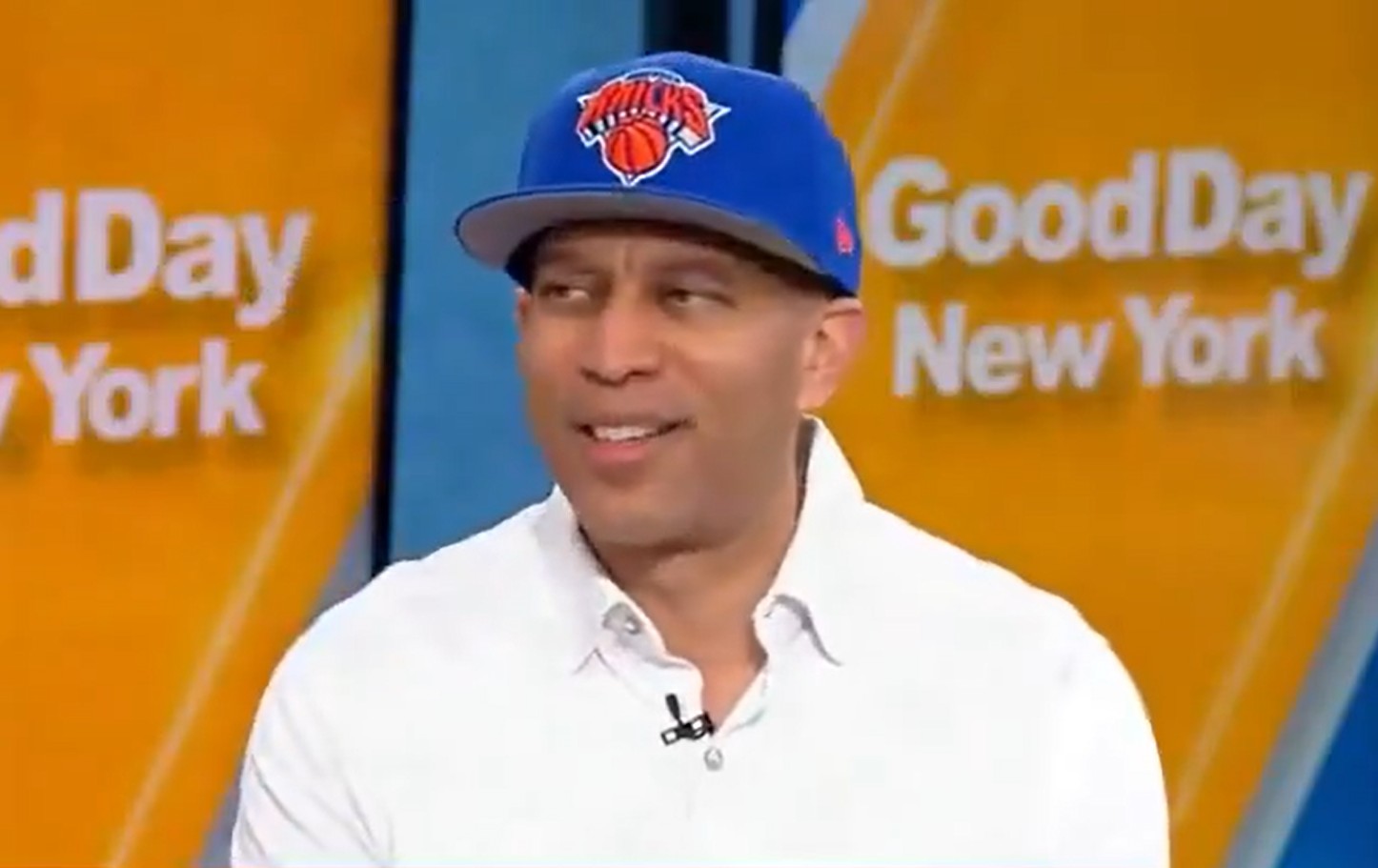

House Minority Leader Hakeem Jeffries walked into what was supposed to be a routine television interview Monday and instead found himself repeatedly defending Democratic economic records after a series of pointed questions from Fox 5 New York hosts Rosanna Scotto and Dan Bowens.
Jeffries appeared on Good Day New York to discuss a variety of political issues, but the conversation quickly shifted toward the economy and the rising cost of living. The Democratic leader argued that President Trump’s foreign policy decisions and tensions involving Iran had contributed to higher energy prices and increased costs for American consumers.
According to Jeffries, uncertainty surrounding the Strait of Hormuz, one of the world’s most important oil shipping routes, has created economic instability that ultimately affects working families through higher fuel and grocery prices. He characterized the situation as the result of a “reckless war of choice” and suggested Americans are paying the price at the pump and in the checkout line.
However, the hosts were not content to let that argument go unchallenged.
Rosanna Scotto quickly pointed out that high gas prices were hardly a new phenomenon and noted that Americans experienced similar pain during previous Democratic administrations.
“All right, listen, the gas prices were this high under Obama, too,” Scotto said.
Jeffries attempted to respond before Scotto followed up with another question.
“And Biden, right?” she asked. “President Biden, didn’t we have gas prices at over $5?”
Jeffries responded by attributing those spikes to conditions following the COVID-19 pandemic.
“No, well, they were gas prices in the immediate aftermath of the pandemic situation,” he replied.
The exchange became even more uncomfortable when Scotto brought up another issue that frustrated millions of Americans during Biden’s administration: grocery prices.
“And I remember eggs were like $12 a dozen,” Scotto said.
That comment highlighted one of the biggest political vulnerabilities Democrats continue to face. While party leaders often focus on current economic concerns and criticize Republican policies, many voters still remember the inflation surge that drove up the cost of food, gasoline, housing, and other necessities over the past several years.
As Jeffries continued attempting to focus attention on affordability concerns under President Trump, the interview increasingly became a discussion about inflation during Democratic administrations. Instead of advancing his original message, Jeffries spent much of the segment explaining or defending economic conditions that occurred under Biden.
The timing of the exchange was particularly notable given developments in global energy markets. Oil prices fell sharply Monday after President Trump announced a peace agreement framework with Iran, easing concerns about a prolonged Middle East conflict and the potential closure of the Strait of Hormuz.
The announcement sent both Brent crude and West Texas Intermediate oil prices to their lowest levels since March. Investors responded enthusiastically, pushing major stock indexes higher amid expectations that lower energy prices could reduce inflationary pressures and provide relief for consumers.
If crude prices remain at current levels, Americans could begin seeing lower prices at the gas pump in the coming weeks. Transportation, technology, and consumer-related stocks all benefited from renewed optimism surrounding global energy stability.
By the conclusion of the interview, Jeffries reiterated that lowering costs for American families should remain a top priority. Yet the most memorable moments came from Scotto’s persistent questions about gas prices, inflation, and grocery costs under Democratic leadership. Rather than focusing exclusively on criticism of President Trump, Jeffries found himself revisiting some of the most politically damaging economic memories of the Biden era, a challenge Democrats continue to face as they make their case to voters.
Leave a Comment