
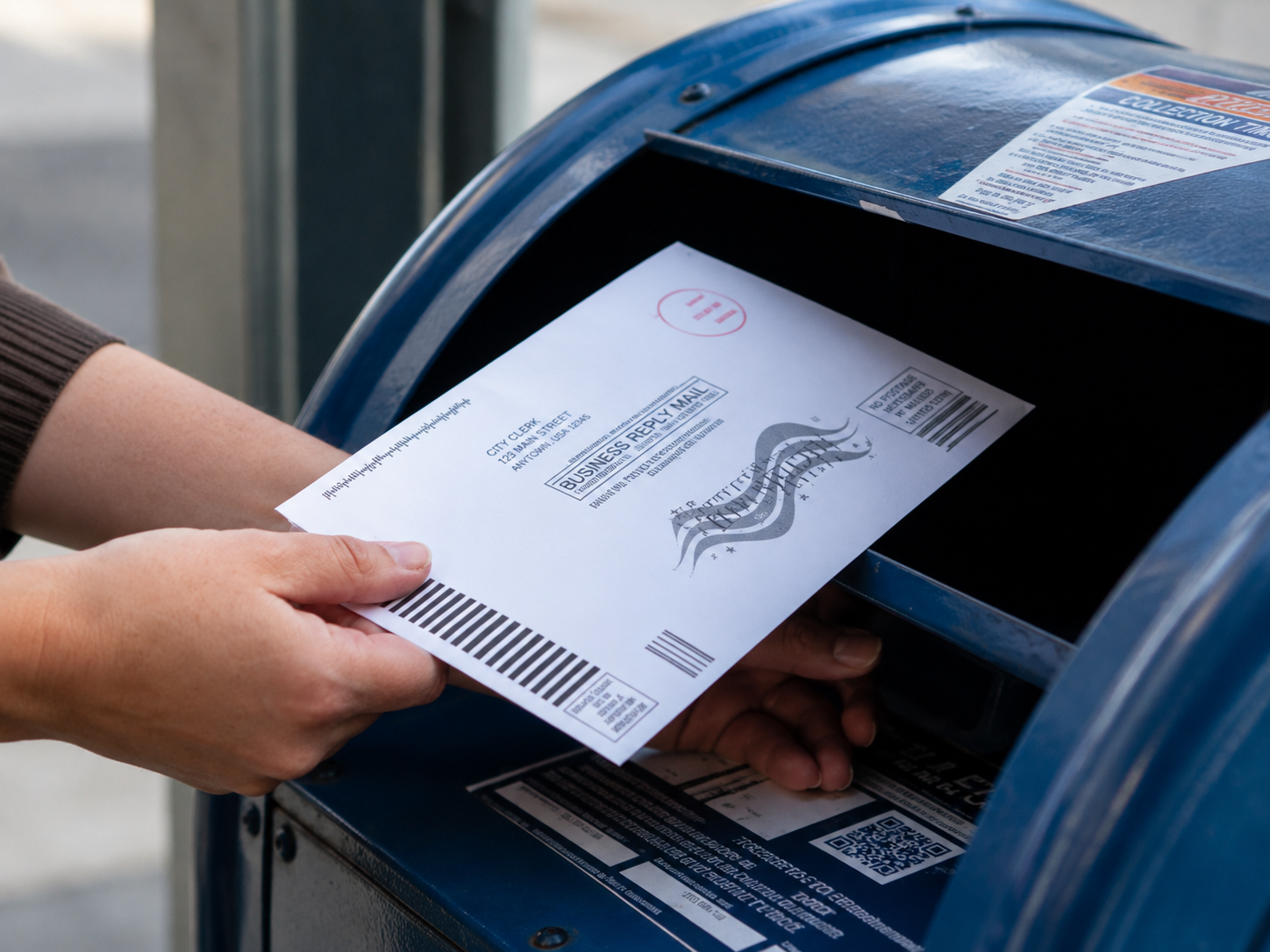

The U.S. Postal Service is moving forward with new procedures surrounding mail-in ballots ahead of November’s midterm elections, adding another chapter to the national battle over election administration, citizenship verification and absentee voting.
Under the new policy described in the announcement, states seeking certain USPS assistance with absentee and mail ballots will need to notify the Postal Service at least 60 days before the election if they plan to provide lists of eligible voters using citizenship information.
The stated goal is straightforward: improve coordination and help ensure election mail reaches eligible voters.
Postmaster General David Steiner summarized the objective by saying the changes are intended to ensure “the right ballots are going to the right people.”
The policy follows provisions contained in a March executive order from President Trump aimed at changing federal election-related procedures, including measures concerning citizenship verification.
That broader effort has already encountered resistance in federal court. U.S. District Judge Indira Talwani recently blocked enforcement of portions of President Trump’s order nationwide, with concerns raised about potential disruption to election administration.
The White House, however, says it intends to continue pursuing election-security measures within its lawful authority.
“We will continue lawfully enacting the agenda President Trump was elected to enact – which includes the safety and security of American elections,” White House spokesperson Lauren Bis said.
The dispute matters because voting by mail is no longer some obscure corner of American elections.
According to the U.S. Election Assistance Commission figure cited in the report, approximately 30.3 percent of ballots in the 2024 general election were submitted by mail. When nearly a third of ballots travel through the postal system, procedures governing election mail inevitably become a major issue.
President Trump has repeatedly called for tighter election rules, particularly requirements designed to establish that individuals registering to vote are U.S. citizens. Federal law already prohibits noncitizens from voting in federal elections, while the political battle has increasingly centered on what documentation states should require and what role Washington should play in setting those standards.
The administration has also supported the SAVE America Act, legislation intended to establish documentary proof-of-citizenship requirements for voter registration and identification requirements for voting. The proposal has faced resistance in Congress, including disputes over federal authority, implementation and voter access.
Mail-ballot deadlines have generated another legal fight. In June, the Supreme Court upheld rules at issue in a case involving ballots received after Election Day but postmarked by the applicable deadline. Justice Samuel Alito criticized the majority’s decision in dissent.
Supporters of stricter election procedures argue that verification requirements can strengthen public confidence and reduce opportunities for improper voting. Critics counter that additional federal requirements can create administrative burdens and potentially make voting more difficult for eligible citizens.
Those arguments are unlikely to disappear before November.
For USPS, however, the immediate challenge is considerably less philosophical: millions of ballots have to travel through an enormous national mail network, arrive where they belong and be handled according to the applicable election laws.
With another national election approaching, even the mailbox has become part of Washington’s election-law battlefield.
Leave a Comment