
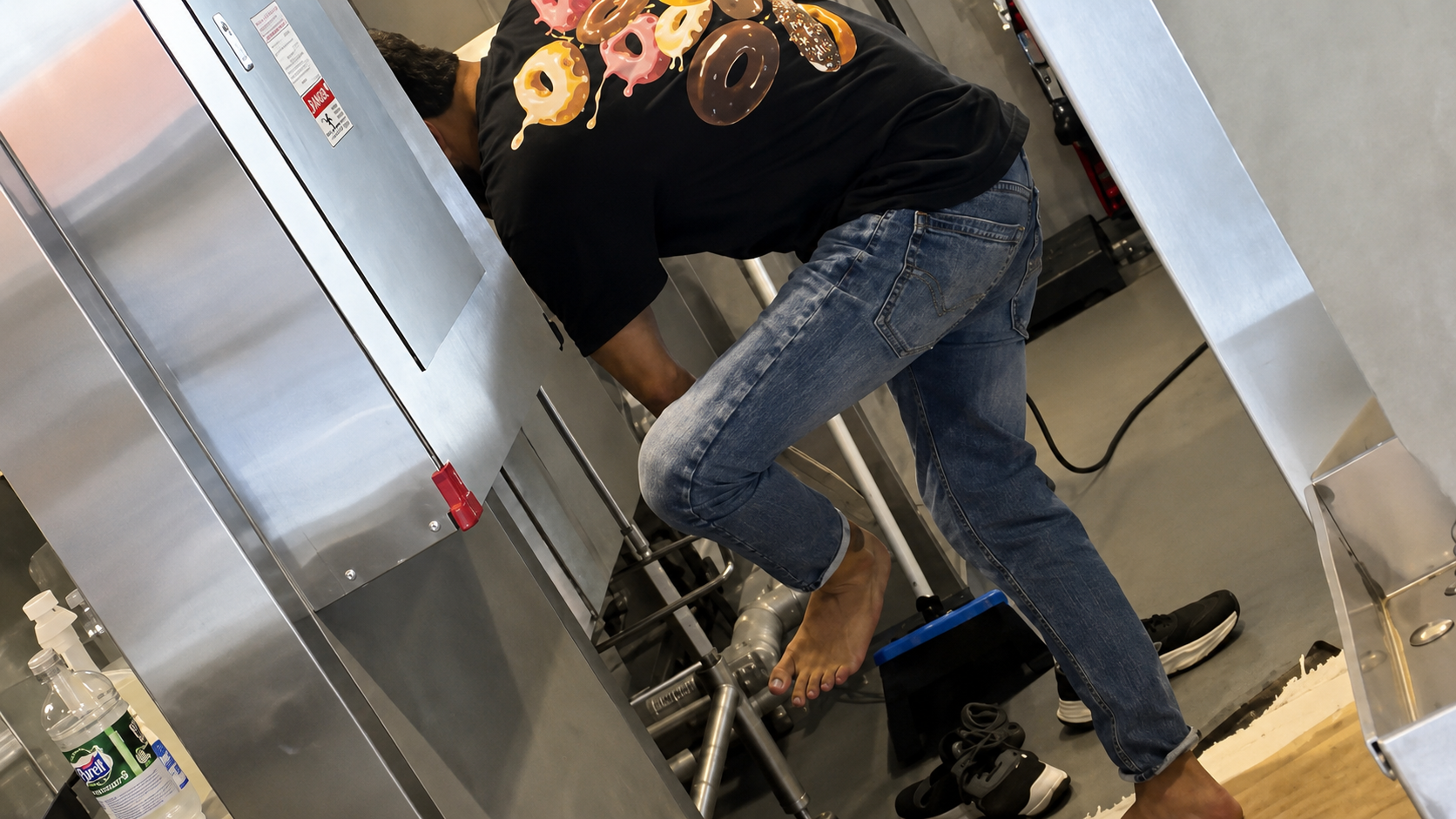

A viral video from a Dunkin’ location in New York City is giving customers a reason to think twice before ordering that coffee and Boston creme donut.
The footage, reportedly recorded at a Dunkin’ inside the Staten Island Ferry terminal, shows an employee appearing to wash his feet in a sink inside the restaurant. Predictably, the internet noticed. The clip quickly accumulated millions of views across TikTok and X, triggering disgust, jokes and, more importantly, scrutiny from New York authorities.
According to TMZ, the New York City Department of Transportation is investigating the incident. The New York Post also reported that the city Health Department is involved.
The employee may have been performing wudu, the Islamic ritual of washing before prayer. Wudu involves cleansing specific parts of the body, including the hands, face, arms and feet, and is commonly performed before the five daily Islamic prayers.
That religious context deserves to be explained accurately because otherwise the story quickly becomes something it isn’t.
The controversy isn’t that a Muslim employee wanted to perform a religious ritual. The controversy is that the video appears to show someone putting his foot into a sink inside a commercial food-service establishment.
Those are two very different issues.
Religious freedom is a fundamental American principle, but so are basic sanitation standards. Nobody ordering a glazed donut should have to wonder whether the sink in a restaurant was recently doubling as a foot bath. That’s not religious intolerance. That’s the completely ordinary expectation that restaurants maintain sanitary food-preparation environments.
The New York Post noted that online critics similarly focused primarily on the location of the washing rather than the practice of wudu itself. The sink shown in the footage was reportedly near areas associated with food preparation.
And that’s precisely why an investigation makes sense.
Authorities can determine exactly what kind of sink was involved, whether it was designated for food preparation or handwashing, whether applicable health regulations were violated, and what sanitation procedures were followed afterward.
Dunkin’ and the operator of the location also have an obvious responsibility to determine what happened and make sure employees have appropriate facilities and clear rules. If workers need religious accommodations, employers can address those needs without creating potential sanitation problems.
This really shouldn’t require a graduate seminar in cultural sensitivity.
Employees deserve reasonable religious accommodation. Customers deserve sanitary restaurants. Businesses are capable of respecting both principles simultaneously.
The viral reaction also demonstrates how quickly a local incident can become a national headache for a major restaurant brand. Twenty years ago, something like this might have generated a complaint to the manager. Today, somebody pulls out a smartphone, TikTok gets involved, millions of people see it, and suddenly government agencies are answering questions.
Welcome to restaurant management in 2026.
The investigation should establish the facts before conclusions are drawn about any specific health-code violation. But regardless of what authorities ultimately determine, restaurants would be wise to establish a pretty uncomplicated rule.
Food-service sinks are for food-service purposes.
Your customers really shouldn’t need to ask.
Leave a Comment