
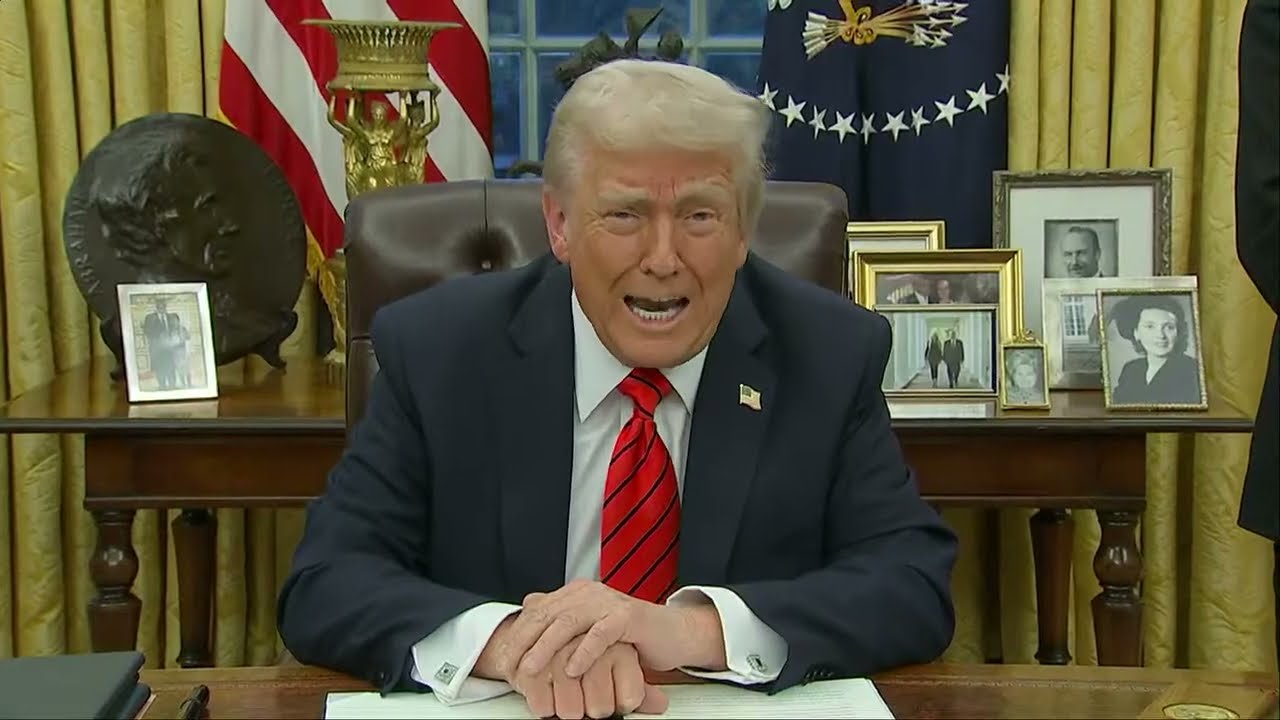

ABC could soon find itself under additional scrutiny from the Federal Communications Commission after the network declined to air President Trump’s recent primetime address on its broadcast network, a decision that has sparked questions from lawmakers and the FCC itself.
The speech centered on election security and alleged vulnerabilities surrounding the 2020 election. While several major networks chose not to carry the address over their traditional broadcast channels, the decision has generated a growing debate over whether broadcasters are fulfilling their obligation to serve the public interest.
FCC Chairman Brendan Carr made it clear this week that he believes major presidential addresses deserve airtime.
“I was asked at the beginning of the week whether I thought broadcasters should air the president’s remarks, and I said, of course they should,” Carr told Fox News Digital. “And they should do so because they have an obligation at the end of the day to operate in the public interest to serve the needs of their communities.”
Carr added that providing Americans access to significant presidential speeches is something broadcasters “should want to do.”
ABC and NBC both declined to broadcast President Trump’s address on their over-the-air television networks, although each company made the speech available through its digital streaming platforms. CNN also chose not to carry the address, but because it operates as a cable network rather than a broadcast license holder, it is not subject to the same FCC licensing requirements.
The controversy has quickly reached Capitol Hill.
Rep. Buddy Carter of Georgia sent a letter Monday urging the FCC to investigate whether the networks satisfied their legal responsibility to operate in the public interest after refusing to air the speech.
“Broadcasters may criticize, analyze, or fact-check the President’s statements,” Carter wrote. “However, refusing to air a major presidential address because executives disagree with its content raises serious concerns that they intended to keep Americans in the dark about potential foreign interference in our elections.”
Carr acknowledged Congress’ interest in the matter and confirmed the agency is reviewing Carter’s request.
“There’s been a lot of interest in Congress. Obviously, we got a letter from Congress asking us to investigate the decisions to do this or not do this, and we’re reviewing the letter itself, at least at this point. And there’s been a lot of interest in this, so we’ll see where it goes.”
The FCC chairman also suggested Disney, ABC’s parent company, could face additional questions as part of ongoing regulatory proceedings already involving the company.
“I’m sure that there are going to be points raised in that proceeding that relate to Disney’s decision,” Carr said. “Again, we’re going to hold all broadcasters to the public interest obligations, and we’re always looking to make sure they do exactly that.”
Those comments come as the FCC is already reviewing eight Disney-owned ABC television stations after accelerating their license renewal process earlier this year. Regulators are examining whether the stations have fulfilled their public interest responsibilities while also reviewing Disney’s diversity, equity, and inclusion initiatives. Originally, those licenses were not scheduled for renewal until between 2028 and 2031.
Interestingly, not every conservative organization believes license renewals should become a political weapon.
A coalition of 14 conservative groups led by the Center for Individual Freedom recently warned the FCC against creating unpredictable renewal standards, arguing that today’s precedent could easily be used by future administrations against conservative broadcasters.
“Our concern is that establishing precedents of non-routine renewal creates a powerful lever that future FCCs, including ones hostile to conservative, religious, or otherwise disfavored broadcasters, would be all too willing to pull,” the organizations wrote.
ABC is also facing a separate FCC investigation involving “The View” over allegations related to equal treatment of political candidates. The network maintains the daytime program qualifies for the agency’s long-recognized “bona fide” news exemption, which would exempt it from equal-time requirements.
Not every ABC affiliate followed the network’s decision regarding President Trump’s speech. Stations owned by Sinclair Broadcast Group broke away from regular programming and aired the address, giving viewers in those markets direct access to the president’s remarks.
Whether the FCC ultimately takes formal action remains to be seen. What is clear is that the decision not to air a presidential address has evolved into a much larger debate over broadcasters’ responsibilities, the meaning of the public interest standard, and how far federal regulators should go when evaluating the decisions made by America’s largest television networks.
Leave a Comment