
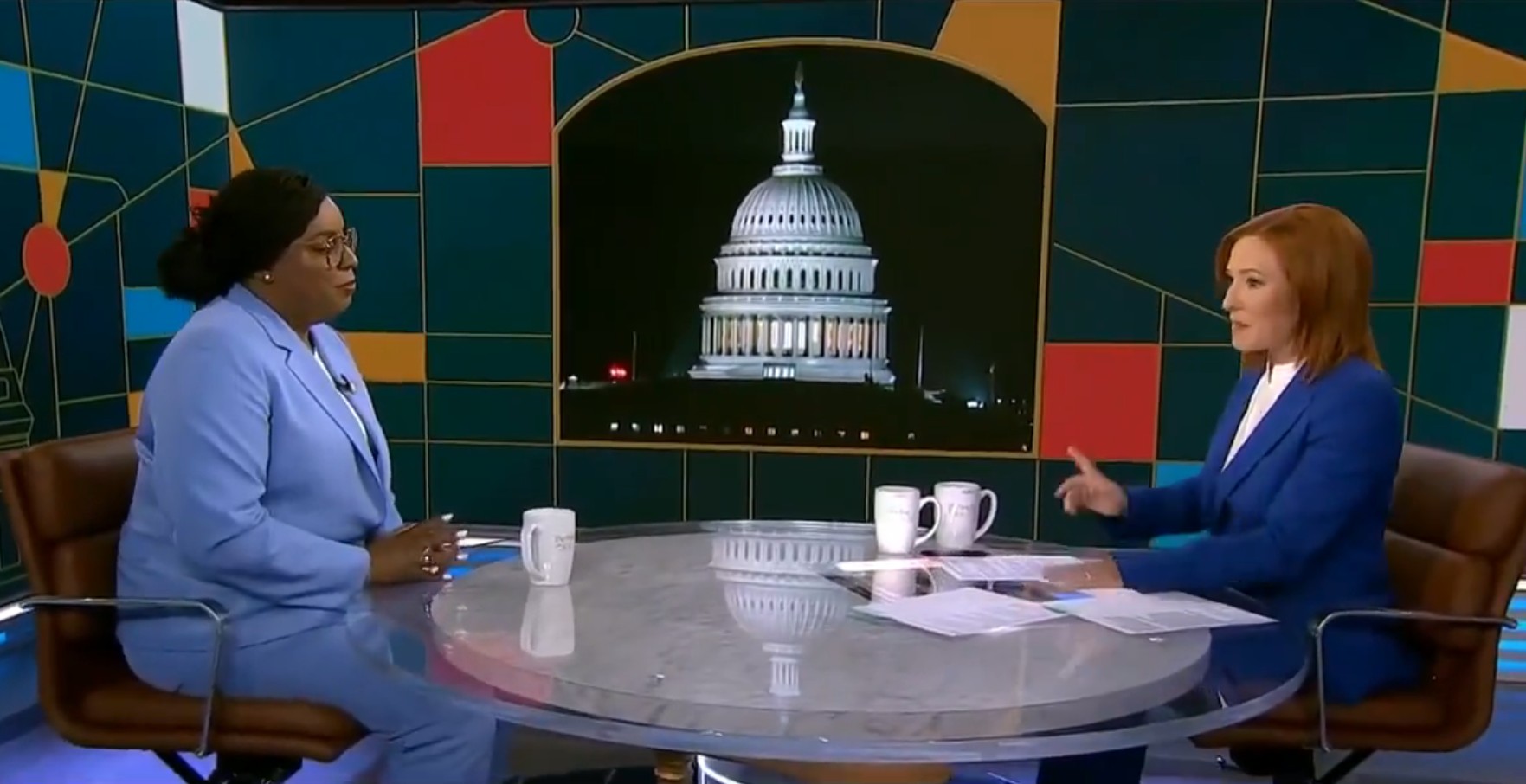

Democratic Rep. LaMonica McIver of New Jersey just received some bad news from a federal appeals court, and apparently being a member of Congress does not come with a constitutional license to allegedly shove federal agents.
Imagine that.
A three-judge panel of the U.S. Court of Appeals for the Third Circuit ruled 2-1 Wednesday that two felony charges against McIver can move forward following the confrontation outside the Delaney Hall immigration detention facility in Newark.
McIver was indicted in June 2025 after an incident involving federal immigration officers that was captured on video. She has pleaded not guilty.
Her attorneys argued that McIver was engaged in legitimate congressional oversight and therefore protected by the Constitution’s Speech or Debate Clause. McIver, a member of the House Homeland Security Committee, had arrived at Delaney Hall with Democratic Reps. Rob Menendez and Bonnie Watson Coleman for an unannounced inspection.
There is just one rather substantial problem with the immunity argument.
The charges involve alleged physical conduct against federal officers, not a speech on the House floor, a committee vote or a congressional report.
Judge Cindy Chung, joined by Judge Stephanos Bibas, called the conduct underlying the first two counts “unambiguously non-legislative.”
“Count One neither charges Congresswoman McIver for an act that is legislative in nature nor requires that she answer for any legislative act,” Chung wrote.
That’s about as straightforward as judicial language gets.
According to the indictment, McIver allegedly positioned herself between Newark Mayor Ras Baraka and a Homeland Security Investigations agent as officers were arresting Baraka. Prosecutors allege she slammed her forearm into the agent and grabbed him.
The second felony count concerns what allegedly happened afterward. Prosecutors say McIver attempted to re-enter the secured facility and pushed past an ICE deportation officer while striking him with her forearms.
Those allegations remain allegations, and prosecutors will still have to prove their case. McIver is entitled to the same presumption of innocence and due process as any other defendant.
But the appeals court’s ruling means she cannot simply make two of the charges disappear by labeling the entire encounter congressional oversight.
The Constitution provides lawmakers substantial protection for legitimate legislative activities, and for good reason. Presidents and prosecutors should not be able to criminalize congressional investigations merely because lawmakers are politically inconvenient.
But legislative immunity isn’t supposed to transform members of Congress into untouchable nobility.
The court did give McIver a partial victory concerning Count Three, a broader misdemeanor allegation involving interference with officers. The panel sent that count back to the district court to determine whether it encompasses protected legislative activity and whether any protected conduct can be separated from the rest.
Judge Thomas Ambro partially dissented, arguing that the conduct underlying Count Two could potentially be viewed as incidental contact connected to McIver’s attempt to continue the congressional inspection.
That issue will undoubtedly keep the lawyers busy.
The larger principle, however, should not be controversial. Members of Congress have constitutional protections because representative government requires independence from executive intimidation.
They don’t have a magical “congressional oversight” card that automatically immunizes every alleged physical act committed while conducting that oversight.
McIver will now have the opportunity to fight the government’s allegations in court.
That’s called due process.
Apparently even Congress has to live with it.
Leave a Comment