

A routine day of farm work in Behbeit El-Hagar, a village in Egypt’s Nile Delta, became an archaeological headline when a resident found an inscribed block in the field in front of his home. Instead of ignoring an unusual stone or treating it like a piece of farm debris, he stopped and reported it to authorities. Egypt’s antiquities inspectors then arrived, and the report triggered a rescue excavation. That plain, responsible decision opened a window into a world buried for more than 3,000 years.
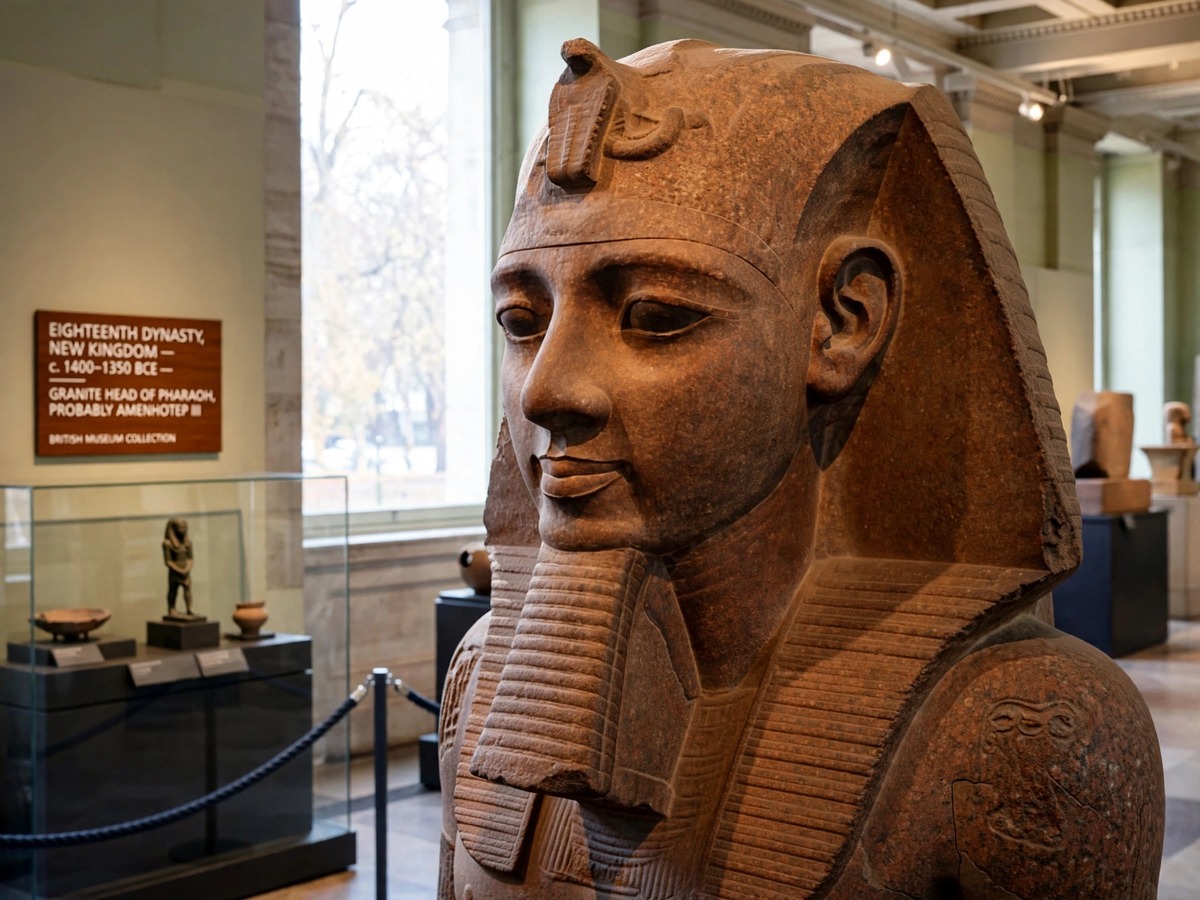
According to Ahram Online, citing Egypt’s Supreme Council of Antiquities, the first major find was the colossal head of a statue of Ramesses II. The head measures approximately 1.6 meters, more than five feet, from top to bottom. Ramesses is shown wearing the double crown representing the unification of Upper and Lower Egypt. Part of the back pillar survived too, carrying the king’s Horus name, “Hor Ka Nakht Mery Maat.” From the head’s size, archaeologists estimate the complete monument, including its base, originally stood about 8.5 meters tall, nearly 28 feet. One carved block led to a monument taller than a two-story house.
The excavation did not stop with one enormous head. Archaeologists uncovered a substantial section of a second royal statue measuring about 2.4 meters, or just under eight feet. Its legs and base are missing, and the upper part of its striped royal headdress is damaged. The face, however, remains clearly visible and in good condition. Researchers say its facial features resemble those of the first monument, leading them to believe the second statue also depicts Ramesses II, although work continues. About one meter north, the team found a 1.3-meter block of pink granite with fragments of royal titles. The surviving hieroglyphs include “Nesu Beti,” meaning King of Upper and Lower Egypt, and “Sa Ra,” meaning Son of Ra.
Behbeit El-Hagar was already known as the location of a major temple dedicated to Isis. The site contains an extensive field of granite architectural fragments from a sanctuary that became one of the most important centers of Isis worship in the Nile Delta. These newly uncovered pieces may push the story of the site farther back. Archaeologists now want to determine whether the statues originally stood there, how they relate to the later temple complex and what the surrounding remains reveal about earlier construction. No treasure map was needed, just someone willing to notice that the ground was holding more than dirt.
Heritage Daily notes that Ramesses II was the third pharaoh of Egypt’s 19th Dynasty and ruled for more than six decades, from approximately 1279 to 1213 B.C. His reign produced an extraordinary building program, military campaigns and monumental statues across Egypt and Nubia. He is also popularly associated with the pharaoh in the biblical Book of Exodus, the ruler who enslaved the Israelites and challenged Moses. That connection helps explain why the discovery has attracted attention well beyond archaeology circles.
Tourism and Antiquities Minister Sherif Fathy praised the resident for alerting officials. The ministry says public awareness and community cooperation are essential to protecting Egypt’s heritage, especially where ancient remains can sit beneath ordinary homes and fields. An ordinary report from an ordinary field has now brought attention to royal monuments, ancient titles and a site with layers of history still waiting to be understood. Sometimes the responsible thing is also the most interesting thing, especially when the “stone” turns out to belong to a nearly 28-foot statue.
Leave a Comment