

President Trump has announced that “massive” oil, gas and mineral exploration is preparing to begin across Greenland, placing the island’s natural resources inside a broader American security strategy. The move goes beyond a map or a talking point. It connects energy, critical minerals and Arctic defense in one plan, a concept Washington has often treated like three unrelated paperwork piles.
In remarks shared on X, President Trump said experts believe Greenland could hold extraordinary amounts of accessible oil. He also described its location as second to none for defending the United States and Europe. “Any future attack on the United States will have to come across Greenland,” he wrote, arguing that the island gives American defenses time, location and sightlines that cannot be duplicated elsewhere. That is a very Trump-style argument, resources and geography serving national strength rather than sitting in separate policy silos.
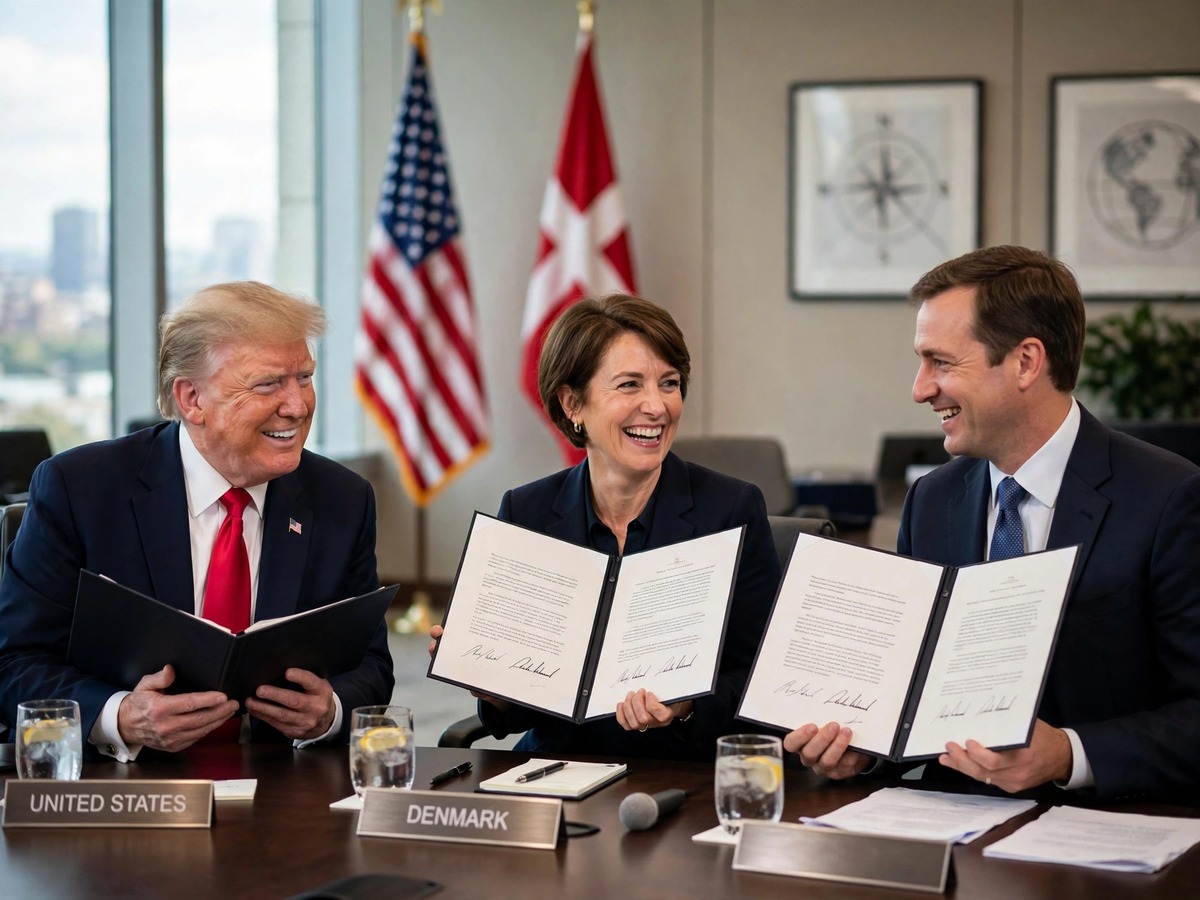
The announcement follows a security pact signed last month by the United States, Denmark and Greenland. According to the source report, the agreement expanded America’s ability to establish military facilities on the island while preserving Danish sovereignty and Greenlandic self-government. The White House text permits modernization and expansion at Pituffik Space Base, additional defense areas at Narsarsuaq and Mestersvig, and proposals for more sites when needed to defend Greenland, North America and NATO territory.
It also provides broad access for American aircraft, ships, forces and vehicles between those areas. The pact calls for stronger NATO planning, exercises and intelligence collection in the Arctic. It bars non-NATO states from establishing military installations without agreement from the parties and creates protections against dangerous foreign investments in sensitive sectors. This is where the mineral question stops being a side issue and starts looking like a strategic one.
There are real limits, and they are not small. President Trump did not announce a timetable, participating companies or specific exploration sites. Greenland halted new oil and gas licenses in 2021, and commercially recoverable petroleum reserves have not been established. Existing approvals and Greenland’s regulatory process will determine how quickly any part of the vision can move. The Arctic does not run on press releases, no matter how dramatic the announcement.
Greenland remains a self-governing territory within the Kingdom of Denmark. Copenhagen handles foreign affairs, defense and security, while Greenland controls much of its domestic policy, including mineral resources. Some older exploration licenses remain valid, but drilling requires additional government approvals. The security agreement did not transfer sovereignty to the United States, so cooperation with Nuuk and Copenhagen remains essential.
The larger contest is already taking shape in the source’s framing. Changing Arctic conditions are opening new shipping possibilities as governments compete for energy, rare earths and strategic access. China has spent years pursuing influence over critical-mineral supply chains, while Russia has expanded its military posture across the High North. Greenland sits between those challenges, combining strategic geography with major geological promise.
President Trump’s announcement puts the United States directly into that competition, backed by a defense agreement rather than empty slogans. The hurdles include permits, regulation, cooperation with Greenland and Denmark, and the question of what exploration will actually find. Still, linking American energy and mineral policy to Arctic defense gives the strategy a clear purpose. The work is beginning, and the bureaucracy now has to keep up with the geography.
Leave a Comment